Rich profiles
Personalize loyalty with enriched member profiles
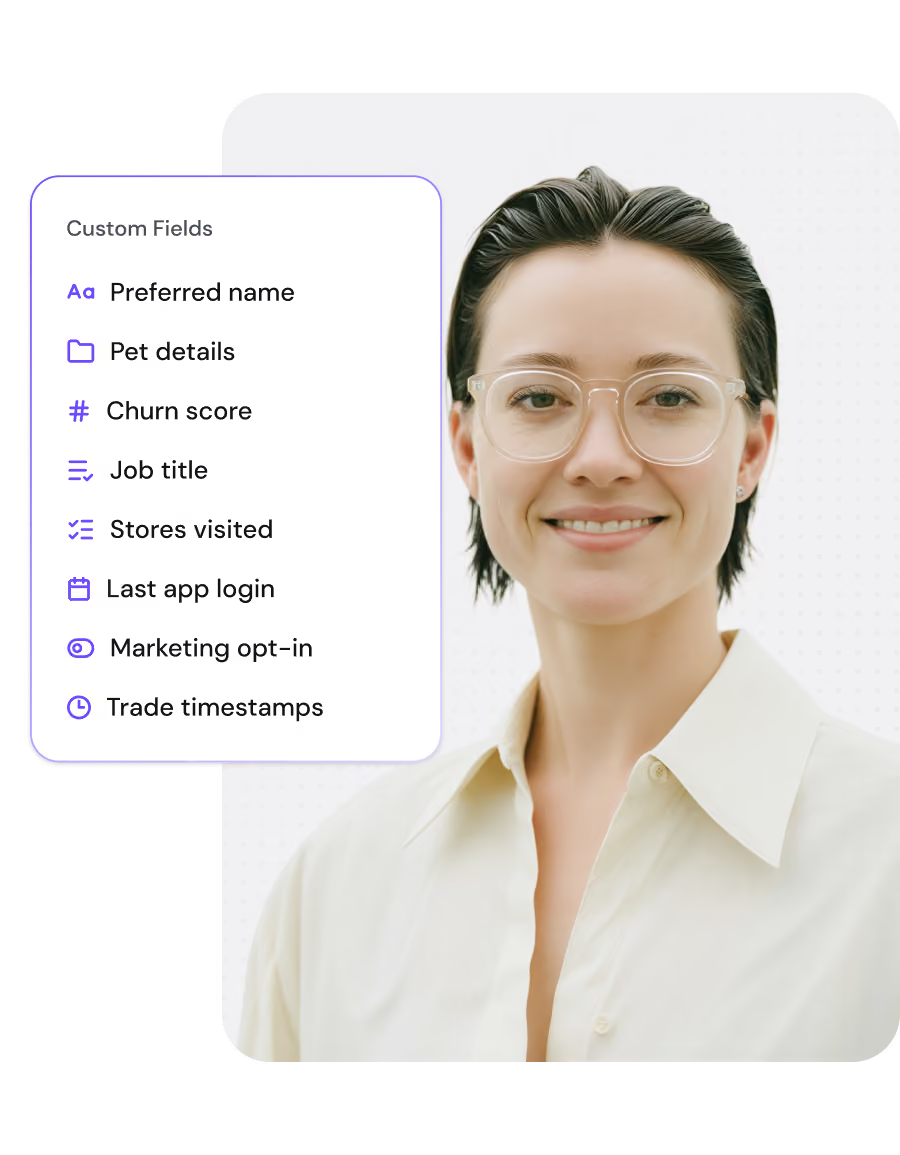
Structure the loyalty program with custom fields so it follows your workflow by adding text, date, multi-choice, subgroups, and more field types to member profiles, rewards and campaigns.


We helped 100+ enterprises build successful loyalty points programs


Loyalty software program that drives long-lasting results


How custom fields help in solving your business needs
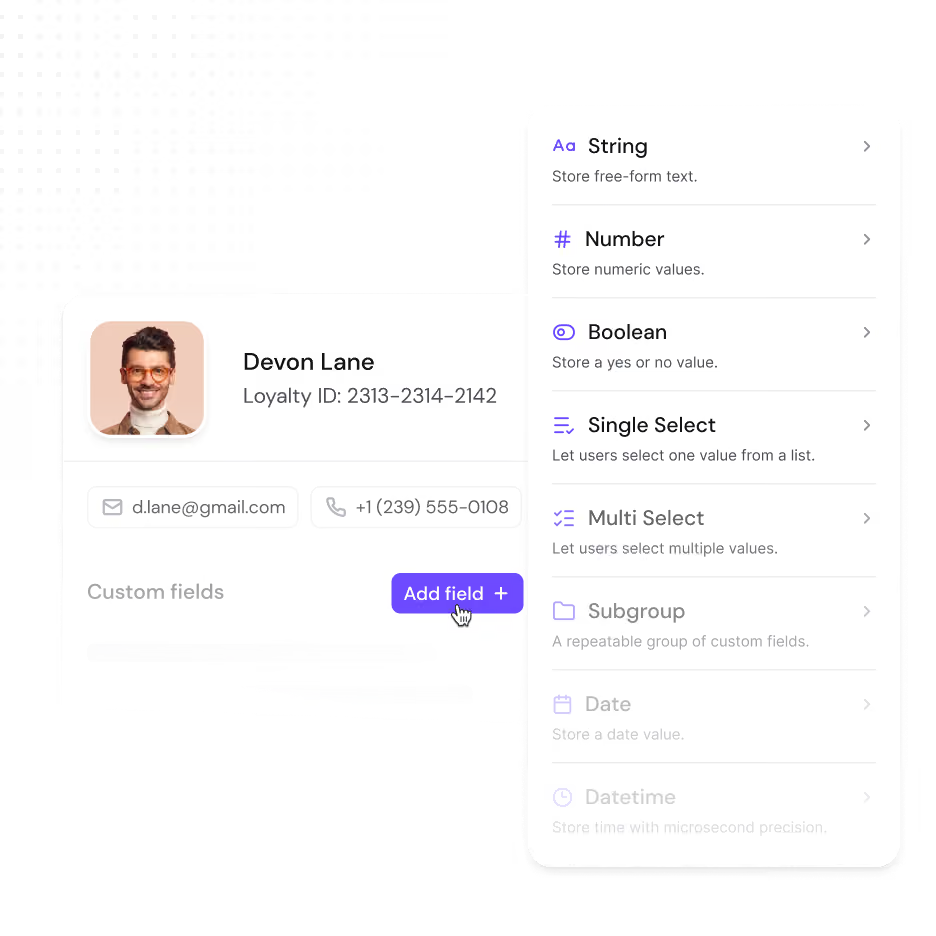

Store any business-specific data directly on members, rewards, and campaigns
Add the attributes your program depends on – CRM references and engagement scores on member profiles, supplier codes and redemption conditions on rewards, and more.
Use nine typed types – text, numbers, dates, datetimes, boolean flags, single-select, multi-select, and structured data rows – to keep every value clean, validated, and consistent across reporting, webhooks, and integrations. Attach dozens of custom attributes per member, reward, or campaign.
Structure data around your workflows – not around platform constraints
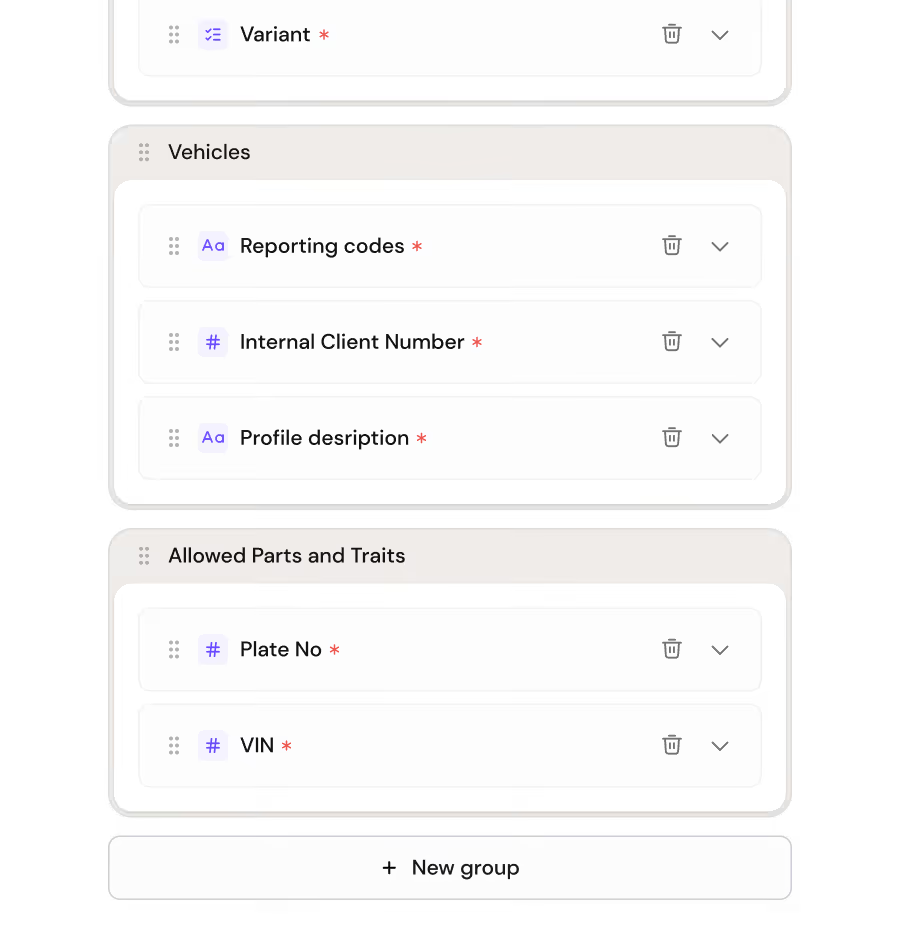
Define field groups that reflect your internal taxonomy: Preferences, Marketing Profile, Engagement History, or any grouping relevant to your program. The same group structure works consistently across members, rewards, and campaigns – so your data model stays coherent as the program grows.
Use groups to give different teams or integrations access to only the data they need. Request a single group from the API for lightweight reads, or fetch the full object when you need everything.
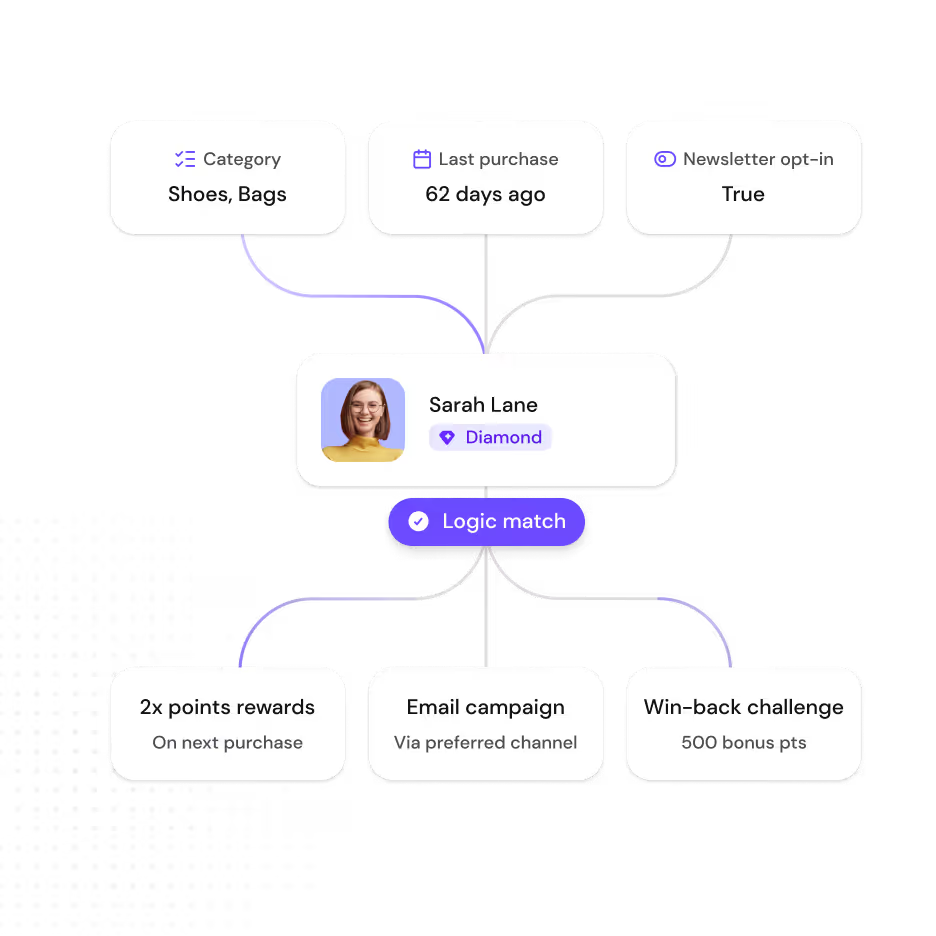
Target campaigns at precisely the members your data identifies
Reach precisely the audience each campaign needs by segmenting by custom fields – for example, target members by preferred channel, engagement score, VIP status, product category affinity, or any other field. Include or exclude members based on conditions specific to your business, such as "preferred category is Footwear AND subscribes to newsletter OR uses an iPhone".
Trigger personalized rewards, communications, and campaign mechanics based on what you know about each member or cohort – not just on what they have bought. Turn the data you have collected into loyalty moments that are relevant by design, not by coincidence.
Open Loyalty lets you attach any structured data to members, rewards, and campaigns – without engineering overhead or schema changes.
Frequently asked questions
What are custom fields in Open Loyalty?
Custom fields let you attach structured, typed data to the core objects in your loyalty program – members, rewards, and campaigns.
Store preferences, CRM references, product metadata, cost center labels, or any attribute specific to your business.
Fields are validated on write, organized into logical groups, and available via API and connected systems.
Which objects support custom fields?
Custom fields are available on the Member, Reward, and Campaign modules. The same field types, group structure, and API model apply consistently across all three.
What types of data can I store in custom fields?
Open Loyalty's nine field types cover the most common data shapes: text, integer, float, boolean, date, datetime, single-select list, multi-select list, and subgroup – a structured table of rows.
Every value is strongly typed, so numbers remain numbers and dates remain dates throughout validation, reporting, and downstream consumption.
How are custom fields organized?
Fields belong to groups – logical buckets such as Preferences, Marketing Profile, or Engagement History.
Groups are the consistent unit across the admin UI, the API, and member or reward payloads. They make it straightforward to give different teams or integrations access to only the data they need.
How do custom fields connect with other platforms?
Custom field values are included in the standard API responses for members, rewards, and campaigns by default.
Write values via PATCH from any connected system – CRM, CDP, POS, or mobile app – updating a single field or multiple groups in one request.
Custom field data is also available in webhooks for real-time sync across your stack.
Can I target or exclude members based on specific field values?
Yes. Open Loyalty's segmentation lets you filter on exact values.
For example, Segment ABC includes only members whose preferred category is Bags and who are not subscribed to the newsletter.
These comparisons are available on text, boolean, and single-select fields, and combine freely with AND/OR/NOT logic across standard and custom dimensions.
Choose reliability and minimize risk with a proven vendor
Part of an international capital group
Recognized by Google, Deloitte, and Gartner

35 loyalty and gamification experts


Helping customers in over 60 countries
Sleep well with rock-solid security and scalability

ISO and GDPR compliance

OWASP and CWE certifications

Global availability with AWS
See what customers say about working with us