Since 2020, the Loyalty Program Trends Report has tracked how loyalty programs evolve in response to changing customer expectations, technology, and business pressure. Each edition captures how loyalty teams rethink goals, investments, and mechanics year over year. The loyalty landscape is evolving rapidly, with many loyalty programs competing for customer attention, leading to significant market saturation and increased pressure on brands to innovate.
With the 2026 edition, we continue this work by taking a closer look at the:
- Real challenges loyalty teams face today
- Areas they actively invest in
- Strategic trade-offs shaping loyalty programs over the next 2–3 years
The report offers a grounded view of where loyalty is heading in 2026 and what that means in practice.
Today, 90% of US adults belong to at least one loyalty program, highlighting the prevalence and saturation of the market. The global loyalty management market is projected to surpass $32.52 billion by 2031, growing at a robust 15% annually, underscoring the critical business importance of understanding loyalty program trends.
Loyalty Program Trends: What's in the 2026 report edition?
The 2026 edition is based on insights from 170+ loyalty professionals working across global and regional markets, representing a wide range of industries, maturity levels, and organizational models.
This year's report delivers 85 concise, insight-driven pages answering the most pressing questions loyalty teams are dealing with right now, including:
- What challenges loyalty teams expect to face in 2026
- Which loyalty goals are gaining priority as budgets tighten
- Where loyalty investments are increasing – and where they are slowing down
- How loyalty professionals see the future of loyalty programs over the next 2–3 years
- Which trends are expected to have the biggest strategic and operational impact
- Which brands are consistently perceived as loyalty benchmarks, and why
How the report is structured
The report opens with a quantitative overview of the most common responses across challenges, goals, investments, and trends, enriched with year-over-year comparisons (2021–2026) to show how priorities have shifted over time.
The second part dives into qualitative expert commentary, where loyalty leaders expand on their answers, explain the context behind the data, and share practical reflections on execution, constraints, and decision-making inside real organizations.
The 2026 edition includes an expanded gamification deep dive, building on previous years and delving deeper into how gamification is designed, operated, and measured. The focus is on why these mechanics work, how they support long-term engagement, and where teams struggle to scale them due to data, tooling, or organizational limits.
💡 Read the full report to learn more.
Who are the loyalty experts behind the report?
As with previous editions, the Loyalty Program Trends 2026 report is grounded in direct input from practitioners working on real loyalty programs.
The research combines survey responses with in-depth qualitative insights from 170+ loyalty professionals working in-house, at agencies, and as independent consultants across global and regional markets.
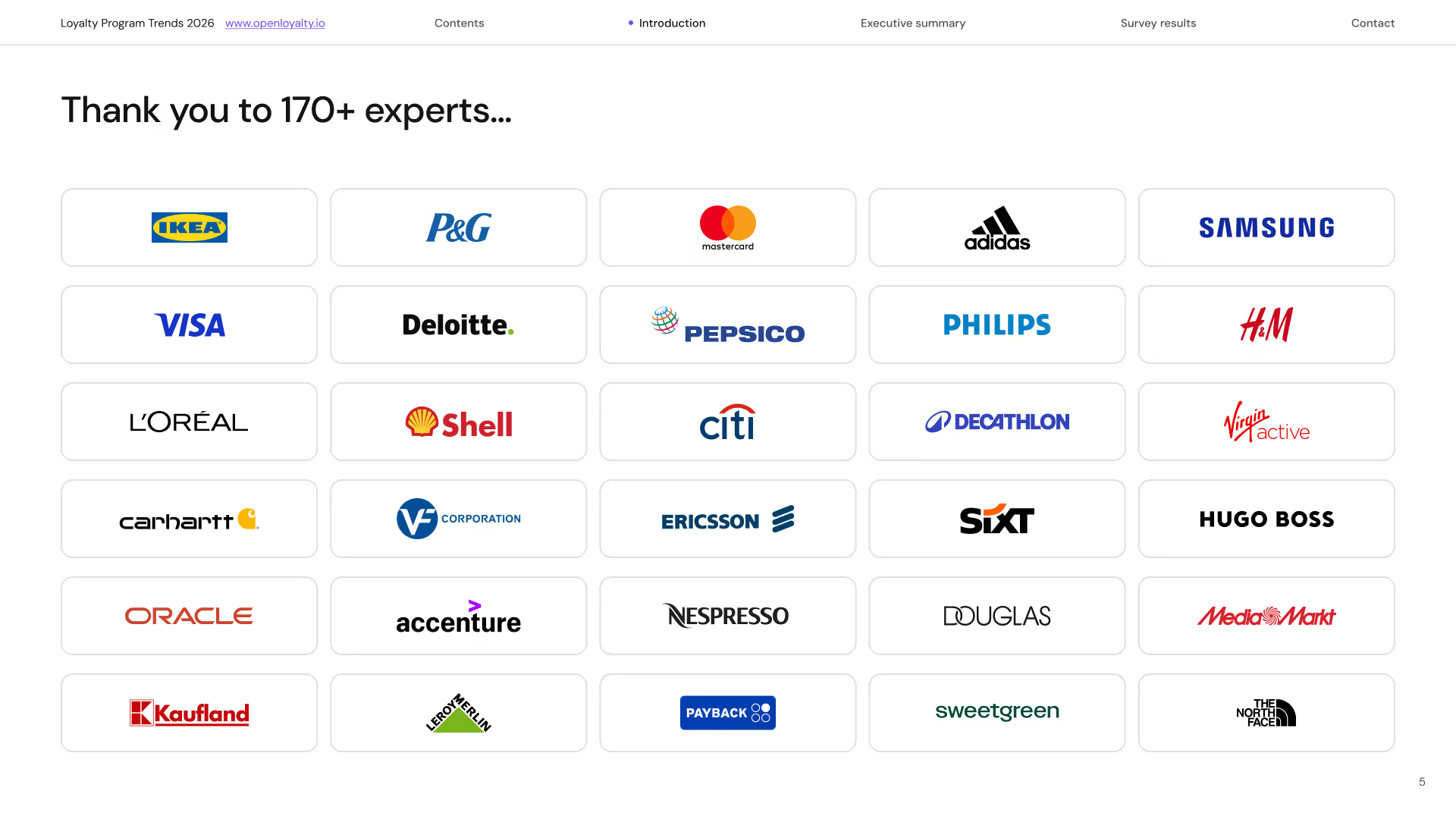
Participants bring hands-on experience from organizations such as IKEA, Procter & Gamble, Mastercard, adidas, Samsung, Visa, Deloitte, PepsiCo, Philips, H&M, L'Oréal, Shell, Citi, Decathlon, Virgin, Ericsson, BOSS, and many others.
Contributors represent a mix of mature and fast-growing loyalty markets, spanning retail, travel, health, finance, FMCG, and services. Such diversity allows the report to capture best practices and the operational constraints, trade-offs, and execution gaps loyalty teams face at different stages of scale and digital maturity.
What are the top-line findings for customer loyalty trends?
Heading into 2026, loyalty programs are under growing pressure to prove their impact. Loyalty programs are expected to focus more on hyper-personalization and real-time rewards, moving away from traditional points-based systems that are becoming less effective. Instant gratification through real-time rewards is becoming a baseline expectation for loyalty program members, with 75% of businesses prioritizing this in their investment strategies.
Customers now expect seamless recognition across multiple touchpoints—including mobile apps, websites, email, and in-store environments—making omnichannel engagement a baseline expectation. Unified customer profiles are essential for delivering optimal personalized experiences across all channels, enabling brands to recognize and engage loyalty program members regardless of how they interact.
While brands continue to talk about personalization, experience, and emotional connection, this year’s findings show a clear gap between what loyalty teams want to build and what they are realistically able to execute. Loyalty programs are evolving from transactional, points-based systems into AI-driven, emotional loyalty programs focused on hyper-personalization, immediate gratification, and experiential rewards.
Emotional loyalty represents the pinnacle of customer relationships, building resilient bonds that withstand competitive pressures, with approximately 70% of brand preference decisions based on emotional factors.
The 2026 report highlights a shift away from short-term tactics toward strategies designed to support repeat behavior, retention, and long-term customer value.
At the same time, loyalty leaders are becoming more cautious: budgets are tighter, expectations are higher, and every investment is increasingly measured through ROI and operational feasibility rather than vision alone.
If this sounds familiar, the following sections unpack the challenges, trends, and investment decisions shaping loyalty programs in 2026 and beyond.
Challenges
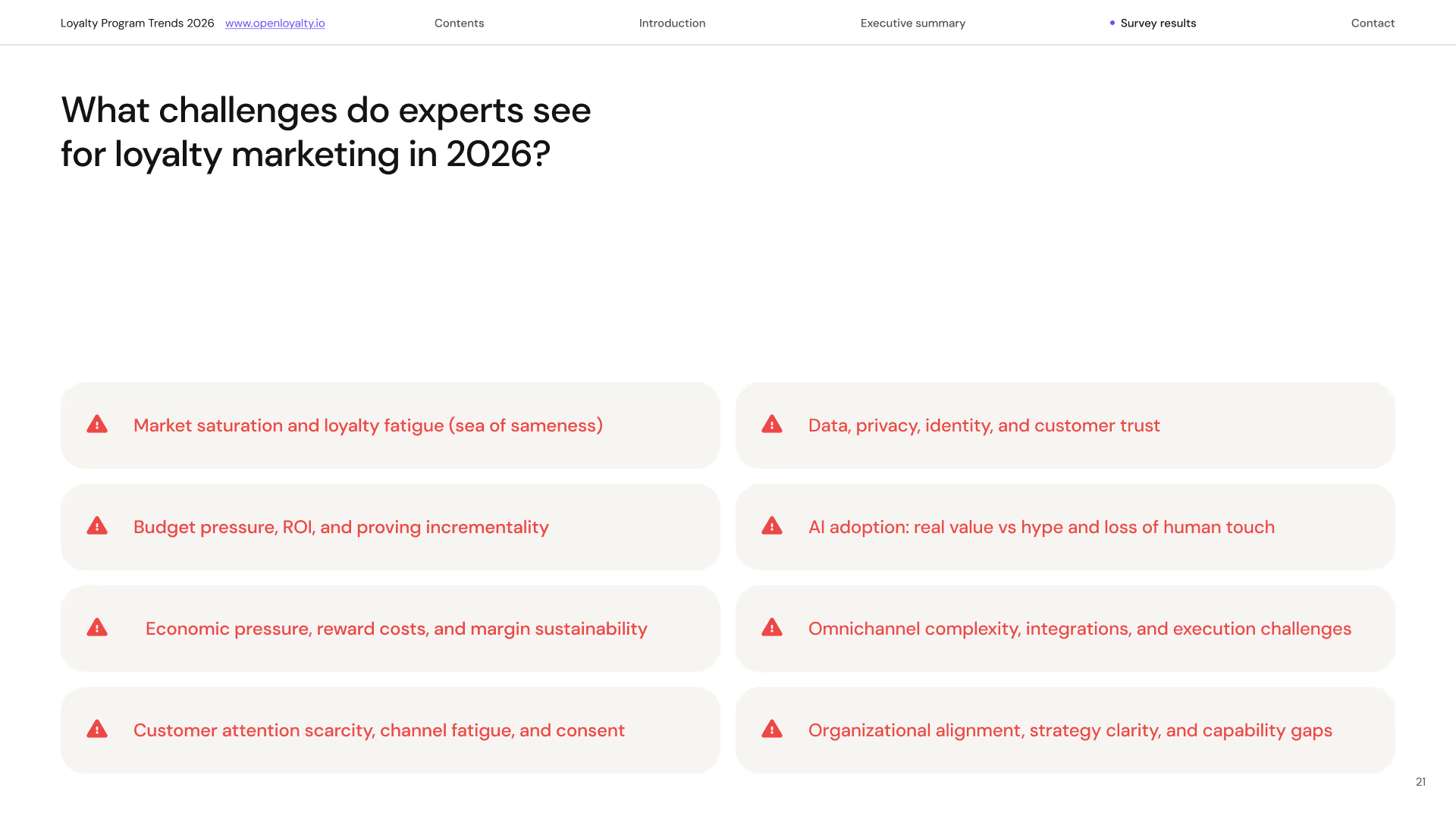
The 2026 data shows loyalty teams operating in a far more constrained and complex environment than in previous years. Challenges are no longer isolated. They stack on top of each other, combining market pressure, execution limits, and rising expectations.
The loyalty landscape is evolving rapidly, with brands under increasing pressure to adapt their loyalty strategies to meet changing customer needs and expectations. Many loyalty programs are becoming similar and less effective, making differentiation a key challenge.
Market saturation and loyalty fatigue remain a constant backdrop. With customers enrolled in multiple programs that often look and feel the same, standing out has become harder. Traditional point-based mechanics struggle to capture attention, while expectations for richer, experience-led engagement continue to rise.
At the same time, teams face growing tension around data, privacy, identity, and trust. Personalization is now a baseline expectation, but stricter regulations, consent requirements, and internal governance limit how quickly and how deeply brands can act on customer data. The challenge has shifted from whether to personalize to how to do it responsibly, transparently, and at scale.
Budget pressure and ROI scrutiny are equally prominent. Loyalty budgets are under closer inspection, forcing teams to prove incrementality, not just engagement. Metrics like Customer Lifetime Value, retention, and cost efficiency are increasingly prioritized over short-term revenue lifts or campaign-level wins.
Operational complexity adds another layer. Omnichannel execution, system integrations, and fragmented tooling slow down delivery, while organizational misalignment and capability gaps make it harder to translate strategy into action. Many teams report that ambition outpaces resources, especially in AI adoption, where separating real value from hype remains a challenge.
💡 Download the full report to explore how loyalty leaders are responding to these constraints and what trade-offs they are making in 2026.
Investments areas
So, where are loyalty teams actually allocating budget in 2026?
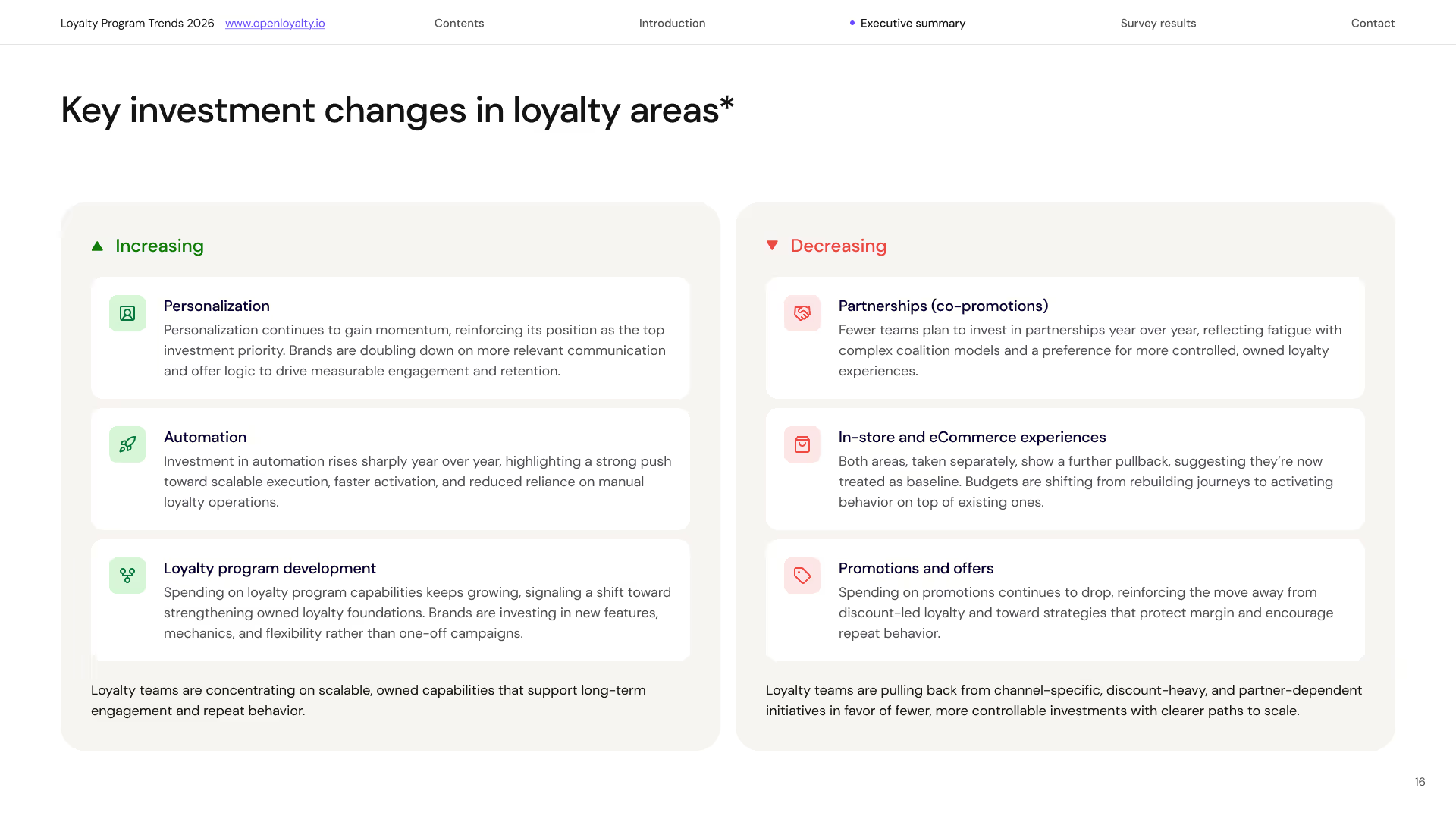
The data shows a clear narrowing of focus. Instead of spreading spend across many initiatives, teams are concentrating on capabilities that support scale, activation, and accountability.
At the top of the list, personalization continues to attract the largest share of investment. Brands are investing more in relevant communication and offering logic to drive engagement and retention. Rather than expanding data infrastructure, teams are working with existing customer signals and translating them into action faster.
That shift is closely connected to rising investment in automation. As expectations around speed and repeatability increase, automation supports faster activation and reduces reliance on manual loyalty operations. Teams are using automation to operationalize journeys and reward delivery, keeping execution manageable as programs grow.
Alongside this, the omnichannel experience receives increased attention. As customer journeys span multiple touchpoints, investments shift from optimizing individual channels to better coordinating interactions.
The picture looks different in other areas.
Partnership-based loyalty (co-promotions) continues to see declining investment. While collaborations remain part of some strategies, fewer teams plan to expand them year over year. Concerns around dependency, execution complexity, and limited differentiation are pushing brands toward more controlled, owned loyalty setups.
On the other side, in-store and eCommerce experience extensions continue to see reduced investment. Both are increasingly treated as standard foundations rather than areas for expansion. Spending is shifting away from redesigning journeys and toward triggering and reinforcing behavior within experiences that are already in place.
Finally, promotions and offers continue to lose share of investment. The ongoing decline reflects a move away from discount-led loyalty toward approaches that protect margin and encourage repeat behavior without constant incentives.
👉 These shifts point to consolidation rather than disruption. Loyalty teams are trimming spend in mature, operational, or margin-heavy areas while concentrating budgets on fewer capabilities that scale without adding cost or complexity.
💡 Want to see the full investment breakdown and how these priorities have evolved? Download the full report.
Strategic trends for the upcoming 3 years
Discover how loyalty teams rank trends based on two things:
- Long-term impact
- How urgent they feel right now
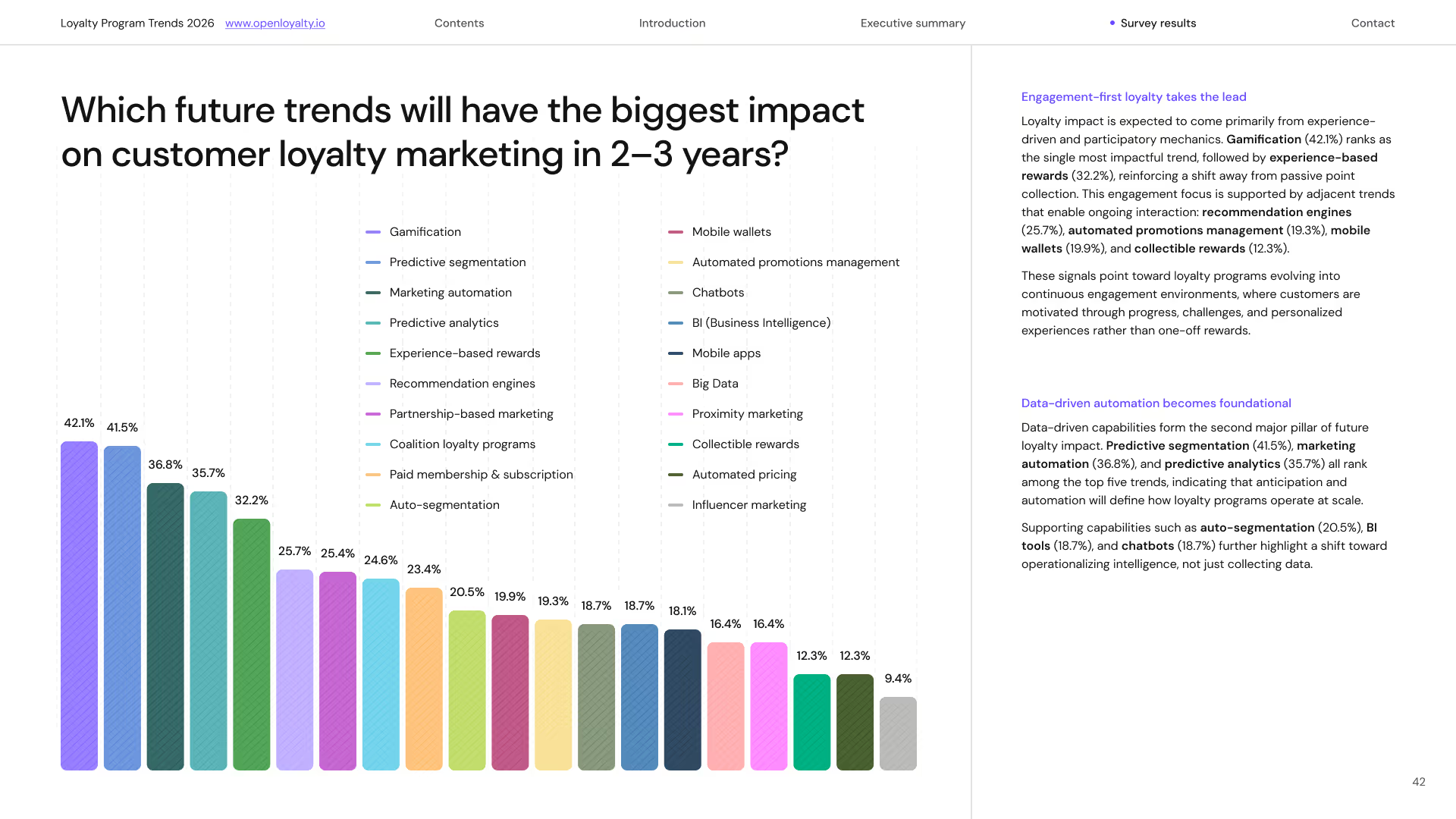
At the top are gamification and experience-based rewards. They're no longer seen as add-ons, but as core parts of modern loyalty programs. Teams point to challenges, progression, and access-based rewards as reliable ways to drive repeat behavior and keep programs relevant. Visual progress bars are especially motivating, with 81% of consumers showing interest in this format, as they encourage repeated interaction.
Rigid point systems are becoming outdated as customers increasingly expect flexible rewards, such as gift cards, cashback, and charitable donations. The trend towards flexible rewards is driven by the need for brands to adapt to changing customer expectations, making flexibility in rewards a baseline expectation rather than a luxury.
Predictive segmentation and AI-driven targeting also score high, reflecting a shift from static reporting to more forward-looking decisions, like anticipating churn or timing rewards better.
Other trends, such as automation and partnerships, still matter but feel less urgent. Many teams see them as supporting tools rather than areas that will define loyalty strategies on their own.
💡Want to see the full trends matrix and what it means for your loyalty roadmap? Download the Loyalty Program Trends 2026 report.
What do the experts say? Preview of insights

What challenges do you see for loyalty marketing in 2026?
"The #1 challenge is differentiation, or simply surviving in the sea of sameness. Loyalty programs have become ubiquitous, and as a result, a 'good' program is no longer a competitive advantage, it's just table stakes. With so many similar schemes competing for the same attention, customers are increasingly fatigued and less responsive. The real challenge in 2026 is standing out in a crowded market where sameness is the default and earning relevance beyond points, discounts, and copy-paste mechanics."
Radek Hrachovec, Partner at Voxwise & Certified Loyalty Marketing Professional

How do you see the future of loyalty programs over the next 2-3 years?
"Loyalty will increasingly move toward ultra-personalization, with experience-based rewards designed to feel meaningful to each individual rather than universally appealing. These experiences will matter not because of their monetary value, but because they create emotional relevance and a lasting connection with the brand."
Rebeca Muñoz, Loyalty Project Manager

API-first loyalty and gamification engine