For enterprise, especially retailers and QSR brands, a mobile app is no longer just a digital catalog – it is the primary driver of customer retention and lifetime value (CLV).
While the examples below are consumer favorites, their success is not just about design. It is about the underlying loyalty mechanics – from tiered rewards to real-time data synchronization.
In this guide, we analyze the best mobile loyalty apps to understand the features that drive engagement. Whether you are in fashion, grocery, or fintech, these benchmarks serve as a blueprint for architecting your own solution using a flexible loyalty engine.
Key takeaways
- Mobile loyalty apps help brands build stronger, data-driven relationships with their customers.
- They deliver both transactional rewards and non-transactional perks like exclusive content or VIP access.
- Top-performing apps focus on seamless design, personalization, and real-time engagement.
- Loyalty apps are widely used across industries like retail, food, travel, health, and tech.
- Customers expect features like mobile wallets, push notifications, and gamification.
- Gen Z users actively engage with loyalty apps that are mobile-first, fast, and fun.
- Security matters. Trusted loyalty apps use encryption and follow best privacy practices.
- Brands can launch quickly using SaaS loyalty platforms before investing in custom builds.
- A loyalty app can improve retention, boost customer satisfaction, and grow revenue.
- Mobile loyalty is a smart investment for companies of all sizes looking to increase customer loyalty.

What is a mobile loyalty program app?
A loyalty app is the customer-facing layer of a loyalty program: the screen where a customer signs up, earns points, checks tier status, and redeems rewards. The program is the rules engine running underneath it, deciding what counts, what expires, and what a customer's balance is worth.
That distinction matters for how you evaluate vendors. A points and rewards program can run on a paper stamp card or a store's own point-of-sale system with no app at all. A loyalty app adds a persistent channel: push notifications, a digital wallet integration for Apple Wallet or Google Pay, and a home for tier promotion rules that a physical card can't display.
The customer-side flow is consistent across most implementations we've reviewed for this list. A customer signs up (often at checkout or via a QR code), earns points on qualifying purchases, watches balances accrue in real time, and redeems points against a reward catalog before they expire. Tiers layer on top, unlocking better redemption rates or perks once spend or frequency crosses a threshold.
According to Bond Brand Loyalty's Loyalty Report, the majority of surveyed consumers say a well-designed loyalty program changes where they choose to shop, which is the entire business case for building the app layer well rather than bolting it onto an existing CRM.
Where this gets architecturally interesting for a Loyalty Program Manager comparing options: a loyalty card aggregator app (think a wallet that stores every retailer's card) solves fragmentation for the customer but gives you, the brand, none of the underlying behavior data. A custom build gives full control but slow time-to-market.
Legacy SaaS platforms move faster but lock program logic into someone else's roadmap. An API-first architecture, our preference for enterprise rollouts, keeps point calculation, redemption, and tier logic in a service your own app, website, and POS all call into, so the mobile app is one interface among several rather than the single source of truth.
Get that layering right and the loyalty app becomes a genuine customer retention strategy lever, not just a digital stamp card with a nicer interface.
These apps offer perks like personalized discounts, early access to promotions, and tailored communication in one place. Instead of handing out plastic cards or generic email offers, brands can use mobile apps to create a direct, real-time connection with their customers.
Here's why that matters:
- Apps let brands personalize experiences through data, like recommending products, sending reminders, or unlocking surprise rewards.
- Through features like push notifications, brands can stay top-of-mind at the right moments if they're near a store or during a seasonal promo.
- Mobile apps also gather behavioral insights that help businesses refine their marketing strategy, optimize product offerings, and understand what their customers want.
In short, a mobile loyalty app is a smart way for companies to go beyond transactions and start building meaningful, long-term relationships.
Are loyalty apps safe and worth it?
In most cases, yes, they're both safe and worth using.
Let's start with safety. Loyalty apps often ask for some personal data – name, email, shopping habits, maybe even payment info. That can feel sensitive, so it's fair to be cautious.
The good news? Most legitimate loyalty apps (from brands like Starbucks, H&M, Nordstrom, etc.) use solid security practices:
- Encrypted data storage
- Two-factor authentication
- Secure cloud services
- Clear privacy policies
To keep your info safe, just follow a few simple rules:
- Download only from official app stores (App Store or Google Play)
- Avoid third-party clones or apps with no reviews
- Check what permissions the app asks for – if it feels excessive, trust your gut
- Read reviews to see how trustworthy the app seems
Examples of mobile loyalty apps that work
Looking for the best mobile loyalty app for your brand, or just curious which ones work? In this part, we've handpicked and broken down top-performing loyalty apps by industry, functionality, and design so you can find inspiration or benchmark your own strategy.
🏪 Best for offline retail
Tesco
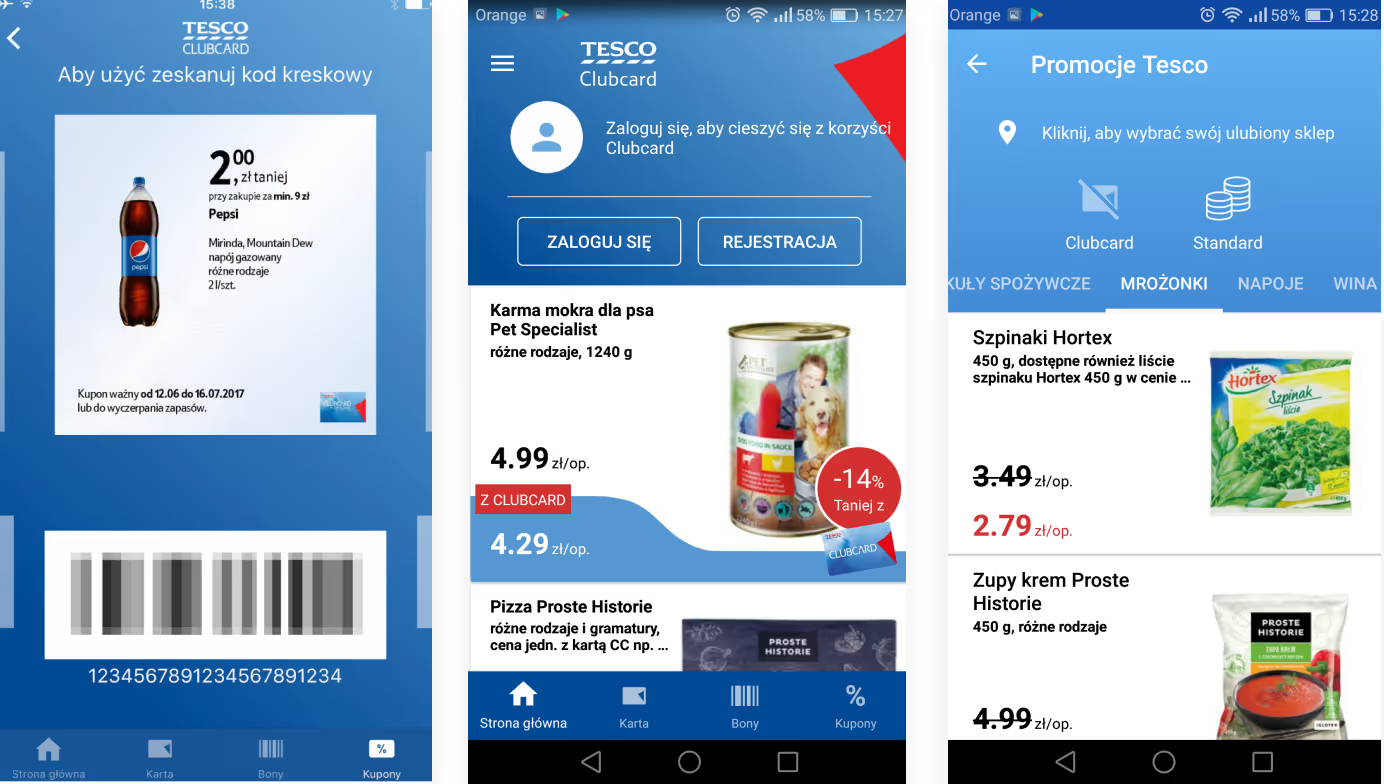
Tesco Clubcard gives users access to vouchers on their phones and allows them to manage the Clubcard account on the go. Customers can collect points with the Clubcard app by scanning their phone instead of a card.
Functionality
- Offers
- The Tesco card code to scan
- Vouchers
- Coupons
- Tesco promotions: categorized with filters available: members-only promotions and standard
- Loyalty account status
- Apple Wallet and Android Pay integration
Design advantages
- Bottom navigation
- Not mandatory registration
- Access to the search function from every app level
Presentation in the store
The presentation includes a clear icon with the brand's logo and the name of the benefit program. App preview contains screenshots presenting the main functions.
Enterprise Note
Tesco excels at omnichannel synchronization. To replicate this, retailers use Open Loyalty’s Points & Rewards Engine to ensure offline POS transactions update the app balance in real-time.
H&M
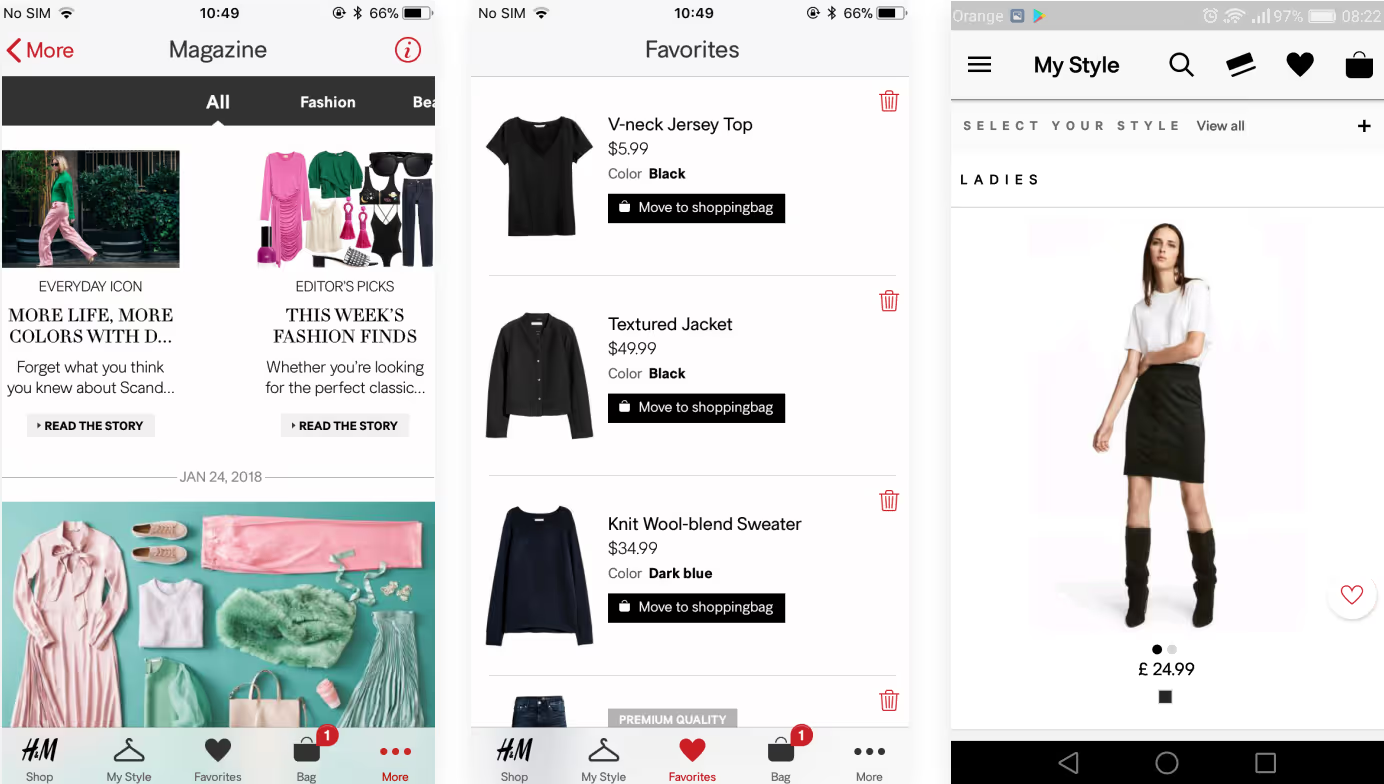
The H&M app enables users to browse and shop for the latest fashion offers, exclusive promotions, and information about the latest trends, news, and videos. Users can get push notifications about new deals and events at local H&M stores, follow order status, check account balance, and edit personal details.
Functionality
- Shop with customer type and product type categorization
- My style: personalized feed
- Favorites products
- Bag and mobile shopping
- Magazine
- Map of stores
- Newsletter
- Gift Cards
- My H&M: orders, cards, inbox, profile, notifications
Design advantages
Reach search: includes top searched products, trending search categories, and links to commonly searched information (shipping, payments).
Presentation in the store
The icon presenting the H&M logo is easy to identify. An app preview consists of video and screenshots, including a description of the app's main features.
Enterprise Note
H&M drives engagement through personalized feeds. Brands can achieve similar targeting by using Open Loyalty’s Segmented Campaigns to trigger push notifications based on specific purchase history.
Fill out the form at the top to see the full list.
Are loyalty apps secure and scalable?
For consumers, safety means data privacy. For the enterprise, it means compliance and stability.
Building a loyalty app requires handling sensitive customer data at scale. Leading brands ensure trust by prioritizing:
- ISO 27001 Certification: Ensuring the vendor meets global security standards.
- GDPR/CCPA compliance: Managing consent and data rights automatically.
- Fraud prevention: Detecting suspicious point accrual patterns,

API-first loyalty and gamification engine