Running a rewards program at enterprise scale takes more than just good intentions. Without structure, things get messy fast, and quick fixes usually don't hold up. Loyalty software such as Open Loyalty helps bring order to it all.
It handles how points are earned, tracked, and redeemed across channels, while keeping everything connected behind the scenes. For larger teams, it helps create a consistent experience across stores, apps, and other touchpoints.
In this guide, you'll find a breakdown of 10 enterprise-ready rewards program platforms. Discover core features, real-world use cases, and how each option approaches things like scale, flexibility, and integration. You'll find answers to common questions about loyalty programs and what to look for during the selection process. When evaluating loyalty platforms, it’s important to assess features, flexibility, analytics, and integration capabilities to ensure the software supports your business needs and growth.
Use this guide to compare your options and see which platforms align with your setup, team, and goals.

Rewards programs are at the heart of any successful customer loyalty strategy, especially for enterprises aiming to build lasting customer relationships and drive sustainable growth. By incentivizing repeat purchases, encouraging referrals, and fostering ongoing engagement, rewards programs help businesses boost customer retention and maximize customer lifetime value.
A well-designed rewards program goes beyond simple transactions. It blends transactional and emotional loyalty elements—such as points for purchases, tiered status levels, and experiential rewards—to create a personalized journey for each customer. This approach not only motivates customers to return but also deepens their emotional connection to the brand, turning occasional buyers into loyal advocates.
Leveraging customer data and insights into customer behavior allows enterprises to tailor loyalty initiatives to the unique preferences and needs of different customer segments. By analyzing purchase history, engagement patterns, and feedback, businesses can deliver rewards and experiences that truly resonate, increasing both program participation and overall customer satisfaction.
Ultimately, effective rewards programs are a powerful tool for enhancing customer loyalty, driving repeat business, and increasing the lifetime value of every customer. By combining data-driven personalization with meaningful rewards, enterprises can create loyalty strategies that deliver measurable results and set the foundation for long-term success.
Not all loyalty platforms are built for enterprise use. Larger programs often involve multiple brands, regions, teams, and systems, so the software must keep pace. As you compare options, focus on features that support scalability, integrate well with your tech stack, and provide your team with room to grow the program over time.
Advanced loyalty platforms also drive operational efficiency by automating processes and optimizing workflows, helping enterprises streamline business operations. The list below outlines what to look for during evaluation.
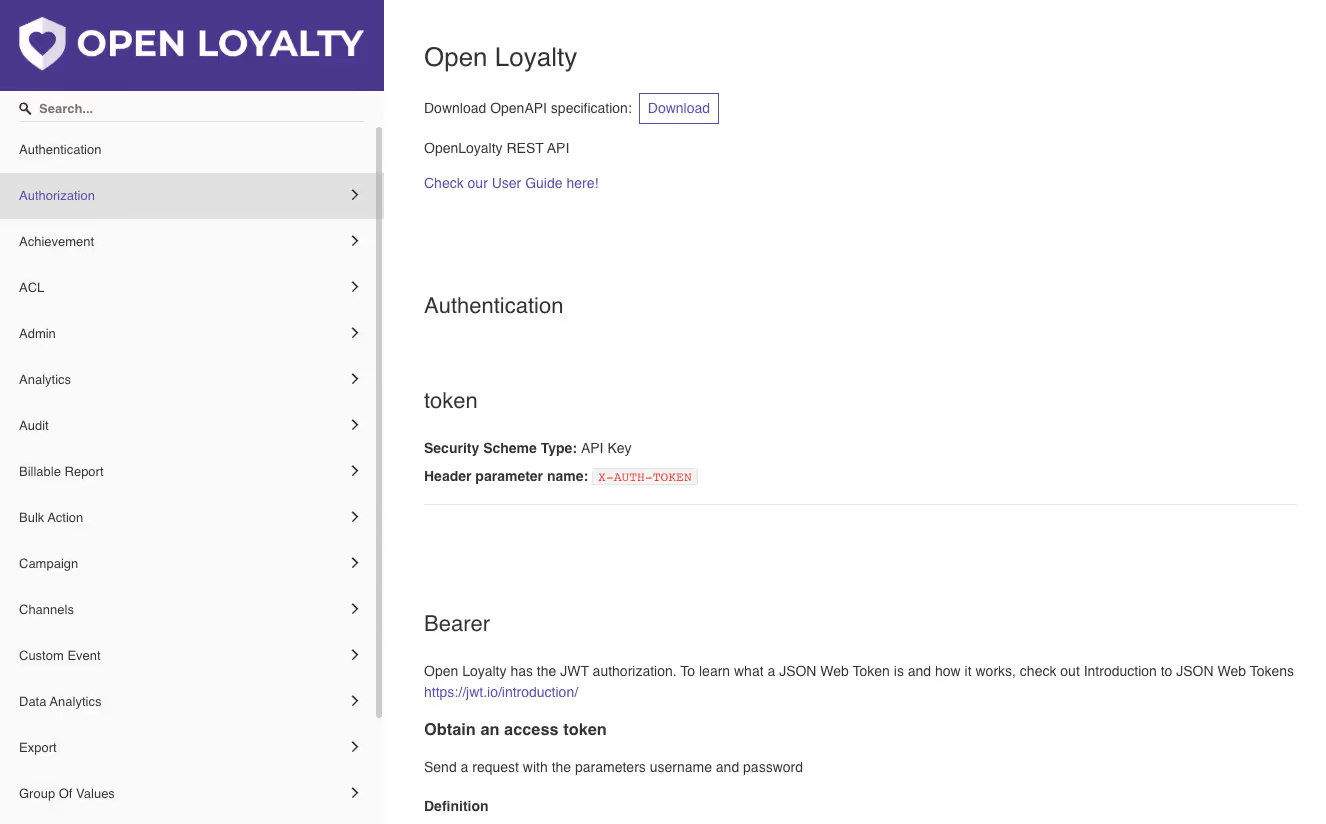
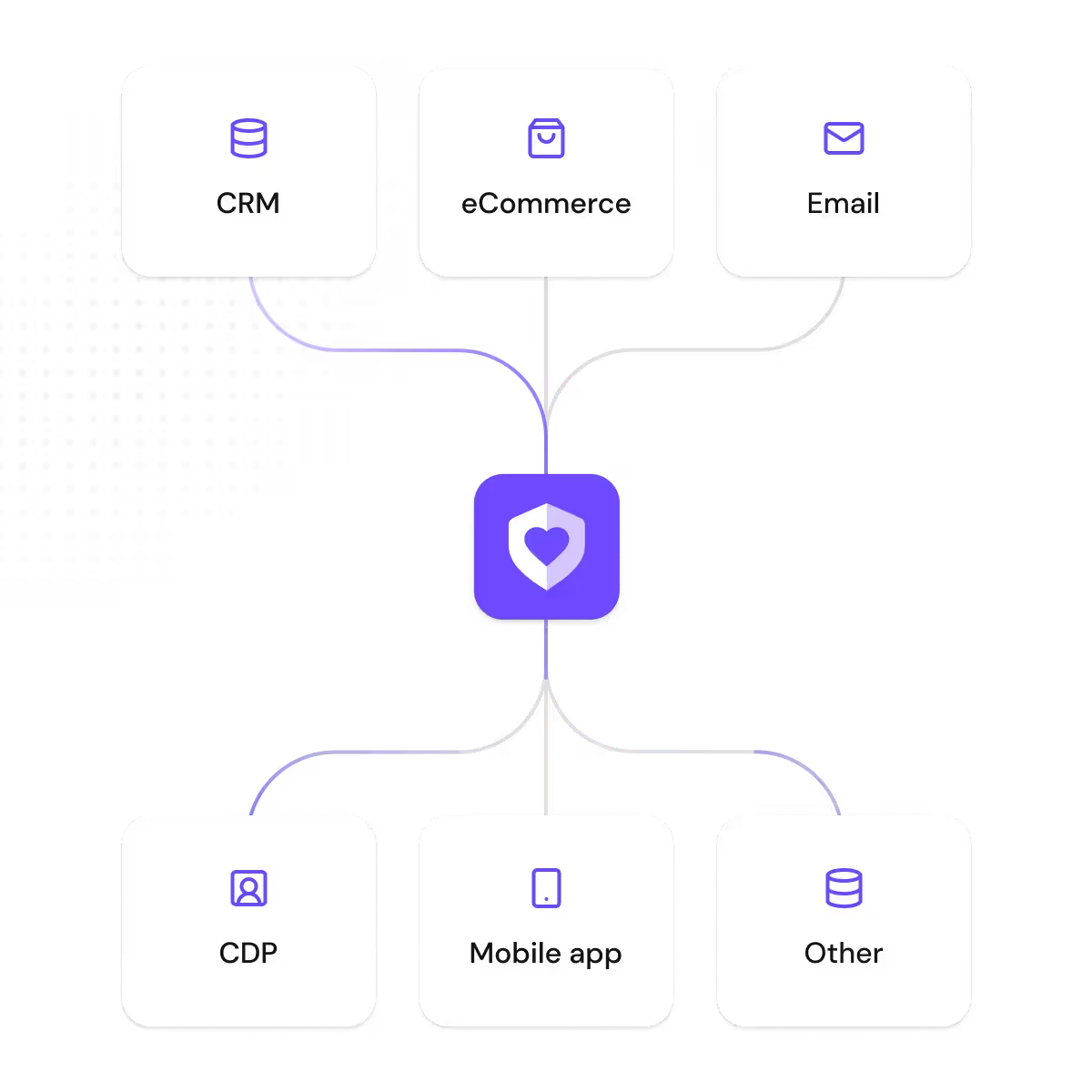
The software should integrate seamlessly with your existing tech stack, including CRM, eCommerce platforms, POS, and mobile apps. An API-first or headless architecture is ideal for enterprises, as it lets you do custom integrations and embed loyalty functionality into any system or customer touchpoint. Your loyalty program data flows across all channels and departments (marketing, sales, customer service, you name it) smoothly.
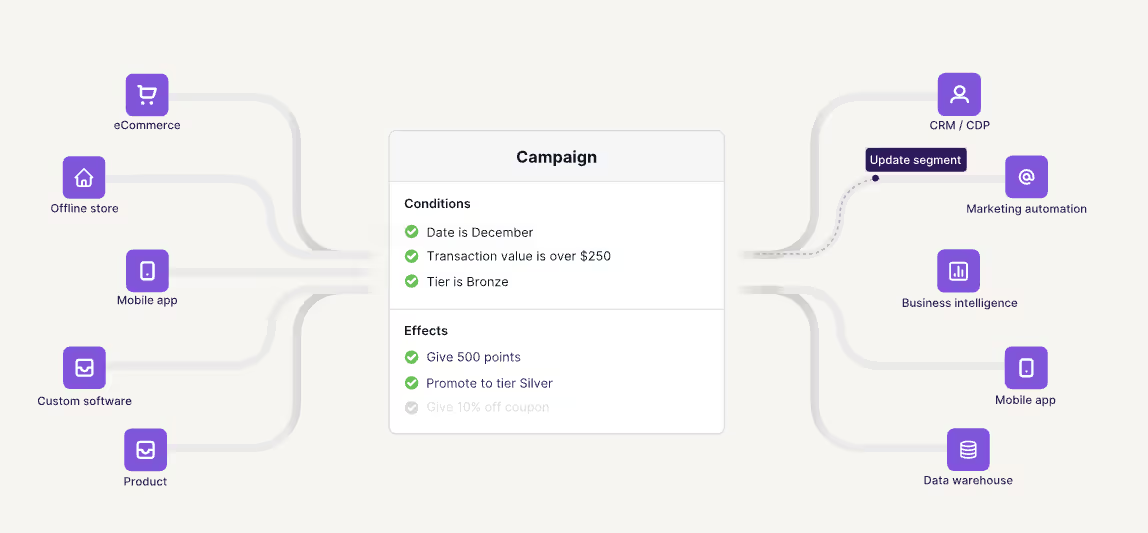
Enterprise programs often involve millions of customers and transactions. The platform must be proven to handle high volumes with real-time processing (updating points balances instantly) and no performance lags. Cloud-based, scalable infrastructure and support for global user bases (multiple currencies, languages) are important for multinational companies.
Advanced customer loyalty platforms enable personalization, such as the ability to send targeted offers or rewards based on customer segments, purchase history, or behavior. Look for features such as customer segmentation and campaign rules that tailor rewards to specific groups. Personalization makes each customer feel recognized (for example, offering birthday rewards or product recommendations based on past purchases).
💡 Find out more about the loyalty segmentation using an extensive step-by-step guide.
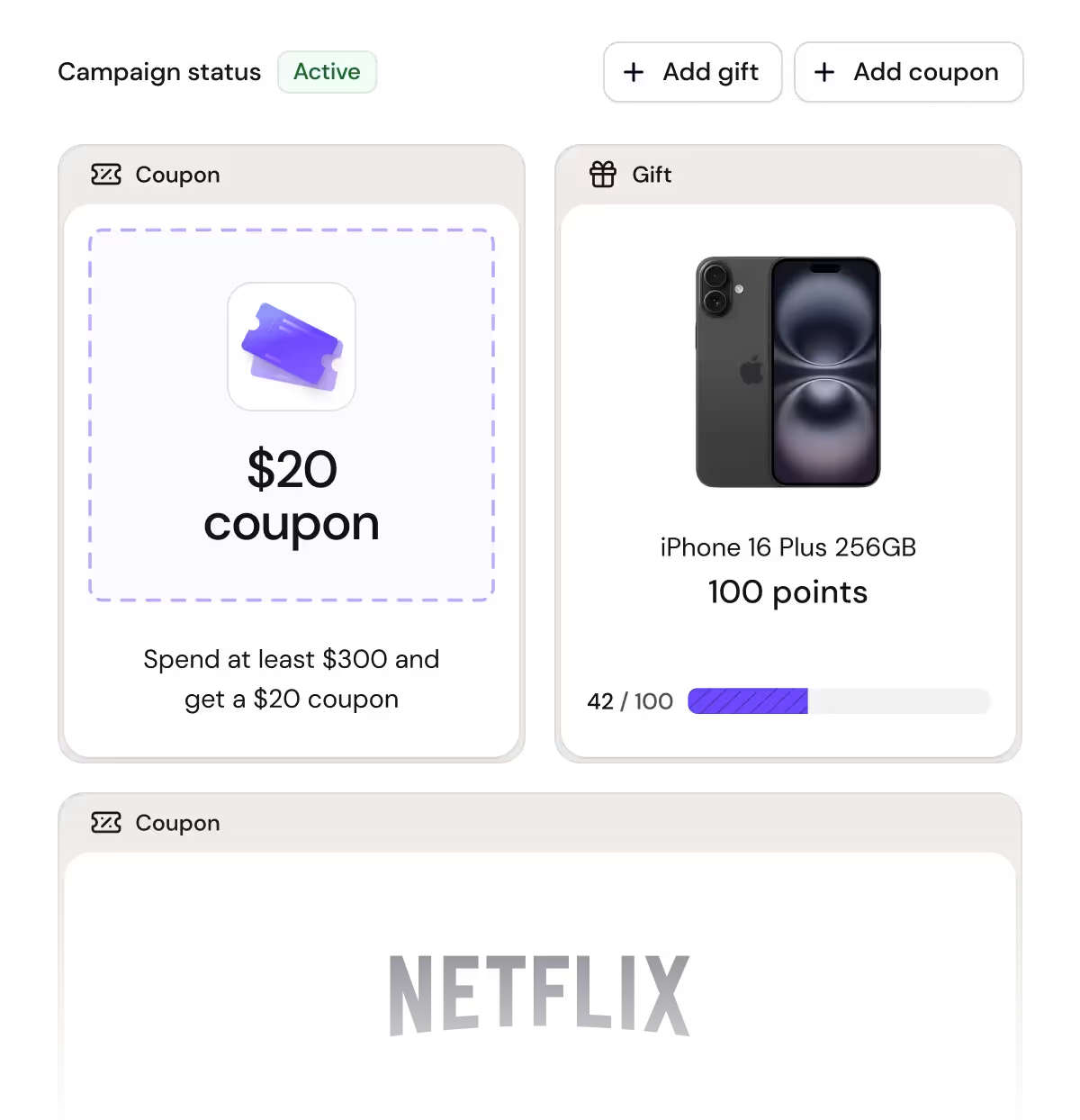
To keep customers engaged beyond simple transactions, many enterprise solutions include gamification features. These can be things like achievement badges, challenges, progress bars, or leaderboards for customers. Gamification turns loyalty into a fun, ongoing experience rather than a static program, which can significantly increase engagement rates.
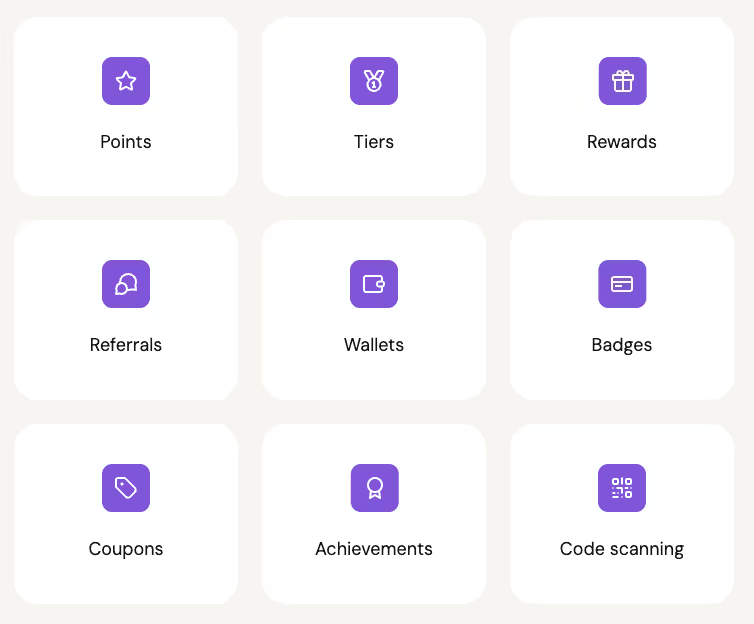
Gamification in Open Loyalty. Source: https://www.openloyalty.io/product/customer-loyalty-analytics
Enterprises need loyalty programs that work across all channels, including in-store, web, mobile app, and social media. A strong platform will support omnichannel earning and redemption (e.g., earning points in-store and spending them in the app) with real-time synchronization.
Omnichannel loyalty programs enable customers to earn and redeem rewards seamlessly across all touchpoints, ensuring a unified and consistent experience regardless of where they interact with your brand.
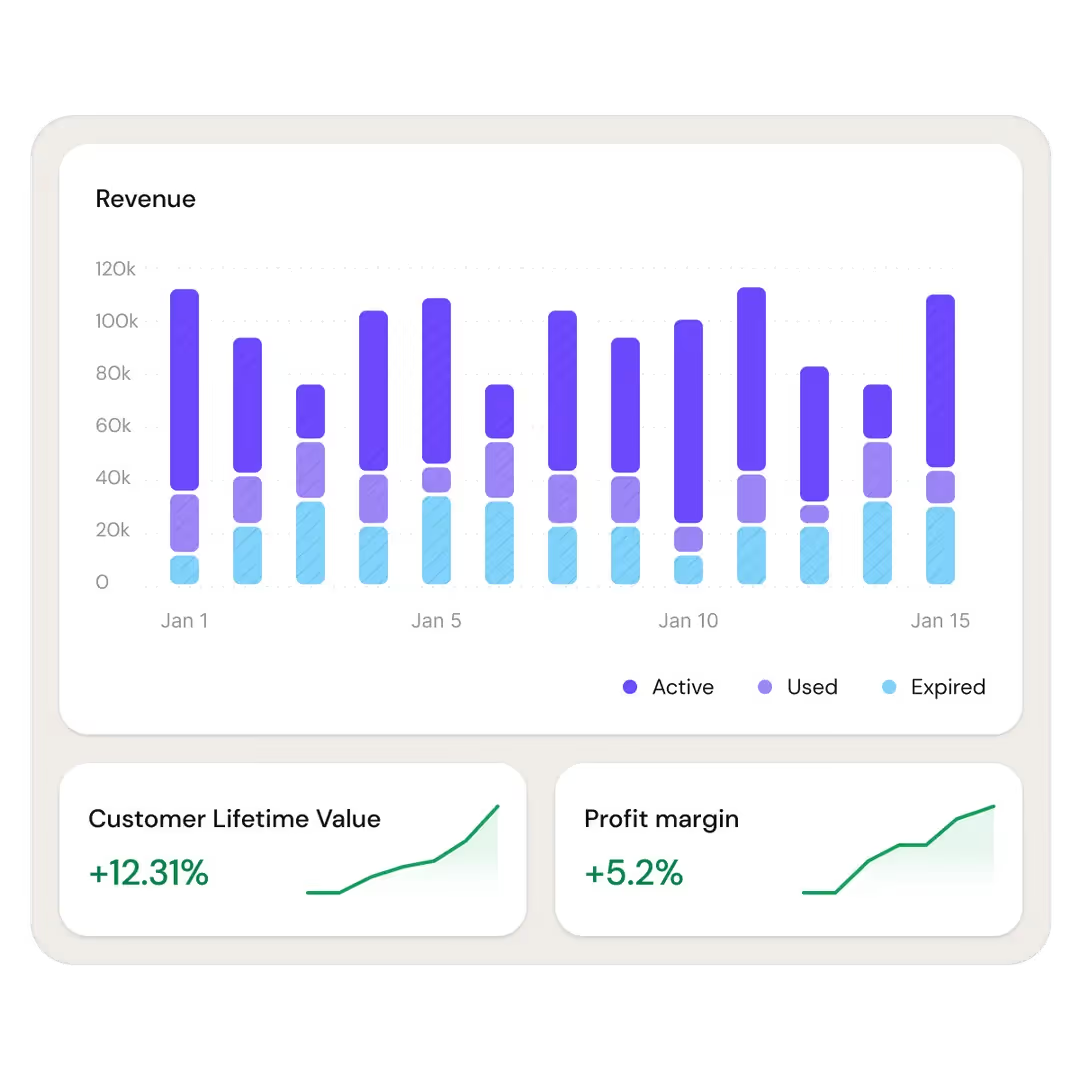
Data is a massive advantage of loyalty programs.
Look for robust reporting dashboards and analytics tools that track metrics like participation rates, points liability, redemption rates, repeat purchase frequency, and customer lifetime value uplift. Collecting and analyzing performance data is crucial for measuring the effectiveness of loyalty initiatives and making informed improvements. These insights let you measure ROI and continually optimize the program.
Enterprise platforms often provide customizable reports and AI-driven insights (for example, identifying at-risk customers or predicting next best offer).
With potentially millions of customer profiles and transactions, enterprise loyalty software must adhere to high security standards. Features such as encryption, role-based access control, audit logs, and compliance with regulations (e.g., GDPR, CCPA) are critical.
Enterprises should ensure that the vendor has relevant certifications (e.g., ISO, SOC 2) to protect customer data.
Finally, enterprises benefit from software that can be customized or extended to fit unique requirements, such as flexible reward rules (e.g., custom point formulas), the ability to create bespoke reward types (experiential rewards, partner rewards), or even white-labeling the member portal/app.
Some solutions offer modular architectures or marketplaces for add-ons that enhance core functionality.
💡 Read more on the personalization strategy in loyalty programs.
Browse the side-by-side overview of how the top loyalty solutions differ. Below is a high-level comparison of the leading rewards program software for enterprises, highlighting their focus and features.
A leading loyalty platform is a comprehensive, data-driven solution designed for e-commerce brands to boost customer engagement, repeat purchases, and brand loyalty, featuring deep integration with major online retail platforms and advanced analytics.
Review the top customer loyalty program software platforms suitable for enterprise-scale deployments. These selections reflect a mix of industry-leading providers and innovative challengers, each with strengths that cater to different enterprise needs.
Open Loyalty is a modern customer loyalty platform purpose-built for enterprises that demand maximum flexibility, ownership, and innovation capability.
Unlike most platforms that package loyalty into rigid templates, Open Loyalty takes a headless, API-first approach, providing a full suite of modular building blocks (APIs, SDKs, UI components) so brands can craft their own loyalty infrastructure from the ground up.
Open Loyalty acts as the foundation (not the ceiling) of your loyalty strategy when launching a global, multi-brand architecture or integrating loyalty into custom digital products.
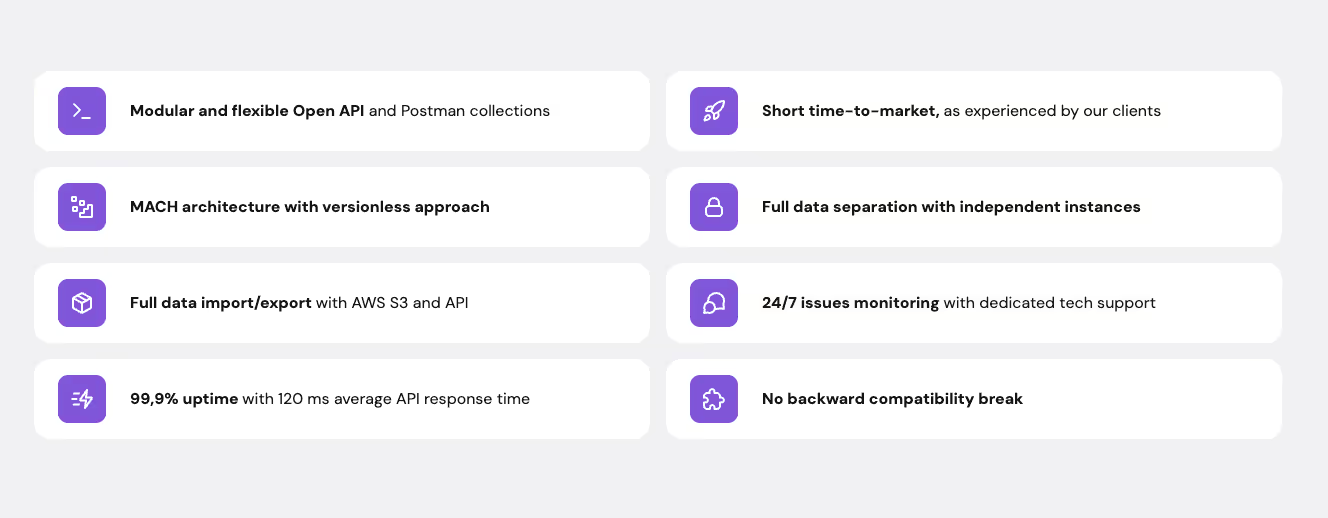
Open Loyalty is trusted by over 100 brands in 45+ countries, including tier-one retailers, banks, telcos, and B2B providers. It can be well-suited to brands with loyalty maturity or future-forward plans, so those who view loyalty not as a plug-in, but as a strategic capability.
Open Loyalty supports enterprises that prefer to shape their own loyalty architecture rather than adapt to rigid templates. It works well for brands that operate across channels, regions, or product lines and want to manage loyalty features within their existing digital ecosystem. Everyday use cases include multi-brand programs, embedded loyalty in mobile apps, gamified engagement strategies, and integrations with custom-built commerce platforms or internal systems.
The platform suits organizations that have development resources and a clear direction for how loyalty should work across touchpoints. Teams can freely design custom rules, launch new program elements as needed, and connect loyalty data with marketing tools, analytics stacks, or personalization engines. Open Loyalty provides the structure to support that flexibility without introducing unnecessary technical overhead.
Retail, eCommerce, QSR, financial services, and subscription-based businesses often adopt Open Loyalty to integrate loyalty programs with existing workflows, user journeys, or service infrastructures. Deployment options include SaaS, private cloud, and on-premise, allowing companies to meet internal requirements around data, access, or governance.
For enterprise teams building loyalty programs as part of a broader product or service experience, Open Loyalty offers a framework that adapts to their structure, and not the other way around. It supports teams who want to experiment, scale, and refine their loyalty approach with complete control over how and where the system is used.
👉 Read more opinions on Open Loyalty on G2 or Capterra.
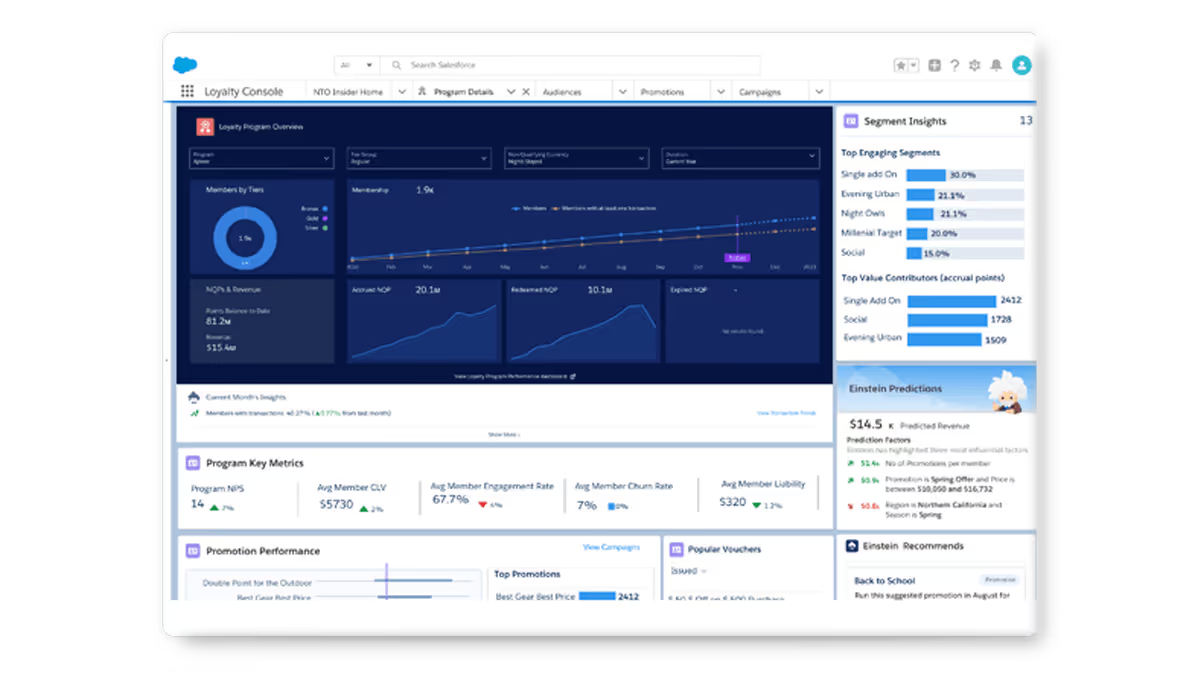
Salesforce Loyalty Management is part of the broader Salesforce Customer 360 suite, providing loyalty capabilities that integrate seamlessly within its ecosystem. It's suited for companies already using Salesforce for customer relationship management, marketing, or commerce, and seeking to extend those systems with integrated loyalty functionality.
It may be a fit for organizations that already rely on Salesforce for customer data and engagement and are looking to expand into loyalty without adopting a separate platform. Relevant for retail, telecom, and financial services, where Salesforce adoption is common.
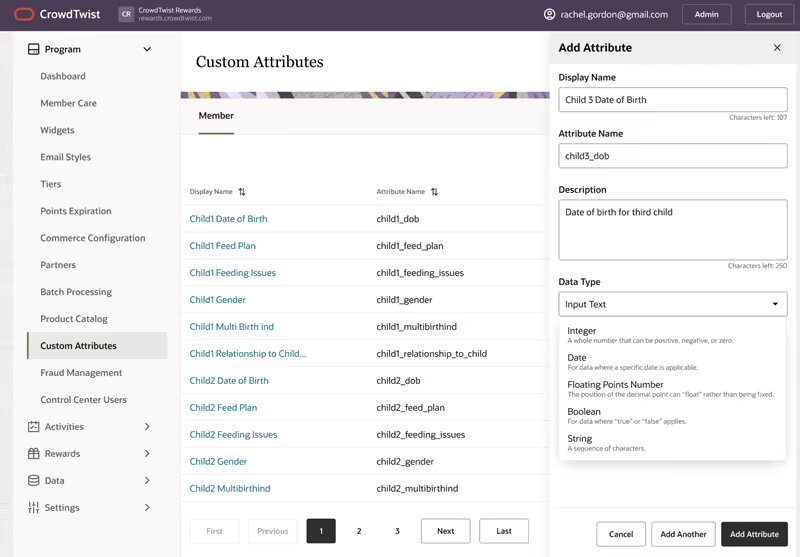
Oracle CrowdTwist is a loyalty solution within Oracle's Customer Experience (CX) suite. Designed for large-scale organizations, including those operating coalition loyalty programs where multiple brands contribute to and share a common loyalty currency.
It's a fit for large-scale organizations already using Oracle's CX that prioritize consistency, program maturity, and integrations. It works well for brands managing coalition programs, multi-partner models, or multi-region operations where structure and scale are the main priorities.
That said, companies looking for more agility, custom logic, or modular deployment may find the platform less accommodating. Brands building loyalty into a broader product experience or aiming for high levels of technical control may lean toward platforms with more open architecture and development flexibility.
Yotpo Loyalty & Referrals is part of Yotpo's broader eCommerce marketing suite, which includes solutions for reviews, user-generated content (UGC), and SMS marketing. Its loyalty module is designed for brands aiming to increase repeat purchase behavior and customer advocacy across online and omnichannel environments.
May be a fit for retailers, direct-to-consumer (D2C) brands, and eCommerce businesses seeking an all-in-one platform. Enterprises with both online and physical stores can benefit from its capabilities, but should verify POS integration needs. For organizations looking to tie loyalty into broader marketing efforts without building a program from scratch, this company provides a marketing-centric, relatively low-lift option.
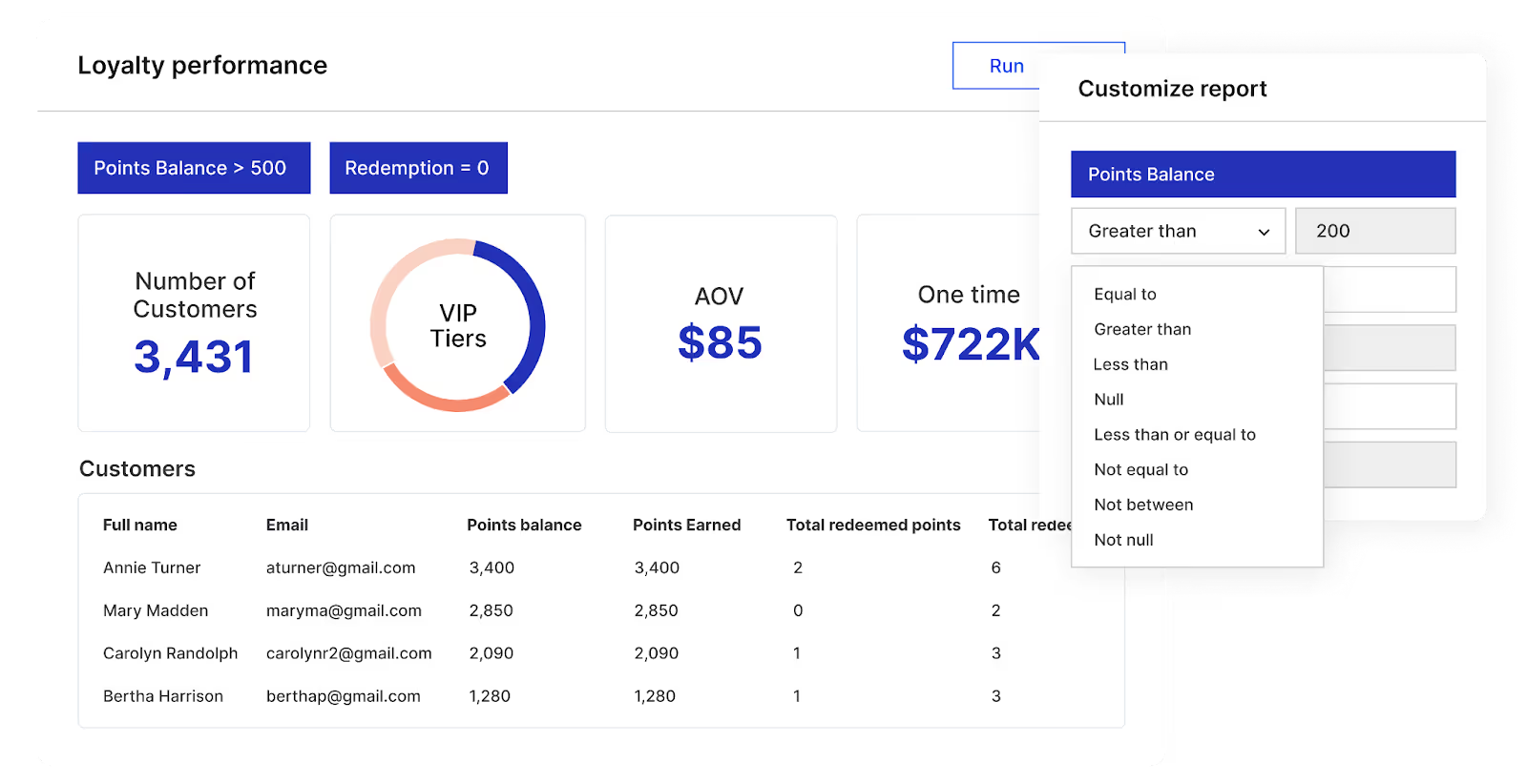
Antavo is a loyalty management platform designed for brands running point-based, tiered, or engagement-focused programs. It supports both transactional and non-transactional use cases, including rewards for behaviors (referrals or content interactions). The platform features campaign tools, reporting capabilities, and integrations with common commerce and marketing systems.
May be a fit for retail, fashion, or lifestyle brands seeking to support loyalty across channels and customer actions. It can be used to run classic points programs or broader engagement models tied to brand interaction. The platform is generally suited for companies seeking prebuilt modules with some customization flexibility, along with access to integration options for broader tech alignment.
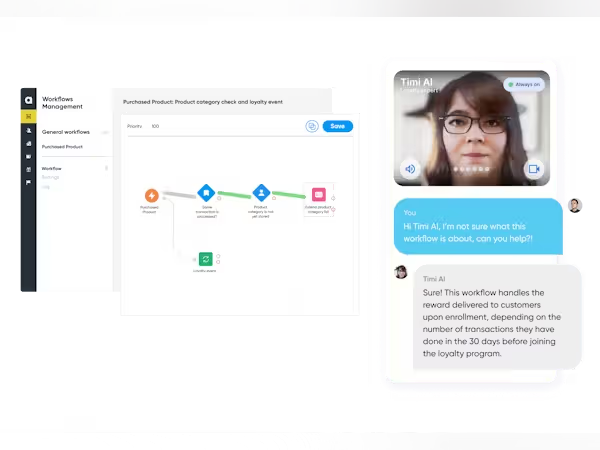
Talon.One is an API-first platform designed to manage loyalty programs, promotions, referrals, and coupons within a unified system. Its strength lies in its flexible rule engine, which allows enterprises to design highly customized incentive strategies without needing multiple disconnected tools.
Works fine for enterprises that require deep customization and have in-house technical teams. It's often adopted by companies in sectors like fintech, gaming, and digital commerce that need precise control over promotional and loyalty logic. Organizations looking to consolidate multiple incentive tools into a single, programmable engine may also benefit.
However, due to its technical nature, this platform is best used by businesses willing to invest in setup and ongoing development to fully leverage its capabilities.
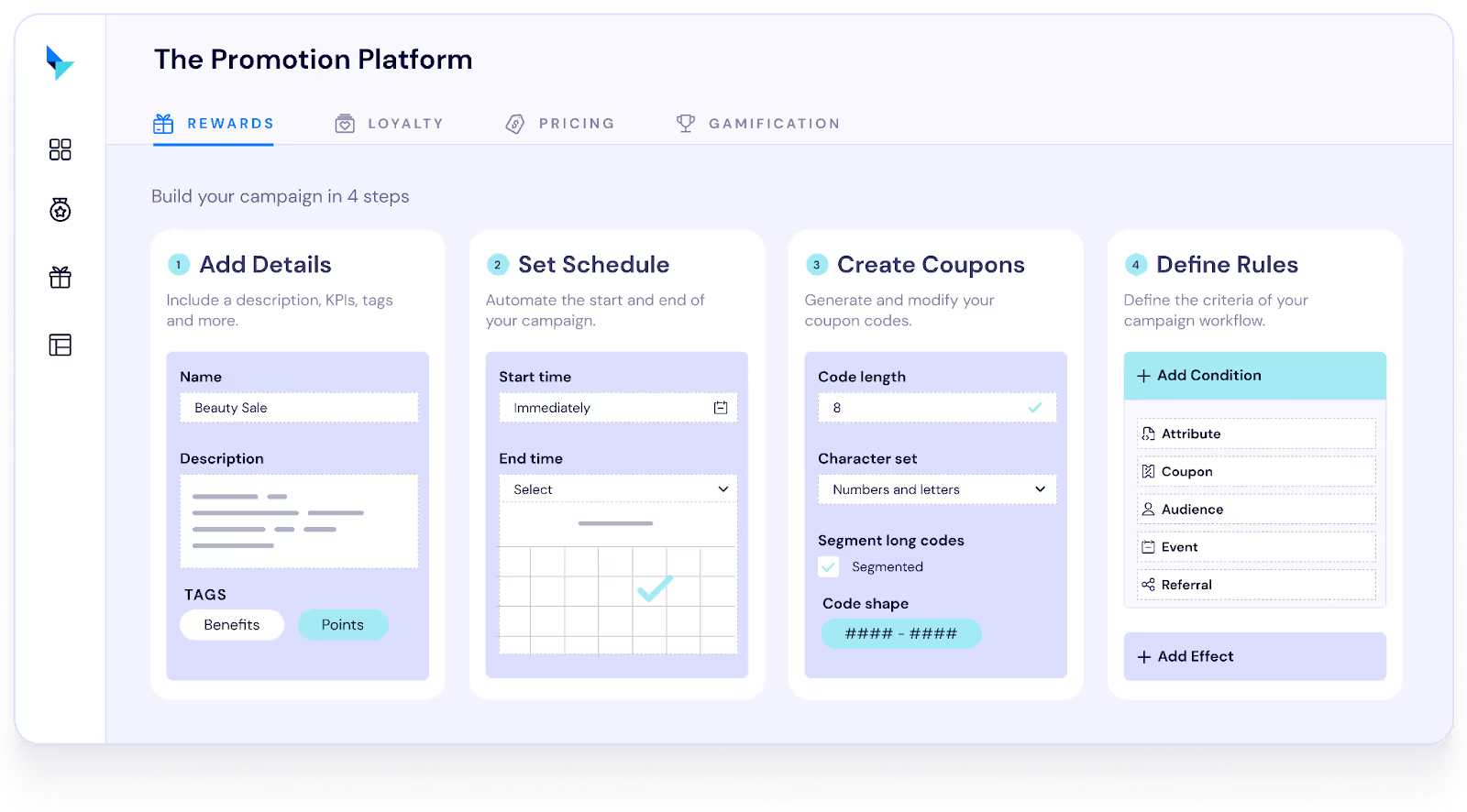
Smile.io is a popular loyalty platform known for its ease of use and quick deployment in the eCommerce space. It offers a clean, user-friendly approach to launching loyalty programs centered around points, referrals, and VIP tiers, making it a go-to solution for many online brands looking to get started without significant development effort.
Well-suited for small to mid-sized eCommerce businesses, meaning those on Shopify or similar platforms. It's often used by brands looking to quickly validate the impact of loyalty on customer retention and repeat purchases. Brick-and-click retailers can connect this platform to compatible POS systems.
While not as feature-rich or customizable as some enterprise-level platforms, it's a solid choice for organizations seeking a straightforward loyalty program or for larger companies running pilot programs in select markets or brands.
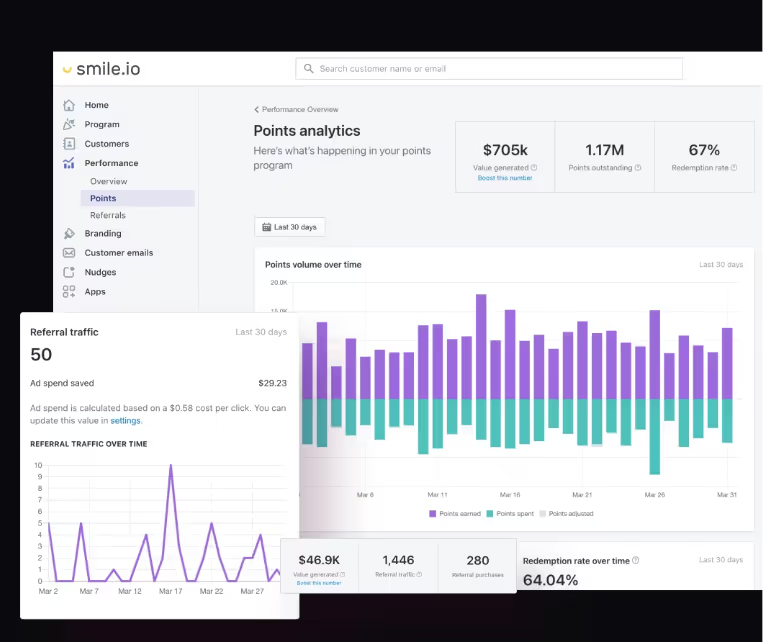
Annex Cloud is an enterprise-grade customer marketing platform that offers a comprehensive loyalty experience solution alongside referral marketing and user-generated content (UGC) capabilities.
Particularly relevant for brands in beauty or consumer goods, where customer advocacy has a central role and established systems like Salesforce or SAP are already in place. The platform supports multi-region deployments, advanced reward structures, and tight integrations across marketing and commerce systems.
Still, the rollout process can be more structured and service-led, which may not align with companies looking for quicker launches, modular control, or in-house program ownership.
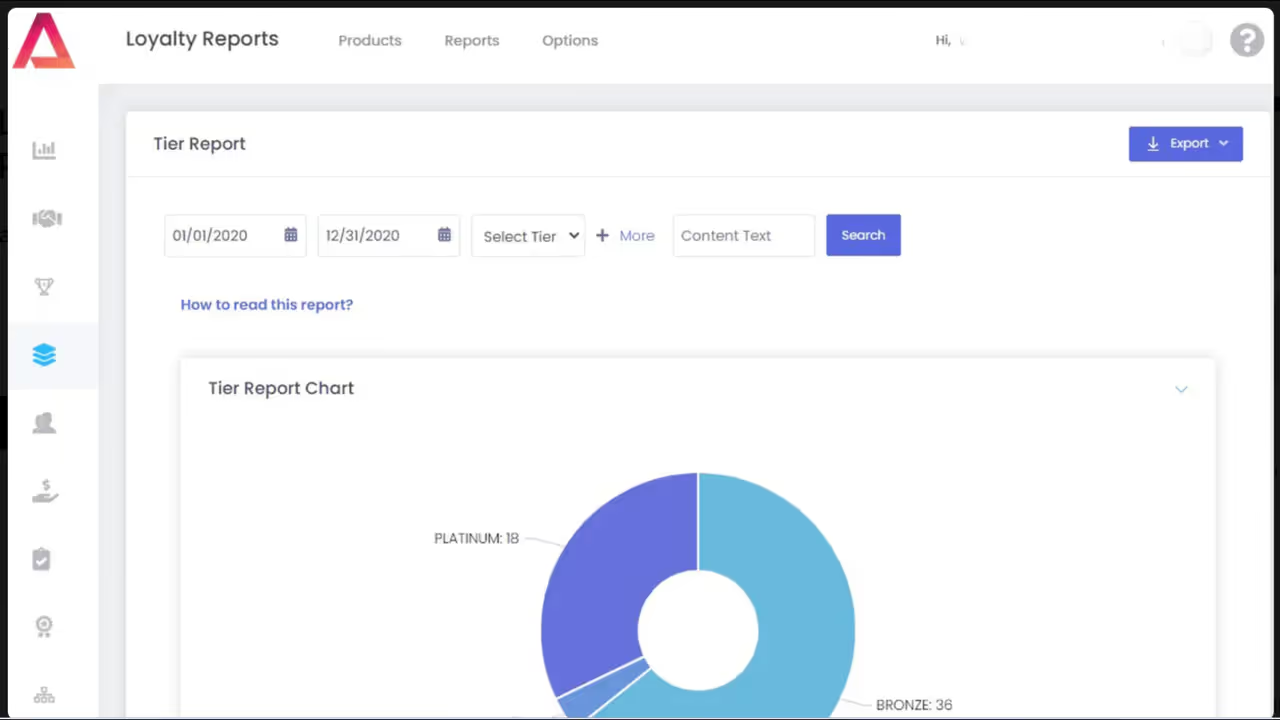
Square Loyalty is a built-in rewards program designed for businesses using platform's point-of-sale system. While it isn't positioned as a traditional enterprise loyalty platform, it's widely adopted by multi-location small companies and growing chains. Known for its simplicity and seamless integration, it offers a frictionless path to launching customer rewards directly at the point of purchase.
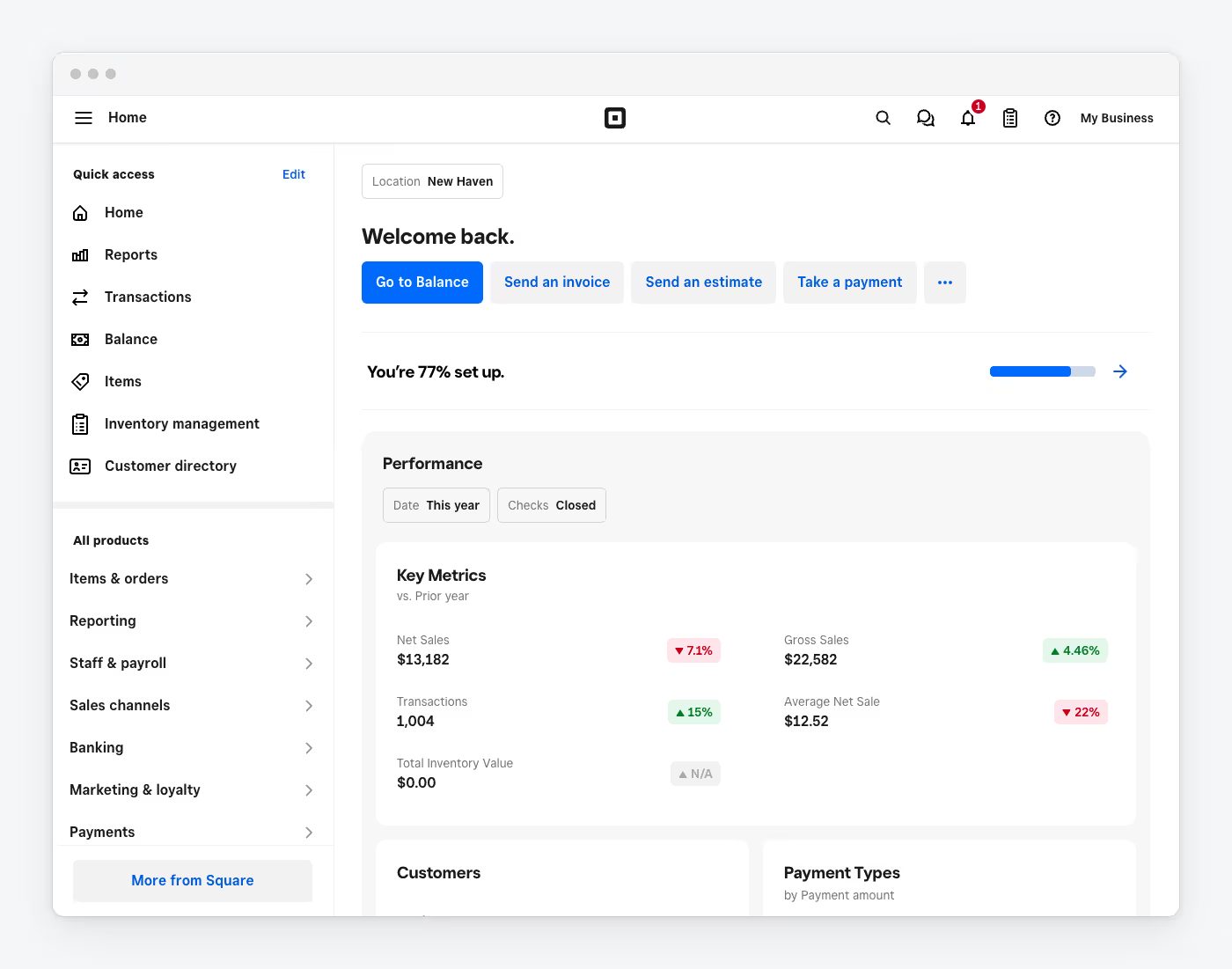
Best suited for small to mid-sized retailers, restaurants, and service-based businesses already using the its ecosystem. Examples include fast-casual restaurant chains, fitness studios, or independent retail stores. Even some enterprise brands test it at the store level due to its ease of setup.
Yet, larger organizations often require more advanced capabilities and system integrations beyond what platform offers.
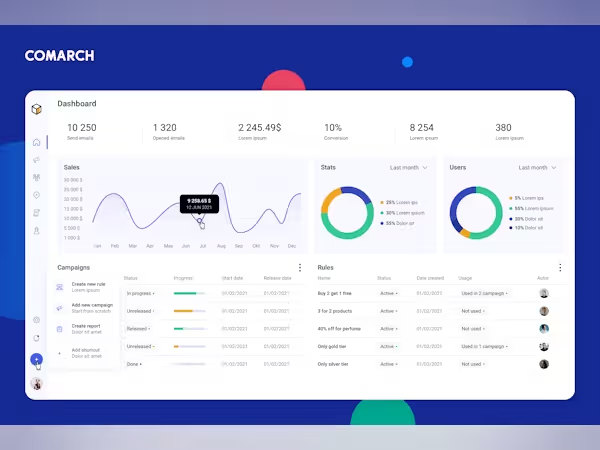
Comarch Loyalty Management is a mature, enterprise-grade platform developed by Comarch, a global IT company with decades of experience in complex system implementations. The platform is known for its advanced functionality in environments requiring regulatory compliance, global scale, and legacy system replacement.
Companies with mature loyalty operations and complex infrastructure needs typically select this platform. The platform supports detailed program logic, regional customization, and long-standing governance models, making it a solid option for organizations replacing or modernizing legacy tools.
However, teams exploring newer loyalty formats or seeking faster deployment cycles may find this platform's setup more rigid. Brands focused on flexibility, experimentation, or frequent iteration may prefer platforms with lighter architecture and broader developer control.
A well-executed customer loyalty software, supported by the right software, can deliver significant benefits for enterprise businesses. Take a look at all the benefits that await you.
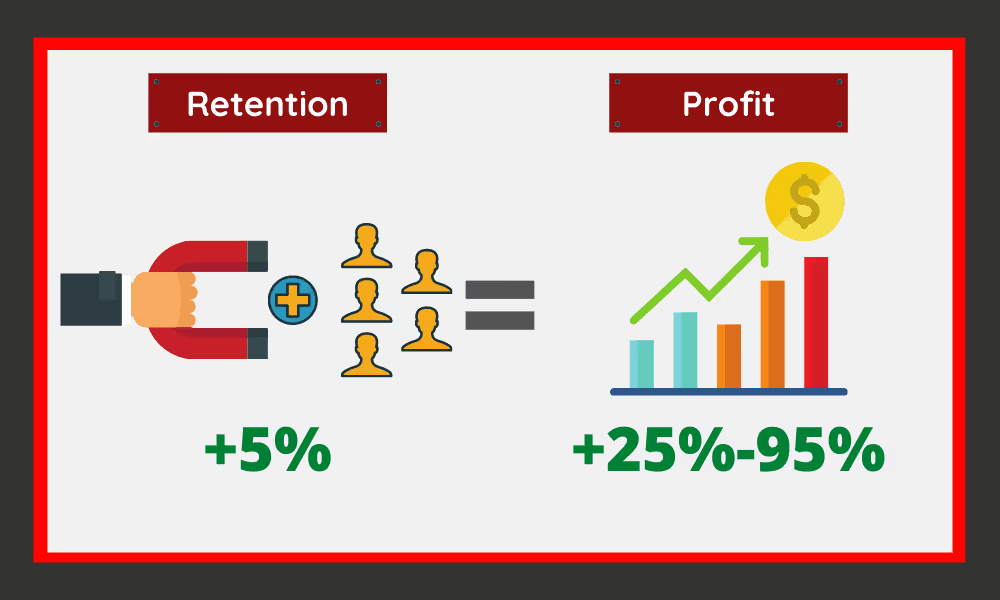
Rewarding customers encourages them to stick around. Loyal customers tend to make more frequent purchases and spend more per transaction. In fact, fostering even a slight increase in retention can yield outsized profit gains.
Research by Bain & Company indicates that a 5% increase in retention can lead to a 25% or more increase in profits. By keeping your best customers coming back, loyalty programs boost their lifetime value to the business.
Loyalty programs provide continuous touchpoints with customers beyond transactions. Through point accrual, rewards, tiers, and special promotions, customers have more reasons to engage with your brand.
Gamified challenges or referral incentives, for example, can spur interactions between purchases. Such an ongoing engagement deepens the customer's relationship with the brand, making them less likely to churn.
💡 How does gamification increase engagement? Explore top engagement strategies explained by experts.
A good rewards program makes customers feel appreciated. Exclusive perks (like early access to sales, free upgrades, and birthday gifts) add VIP-style personalization to the customer experience.
When customers feel recognized and rewarded, their overall satisfaction rises. In turn, happy customers are more likely to become brand advocates, leave positive reviews, and refer others.
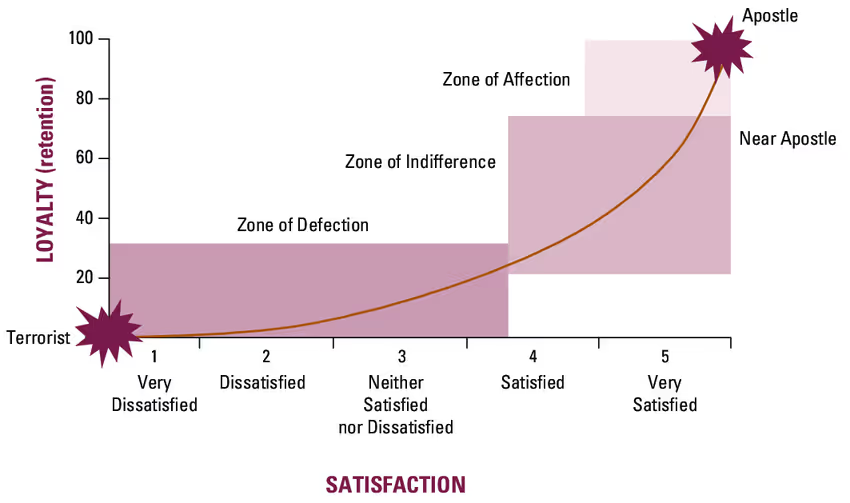
Every swipe of a loyalty card or app scan is a data point. Over time, the program yields a wealth of information on purchase patterns, favorite products, redemption preferences, etc.
Enterprises can mine this data for actionable insights, for instance, identifying which promotions drive the most repeat purchases or which customer segment is most profitable. These insights inform smarter marketing campaigns and product development. Loyalty software often visualizes these trends through dashboards or integrates with BI tools.
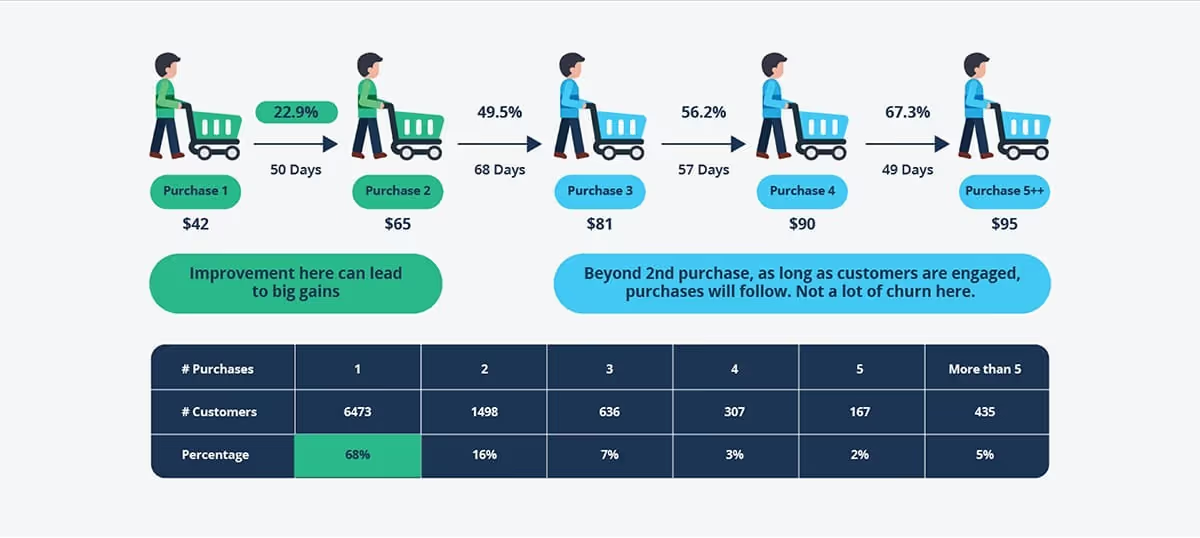
In many sectors, customers now expect some form of loyalty or rewards program. Having a compelling program can differentiate your brand. It builds brand affinity, and customers feel a sense of membership and connection.
It's a must in commoditized industries (like airlines or hotels) where a strong customer loyalty software (miles, points) can sway a customer's choice. Enterprises that invest in loyalty are investing in their existing customers with success, which often yields a higher ROI than expensive customer acquisition efforts.
💡 Read more on customer activation and how to enhance brand stickiness among loyalty program members.
Are rewards programs profitable? Yes, when designed around measurable behaviors and monitored regularly. The increase in repeat purchases and customer lifetime value often offsets the cost of rewards distributed.
Incentive Solutions found that adding a loyalty program to an e-commerce platform can increase average order quantity by 319%. Harvard Business Review reports that loyalty leaders grow revenue about 2.5x faster than their competitors. Bond research adds that 79% of consumers say loyalty programs make them more likely to continue doing business with a brand.
When rewards are linked to the right triggers, and software supports segmentation, targeting, and performance tracking, loyalty programs shift from cost center to revenue engine.
💡 Tracking your ROI already? Read about 9 loyalty program metrics you should track (with benchmarks and use cases).
Choosing customer loyalty software for an enterprise requires clarity, alignment with business goals, and the right level of flexibility. With a growing number of platforms available, the process can feel overwhelming. The following 11 criteria offer a structured way to assess your options and make a well-grounded decision, based on capabilities, integration potential, and long-term scalability.
Match the platform to the size and complexity of your loyalty strategy. Some systems are optimized for fast setup and smaller footprints, while others are designed for managing millions of members, advanced logic, and cross-brand programs.
Consider how many touchpoints you operate, the volume of transactions, and the level of customization required. Replatforming mid-growth introduces unnecessary disruption. Build on a foundation that fits both current business needs and near-term evolution.
Start by defining the features your program cannot run without, such as tier logic, referral tracking, API access, or analytics depth. Then, identify features that would be useful but not critical.
Use these lists to evaluate each platform against your goals. Avoid getting swayed by impressive-looking features that do not align with your structure. If gamification is a core element, focus on platforms built to support it. If referrals are a primary growth lever, prioritize vendors with strong referral modules.
Loyalty programs rely heavily on how well they connect to your existing systems. Integration challenges are one of the most common sources of delays and frustration during implementation. It's important to map out where loyalty data needs to flow and confirm that the platform supports those connections.
Key areas to review include:
Most enterprise-grade platforms claim to offer integrations, but details matter. Ask vendors for architecture diagrams, API documentation, and client examples with similar systems. A well-integrated platform supports consistent customer experiences and minimizes manual work across teams.
Loyalty platforms tend to fall along a spectrum, and some are built for marketers with intuitive interfaces and preconfigured options, while others offer greater flexibility through APIs and developer tools. Understanding where your team falls helps you avoid bottlenecks after launch.
Consider the following:
Assess your team's internal resources, both technical and operational. A system may be powerful on paper, but only delivers value if your team can manage it. Choose a platform that fits your current operating capacity while leaving room for program growth.
The upfront subscription fee only tells part of the story. A loyalty platform's long-term financial impact includes a range of additional costs and commitments.
Before making a decision, assess the full picture across these areas:
A well-selected platform should deliver long-term impact without draining internal resources. Build a cost forecast early in your evaluation process and revisit it as your shortlist narrows.
Choosing a customer loyalty software includes evaluating the team behind the product. A vendor's track record, responsiveness, and level of involvement can shape the long-term success of your program. Areas to investigate include:
A long-term partner should demonstrate stability, technical competence, and ongoing commitment to client outcomes. Look for signs of proactive support and collaboration throughout the evaluation process.
Enterprise loyalty programs handle sensitive data across multiple systems and regions. A thorough security review helps protect customer information and ensures the platform can operate within your legal and compliance framework.
Areas to confirm include authentication and access controls, encryption and data standards, data ownership and portability, and other industry-specific compliance. For banking, healthcare, or telecom, confirm that the platform meets any additional regulatory requirements or can accommodate specific controls as part of the implementation.
Security and compliance reviews help safeguard customer trust and reduce internal risk. Vendors should be transparent and well-documented in how they address these areas.
Enterprise loyalty decisions benefit from a formal evaluation process. A structured approach helps surface differences between platforms that may not be obvious in early demos or marketing materials.
Consider the following steps:
Don't be afraid to ask the vendors tough questions during this process, and even request to speak to one of their similar clients as a reference. Choosing a loyalty platform is a big decision, so due diligence is of the utmost importance. Take the time to explore options, request demos, ask questions, and even create and send out RFPs to the best providers to really compare their offerings and support levels.
💡 Find out how to write an effective loyalty program RFP.
Customer loyalty software should support your current plans and give room to grow as strategy evolves. Even if certain features aren't needed at the moment, they might become relevant within the next few years. Consider how well the platform can adapt to future needs such as mobile-first experiences, personalization and AI tools, support for emerging models, and ongoing development and feature releases.
Choosing a platform with a clear development strategy helps reduce the risk of early obsolescence. Vendors that invest in continuous improvement are more likely to grow alongside your program.
Platform functionality matters, but so does the experience it creates for your members. Before committing, explore how the system feels from the customer side. Most vendors offer demo portals or have clients with public-facing programs you can explore.
Take time to enroll in a sample program. Check how intuitive the signup process is and how long it takes to get started. If enrollment feels slow or confusing, that friction can carry over to real users. Next, go through common customer actions such as earning points, tracking balances, and using rewards. Pay attention to how rewards are delivered through coupon codes, digital wallets, or auto-application at checkout.
Remember to evaluate the mobile experience. Many customers will engage through mobile devices. Check if the platform supports a responsive web interface, mobile app integration, or digital passes stored in Apple or Google Wallet. Always look for clarity and consistency. Navigation, language, and reward visibility should feel natural. If the interface leaves you guessing, customers may feel the same.
Customer experience often determines how much value a program delivers. A system that looks good in the backend but feels disjointed to customers risks underperformance. Trialing the customer journey helps catch these gaps before they become real issues.
Once you have all the information, assemble your scorecards and make the decision. After selection, treat the relationship with the vendor as a partnership. Ensure both teams (yours and the vendor's) are aligned on a successful implementation.
Negotiate a good contract that includes everything you need (e.g., perhaps a certain number of customizations, or migration assistance, etc.). Besides, plan for a rollout schedule with the vendor's customer success team. They should help with best practices in the initial phase.
The future of loyalty programs for enterprises is defined by innovation, personalization, and seamless integration across every customer touchpoint. As customer expectations evolve, businesses must adopt loyalty program software that delivers tailored, omnichannel experiences and leverages the full potential of customer data.
Advanced loyalty solutions are increasingly powered by AI-driven insights, enabling enterprises to segment customers with precision and deliver real-time, relevant rewards that drive repeat purchases and boost customer satisfaction. The best loyalty program software will offer customizable loyalty programs, allowing brands to adapt quickly to changing market demands and customer preferences.
Seamless integration with existing systems—such as customer relationship management (CRM) platforms, marketing automation tools, and customer data platforms—is becoming essential. This unified approach ensures that loyalty initiatives are informed by a 360-degree view of the customer, enabling businesses to track program performance, optimize campaigns, and deliver consistent experiences across all channels.
As enterprises look to the future, investing in the right rewards software and loyalty management platform will be key to staying ahead of the competition. By harnessing the power of customer segmentation, actionable insights, and flexible program design, businesses can build stronger customer relationships, increase lifetime value, and achieve long-term growth through loyalty.
When carefully designed and executed, rewards programs can be very profitable for enterprises. The main value of customer loyalty software is increasing customer lifetime value and reducing churn. By encouraging an extra purchase or two per customer, or convincing them to spend a bit more each time, the program can generate incremental revenue that outweighs the cost of rewards.
However, profitability requires managing the program well:
In short, yes, rewards programs are profitable for many companies, but like any investment, they require proper strategy and ongoing management to increase customer loyalty.
Enterprise loyalty platforms should support flexible reward management, including points, tiers, and personalized rewards. Features like customer referrals, digital loyalty cards, and omnichannel tracking are commonly needed. Integration with CRM, POS, and eCommerce platforms is essential, as is support for unlimited customers, multiple channels, and data management tools. Built-in analytics help enterprises analyze customer behavior and optimize program design over time.
💡 Find out how to build loyalty program features from scratch.
Enterprise implementations typically take 3 to 6 months, depending on requirements, including configuration, integration across systems, testing, and member data migration. Many vendors support phased rollouts to help teams engage customers gradually while refining program logic.
💡 Get your copy of the loyalty program implementation checklist.
Yes. Most enterprise-grade platforms offer tools to migrate member profiles, point balances, historical redemptions, and tier qualifications. Planning the transition carefully helps preserve data integrity and continuity for repeat customers.
Many platforms support multi-brand or multi-region setups. Enterprises can manage separate programs, rules, and membership rewards for different customer groups, while centralizing data and program performance monitoring.
Loyalty software typically includes dashboards and reports to track program engagement, reward redemption, repeat customer behavior, and campaign effectiveness. For deeper insights, data can be exported to business intelligence tools to analyze trends and customer preferences across segments.
Digital loyalty cards stored in mobile wallets offer a convenient way for customers to engage across physical and digital touchpoints. They can display point balances, unlock personalized promotions, and support automated rewards triggered by purchases or location.
Yes. Enterprise platforms often support integration across multiple channels, including mobile apps, websites, and POS systems, letting you have consistent reward management and helping businesses engage customers no matter where they shop.
Offering personalized rewards based on customer preferences or purchase behavior increases engagement. Loyalty platforms that support real-time segmentation or AI-triggered campaigns can deliver offers that align with what customers care about, driving loyalty and higher spend.
Most enterprise solutions offer tools for GDPR, CCPA, and other regulatory compliance. These may include configurable data retention policies, consent management, and subject access controls. Enterprises should review data handling features and involve legal teams during vendor evaluation.
Software selection is one part of building a loyalty program. Success comes from aligning internal teams, setting clear goals, and choosing a platform that supports your direction on day one and further, as your needs shift.
Start with program objectives grounded in specific outcomes. Focus on what you want to influence. Is it purchase frequency, spend, or maybe you want to increase customer retention?
Then, work backwards from there. A clear strategy simplifies vendor comparison and helps uncover which platforms can support your structure and integration needs.
Once you narrow down your customer loyalty software options, go beyond feature checklists. Trial environments or limited-scope pilots give your team a hands-on view of workflows, customer experience, and technical fit. Use those insights to refine your rollout plan and identify any early friction points.
Choose a loyalty management platform that gives your team room to grow. Customer expectations will shift. Channels will evolve. The loyalty program should be ready to keep pace with both!

API-first loyalty and gamification engine

Get a weekly dose of actionable tips on how to build and grow gamified successful loyalty programs!