New
Loyalty Program Benchmark Report 2027: Per-industry statistcs, self-assessment, and more!
Get the report

Enterprise gamification platforms are software solutions that bring game-like mechanics, such as points, badges, levels, challenges, and leaderboards, into large-scale loyalty and engagement programs. These platforms are built for environments where loyalty runs across channels, markets, and customer segments, and where integrations with existing systems are part of everyday operations.
For enterprise loyalty teams, gamification has become a practical design choice rather than an experiment. As programs grow, many brands move beyond simple earn-and-burn models and add progression systems, milestones, and missions to keep customers active between purchases. Engagement, retention, and customer lifetime value are among the top metrics tracked by enterprise loyalty programs, especially in retail, QSR, and fashion.
There's also more pressure inside organizations.
Loyalty teams are expected to connect participation and engagement with measurable business outcomes. ROI visibility, long-term program performance, and budget discussions come up regularly at the enterprise level. Platform selection matters here. The technology has to support complex program logic, real-time mechanics, and reporting that works for commercial and finance teams.
This guide looks at 11 enterprise-ready gamification platforms used in large B2B and B2C loyalty programs. Each solution is reviewed through an enterprise lens, covering scalability, integrations, and support for advanced loyalty mechanics.
Read on to explore enterprise gamification platforms and compare them.

Enterprise and business gamification applies game mechanics and behavioral design within business environments to shape participation and motivation. It introduces elements such as points, badges, levels, challenges, narratives, and leaderboards into workflows that were never designed as games in the first place.
At the enterprise level, gamification goes far beyond basic point collection. Well-designed programs balance intrinsic drivers, such as progress, autonomy, and social recognition, with extrinsic rewards like discounts, perks, or access-based benefits. The goal here is long-term participation, not short bursts of activity.
Earlier approaches often missed the mark. Many programs relied on superficial mechanics layered onto existing processes, with little thought given to user behavior or context. That approach rarely translated into sustained engagement.
Modern enterprise gamification platforms take a different route. They rely on behavioral psychology, data, and customization to shape journeys that adapt over time. Mechanics are tied to real actions, progress is visible, and experiences evolve as customers or employees move through the program.
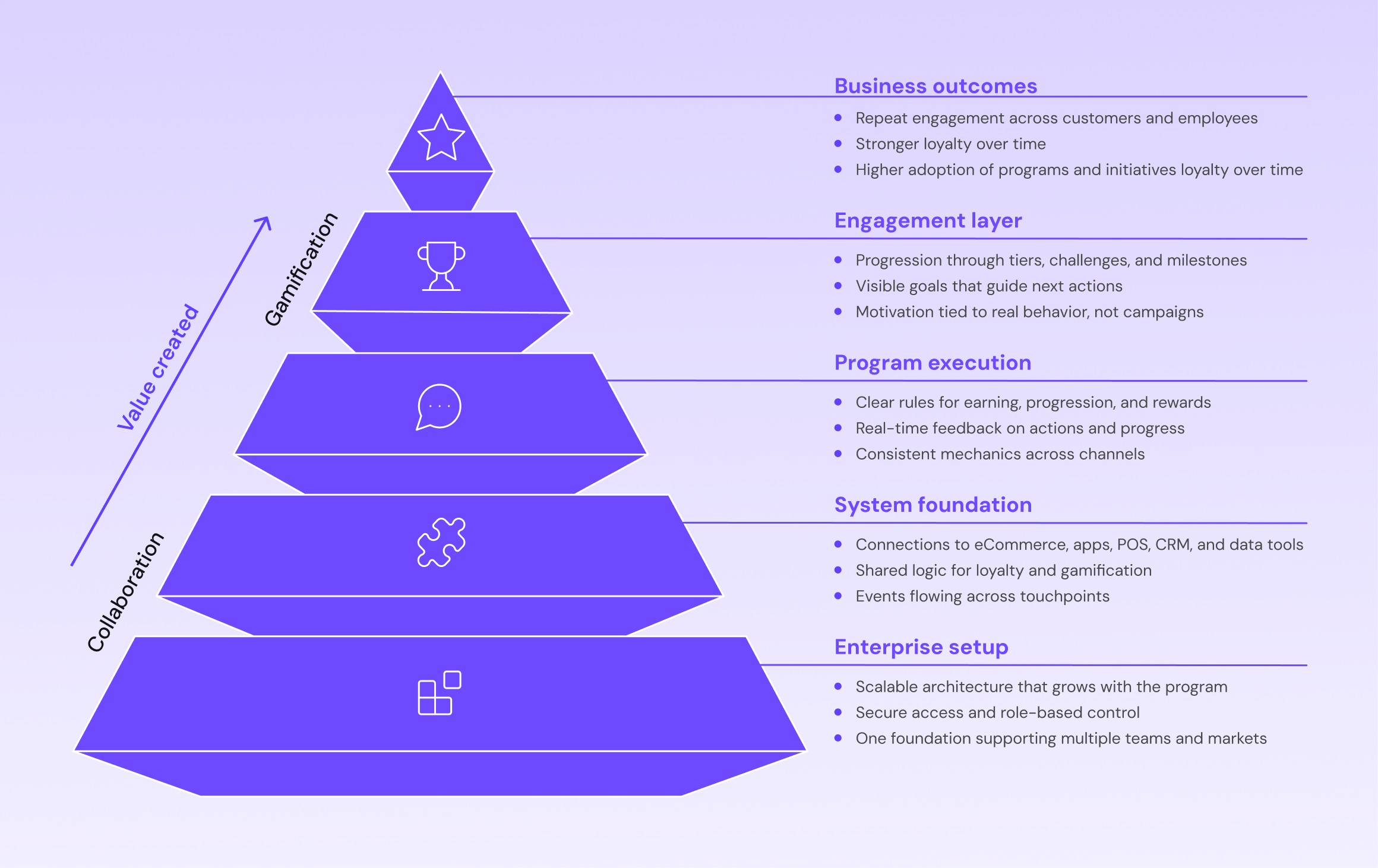
Enterprise gamification platforms support loyalty programs that operate across large customer bases, multiple systems, and long-term program lifecycles.
Common requirements include:
These requirements help distinguish enterprise gamification platforms from tools designed for limited campaigns or small-scale loyalty initiatives.
Gamification tools vary widely in scope and depth. Some are built for quick engagement tactics, while others support long-term loyalty programs running across multiple channels and large customer bases. The differences become clear once program complexity and scale increase.
| Area | Enterprise gamification | Basic gamification |
|---|---|---|
| Program scope | Designed for long-running loyalty programs across brands, regions, and channels | Usually limited to single campaigns or narrow use cases |
| Reward logic | Supports dynamic points, tier progression, multi-step challenges, and conditional rules | Focuses on simple point collection or one-off rewards |
| Connection to customer actions | Tied directly to behaviors such as purchases, app usage, referrals, or content interaction | Often loosely connected to customer activity |
| Scale | Handles large user bases and frequent events without breaking program logic | Intended for smaller audiences and lower activity volumes |
| Omnichannel support | Tracks progress and rewards across web, mobile, and in-store touchpoints | Typically limited to one channel or interface |
| Flexibility over time | Allows mechanics and rules to evolve as the program grows | Changes often require rebuilding or restarting campaigns |
| Integration | Built to connect with existing systems through APIs and webhooks | Limited integration options or standalone setup |
| Use in loyalty programs | Supports full loyalty journeys with progression, status, and long-term participation | Suited for short-term engagement or experiments |
As loyalty programs mature, these differences directly affect how much room teams have to grow and adapt. Enterprise gamification platforms support ongoing participation and program evolution, while basic tools tend to cap what teams can build once initial engagement peaks.
Enterprise gamification platforms are built around a set of mechanics that work best together. Each element helps guide behavior, show progress, or signal what comes next. Instead of relying on a single mechanic, enterprise programs usually combine several elements to keep participation steady over time.
Points usually sit at the center of a gamified loyalty program. They're awarded for specific actions and can reflect progress, status, or spending power inside the program. Virtual currencies often build on top of points, giving teams more flexibility.
One currency can track activity, while another unlocks rewards, making it easier to run different reward paths without changing how earning works.
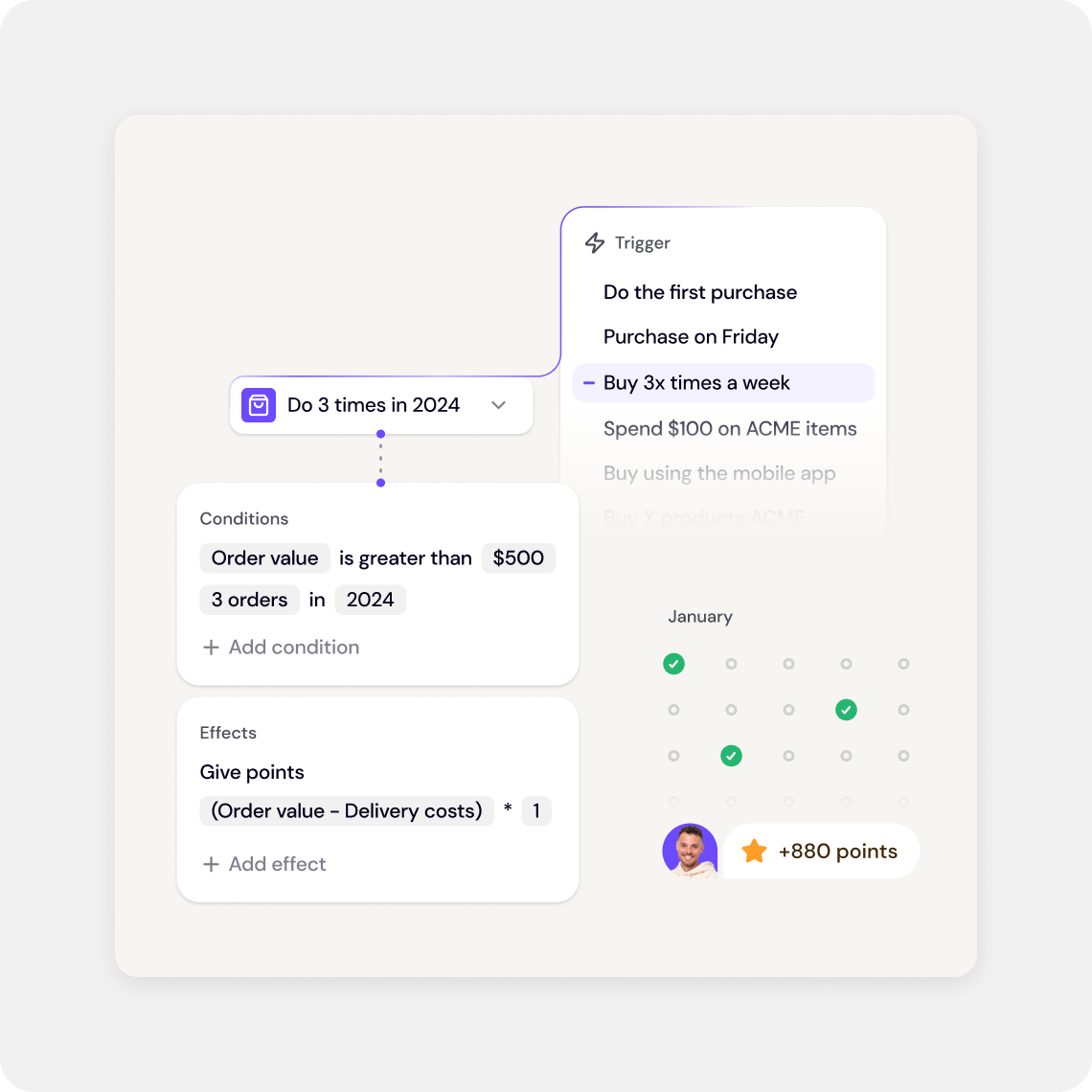
Progress indicators help people see where they are in the program and what's ahead. Tiers, levels, streaks, and progress bars make that visible without extra explanation.
In enterprise loyalty programs, progression usually reflects ongoing participation over time, not single actions, which helps keep customers coming back week after week instead of dropping off after one interaction.
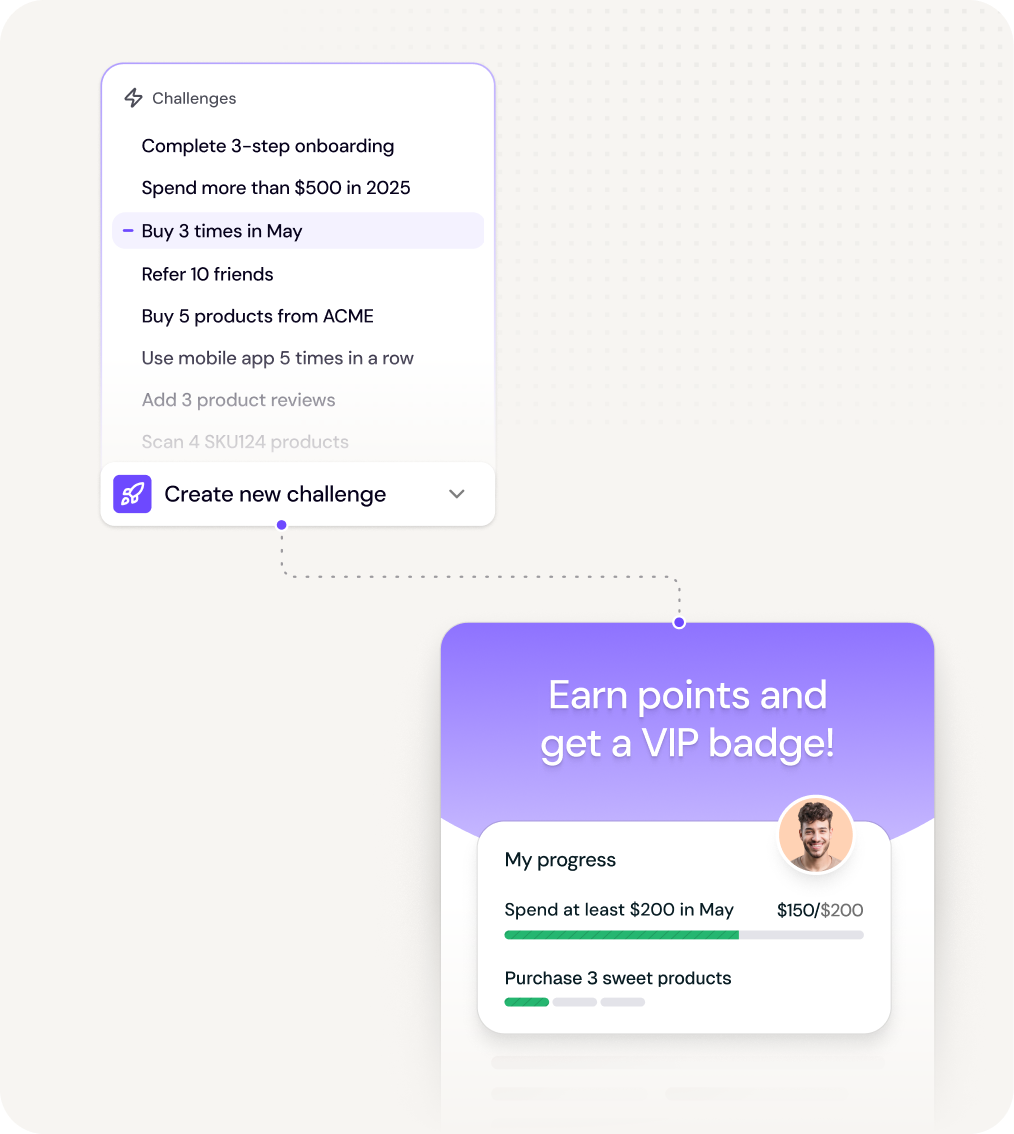
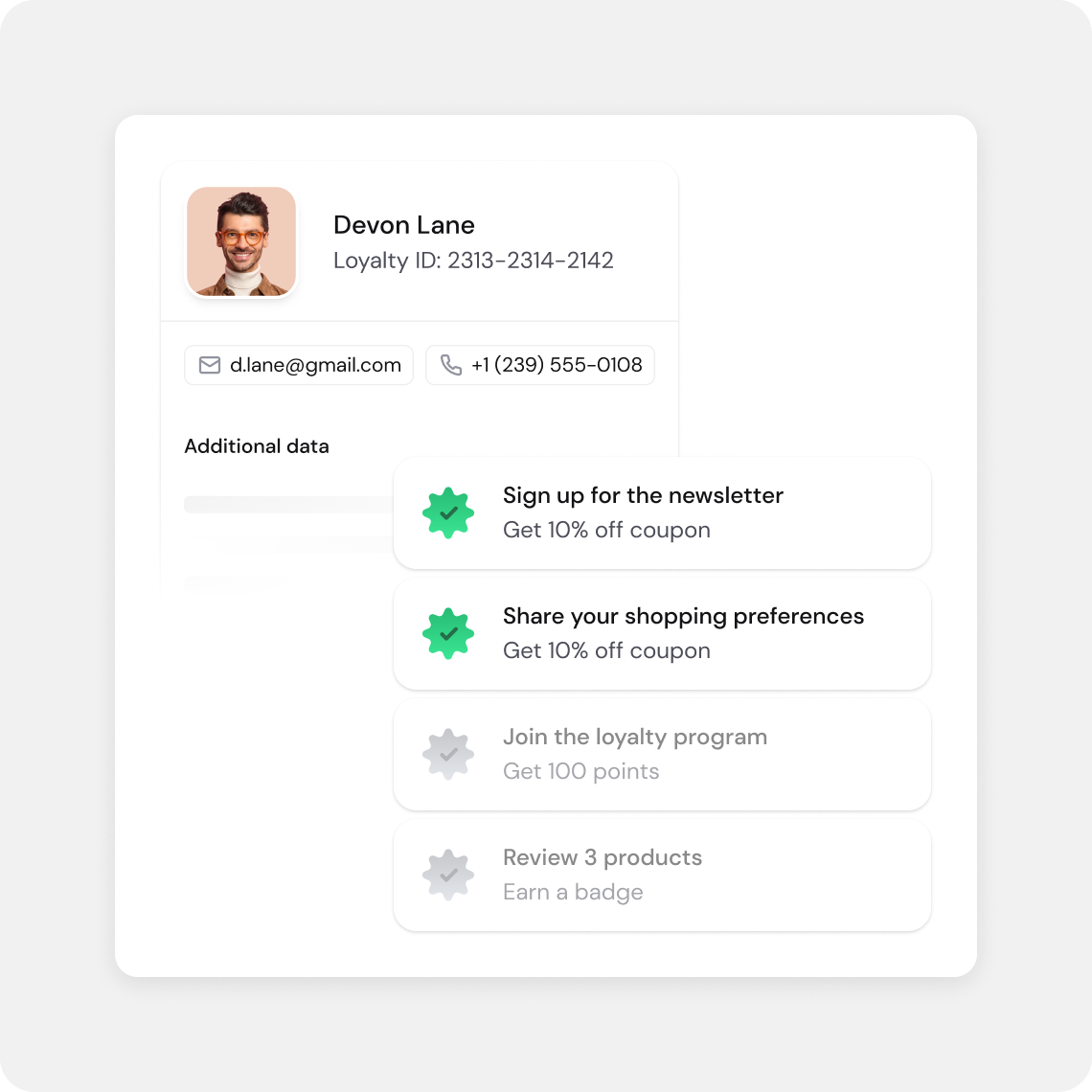
Badges highlight moments worth calling out, like completing a challenge, hitting a milestone, or unlocking a new status.
They give customers something tangible to show for their participation and often work well in programs where status, recognition, or community connection matters more than pure rewards.
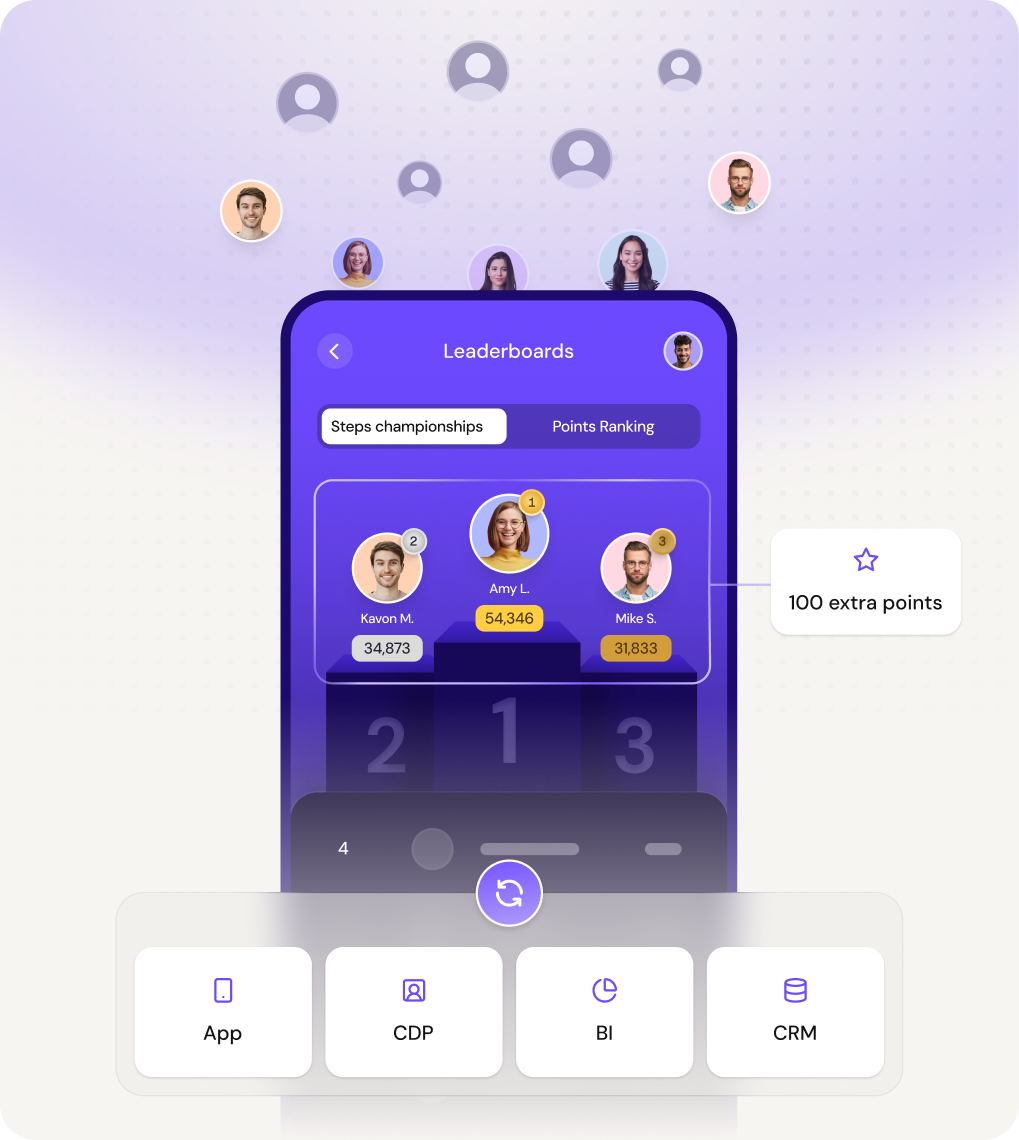
Leaderboards add a social layer to gamification by showing how progress compares within a defined group, such as a region, tier, or time window.
In enterprise programs, these rankings are often segmented to keep competition focused and avoid fatigue, so comparisons feel relevant rather than overwhelming.
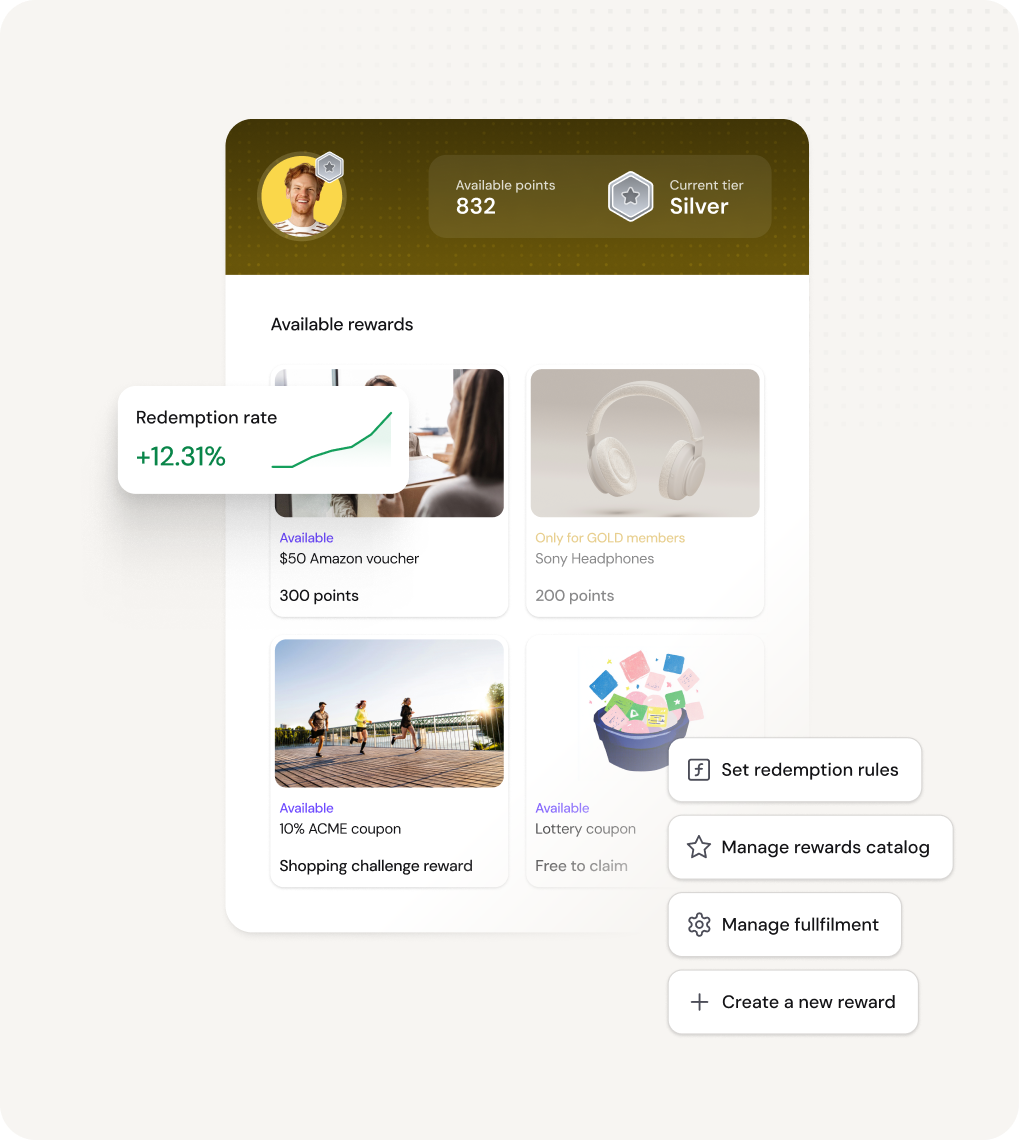
Rewards turn participation into something customers can actually use. That might be a discount, a voucher, a free product, early access, or a branded experience.
In enterprise programs, rewards don't sit behind points alone. Platforms usually allow different unlock paths, so rewards can be tied to progression, challenges, or specific behaviors rather than simple redemption rules.
Seeing a progress update right away makes participation feel more concrete. Enterprise platforms respond in real time, updating progress, unlocking rewards, or surfacing the next challenge without waiting for batch updates.
Personalization then adjusts mechanics based on behavior, activity patterns, or program stage, so the experience stays aligned as customers move through the program.
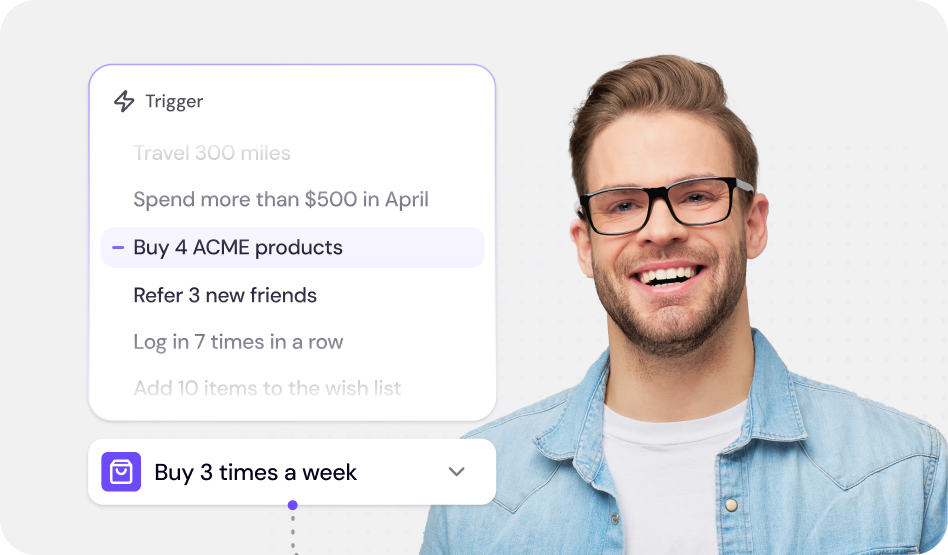
Enterprise gamification platforms differ from basic tools in how they are built, connected, and used over time. Once loyalty programs grow beyond small experiments, certain feature areas tend to come up again and again during platform reviews.
| Feature area | What it covers in enterprise gamification |
|---|---|
| Architecture | API-first, headless setup that connects with existing websites, mobile apps, POS systems, CRMs, and backend services. |
| Loyalty program support | Tiered programs, reward catalogs, multiple earning paths, and long-running loyalty structures. |
| Gamification mechanics | Challenges, quests, progression systems, leaderboards, badges, referrals, and streak-based mechanics. |
| Real-time capabilities | Immediate updates to points, progress, challenges, and rewards triggered by customer actions. |
| Personalization | Rule-based or behavior-based adjustment of challenges, rewards, and progression paths for different customer segments. |
| Analytics and reporting | Visibility into participation, progression, reward usage, and campaign performance over time. |
| Scalability | Ability to handle large user bases, frequent events, and peak activity periods without performance degradation. |
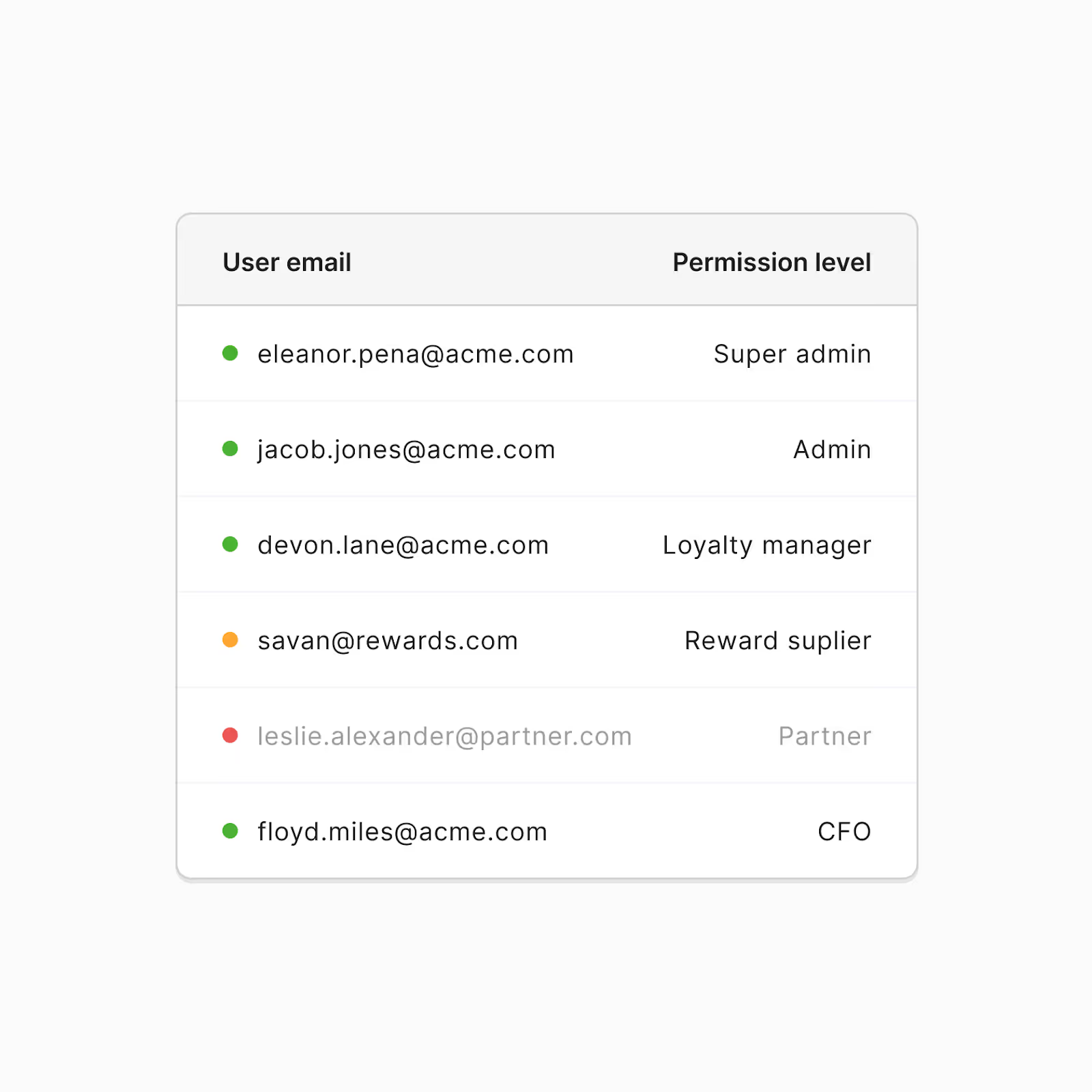
| Security and access control | Role-based permissions, single sign-on (SSO), and data protection features suitable for enterprise environments. |
| Multi-use support | Coverage for customer loyalty programs, employee engagement initiatives, or both. |
Enterprise platforms are typically built as headless systems that connect to existing websites, mobile apps, POS systems, and backend tools. An API-first approach allows teams to design rewards, tiers, and gamification logic independently from the front end and embed them directly into current customer journeys.
Beyond basic point collection, enterprise platforms support full loyalty program structures. That often includes tiered programs, reward catalogs, and multiple earning paths. Gamification layers commonly cover challenges, quests, progression systems, referrals, and social mechanics. Real-time rewards and participation across channels are expected at this level.
Enterprise programs usually adjust mechanics based on different audiences and behaviors. Platforms rely on rule-based logic or behavioral segmentation to adapt challenges, rewards, and progression paths. Analytics typically cover participation, progression, and reward usage, along with views into cohorts, campaigns, and program trends over time.
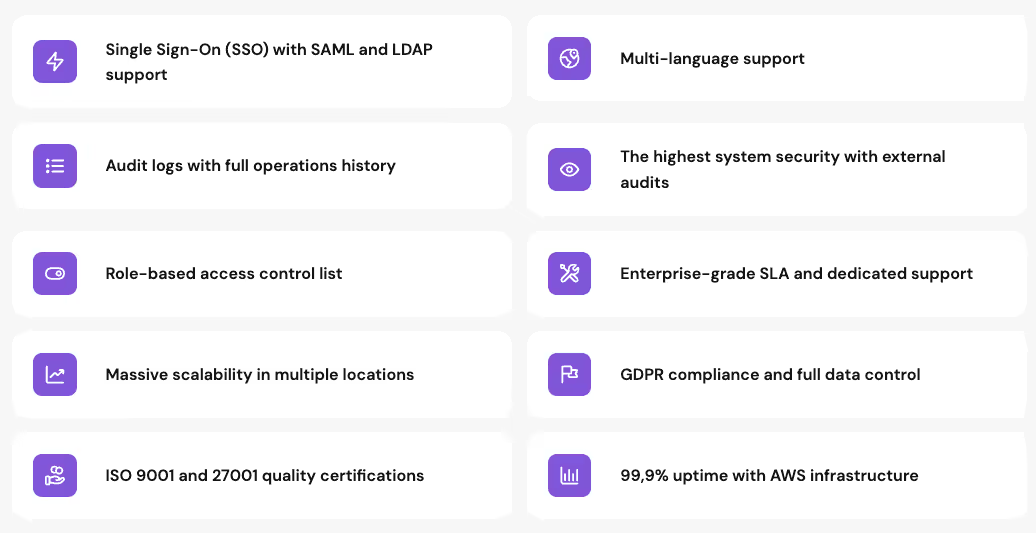
Large loyalty programs generate high volumes of activity, especially during campaigns, seasonal peaks, or app-driven engagement. Enterprise platforms are designed to handle frequent actions and many concurrent users without disruptions. Multi-region setups and operational monitoring are often part of the platform foundation.
Enterprise environments place strong emphasis on access control and data handling. Platforms usually include role-based permissions, authentication options, and support for regional data requirements across markets.
Some platforms focus on customer-facing loyalty programs, while others support internal engagement, training, or performance initiatives. Enterprise teams often review whether one platform can cover both use cases or if separate systems fit their setup better.
With many gamification platforms on the market, comparing them based on surface-level feature lists rarely tells the full story. Differences usually appear in how platforms handle scale, integrations, program logic, and long-term loyalty use cases.
Discover the comparison table below that focuses on features that matter most for enterprise loyalty programs. It highlights how each platform approaches architecture, gamification mechanics, loyalty support, analytics, and operational readiness, helping teams like yours quickly spot which solutions align with complex, large-scale requirements.
| Platform | API and integration | Enterprise gamification mechanics | Primary use case | Industry focus |
|---|---|---|---|---|
| Open Loyalty | Headless, API-first | Points, badges, leaderboards, streaks, challenges | Customer loyalty (B2C and B2B) | Retail, eCommerce, QSR, CPG |
| StriveCloud | SDK and API, no-code builder | Quests, streaks, leaderboards, raffles, virtual currency | B2C app engagement and retention | FinTech, mobility, media, health |
| Mambo | REST APIs, developer-oriented | Levels, badges, lotteries, missions | In-app engagement and learning | Finance, retail, automotive |
| Influitive | CRM and community integrations | Points, badges, referrals, challenges | Customer advocacy programs | B2B technology, SaaS |
| Centrical | LMS and HR system integrations | Points, badges, contests, leaderboards | Employee sales enablement and training | Enterprise B2B, contact centers |
| Comarch Gamification | Part of Comarch Loyalty Suite | Progress bars, surveys, auctions, lotteries, challenges | Customer loyalty programs | Telco, retail, banking |
| Funifier | API-based | Badges, challenges, missions | Loyalty and employee enablement | Retail, consumer electronics |
| Gametize | White-label, API integration | Team challenges, quizzes, polls | Onboarding and communities | Education, NGOs, SMEs |
| CaptainUp | Embeddable widgets, APIs | Live challenges, tournaments, leaderboards | Customer and gaming loyalty | Sports, casinos, e-sports |
| BI WORLDWIDE Nitro | Enterprise-grade APIs | Missions, points, badges, team goals | Employee and partner incentives | Global enterprises |
| Playzo | No-code setup with APIs | Game-based mechanics (trivia, spin-to-win, puzzles) | Consumer engagement campaigns | CPG, consumer brands |
Take a look at the platforms below, reviewed through an enterprise loyalty lens. Each section shows how the solution supports large-scale programs, how gamification is used in practice, and where the platform fits within complex organizational setups.
Open Loyalty is an API-first loyalty and gamification engine built for enterprises operating complex, long-running loyalty programs across multiple channels and markets. The platform is designed as a composable loyalty layer that integrates directly into existing tech ecosystems rather than replacing them.
Open Loyalty focuses on turning loyalty programs into dynamic systems that reward both transactional and non-transactional behavior. Instead of relying on discounts and short-term promotions, programs are structured around progression, achievements, challenges, and status, allowing brands to build long-term engagement patterns that evolve over time.
Enterprise organizations with mature architectures, including custom mobile apps, dedicated backends, eCommerce platforms, and data layers use the platform. Loyalty logic, gamification mechanics, and reward rules are managed independently from the front end and triggered by real customer events across channels.
Enterprise teams choose Open Loyalty when flexibility and architectural control matter more than pre-packaged workflows. The platform fits organizations with mature tech ecosystems that want to embed loyalty and gamification into existing customer journeys rather than run them as standalone tools.
Open Loyalty is often selected when programs need to scale across regions, brands, or business units, while still allowing teams to adjust mechanics, introduce new challenges, and refine progression logic over time. Its API-driven setup supports long-running loyalty strategies that focus on sustained participation, data-driven optimization, and alignment with broader customer engagement goals.
Open Loyalty clients appreciate the loyalty platform and its retail capabilities, saying:
👉 Read more opinions on Open Loyalty on G2 or Capterra.
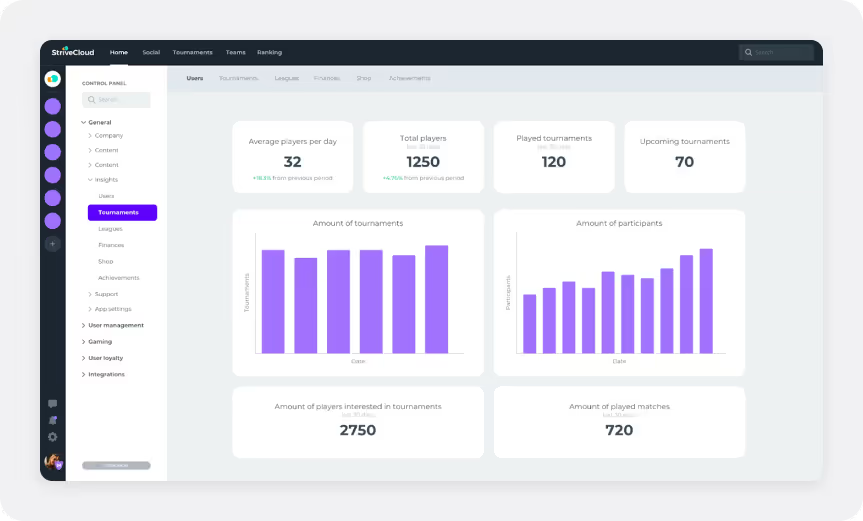
This platform focuses on engagement inside digital products, especially mobile and web applications, with frequent user interactions. It's most often used by teams working on consumer-facing apps where gamification lives directly inside the product experience.
It comes with tooling that lets teams add gamified mechanics to existing app flows. Non-technical teams can configure challenges and progression, while developers can plug everything in through SDKs or APIs. In practice, it's usually applied to short- or mid-term engagement initiatives tied to specific in-app behaviors.
Enterprises tend to choose this platform when gamification is treated as an extension of a digital product rather than a standalone loyalty system. It fits teams that want to introduce engagement mechanics inside apps without branching into broader loyalty structures.
It's most often used for activation, onboarding, and repeat usage in digital products. Cross-channel loyalty logic, reward ecosystems, and long-running loyalty programs are typically managed outside the platform.
Mambo is a gamification platform focused on embedding standard game mechanics into digital products through developer-led integrations. The focus sits on embedding standard game mechanics directly into digital products, with full control kept on the technical side.
Deployment options include cloud and on-premise setups, which often suit organizations with specific infrastructure or compliance requirements. Gamification logic is typically integrated with existing applications via REST APIs, making the platform a common choice for in-app engagement or training scenarios rather than for end-to-end loyalty programs.
Enterprise teams often select this platform when gamification is treated as a technical component inside an existing product. The setup fits organizations that prefer developer-managed workflows and want to introduce predefined mechanics without expanding into a separate loyalty layer.
Common use cases include internal training, in-app engagement, and single-brand environments. Reward ecosystems, omnichannel loyalty logic, and advanced program orchestration are usually handled elsewhere.
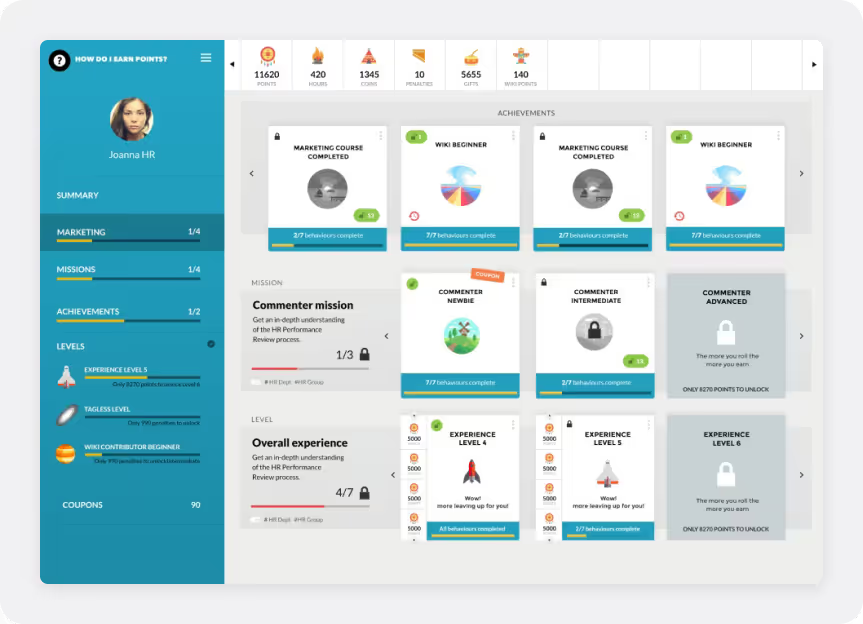
Influitive is a gamification platform focused on customer advocacy and community-driven engagement, primarily in B2B environments. Programs are designed around actions such as writing reviews, sharing referrals, providing testimonials, or taking part in community discussions.
Gamification mechanics are applied to advocacy workflows rather than to transactional loyalty journeys. Participation is usually linked to recognition, access-based rewards, or community status rather than to points earned through purchases.
Enterprises often choose this platform when customer advocacy runs as a separate initiative from loyalty programs. The setup fits B2B organizations looking to formalize referrals, reviews, and community participation through structured, gamified workflows.
The platform is commonly used alongside existing loyalty or CRM systems rather than replacing them. Transaction-based rewards, omnichannel loyalty logic, and purchase-driven progression typically remain outside its scope.
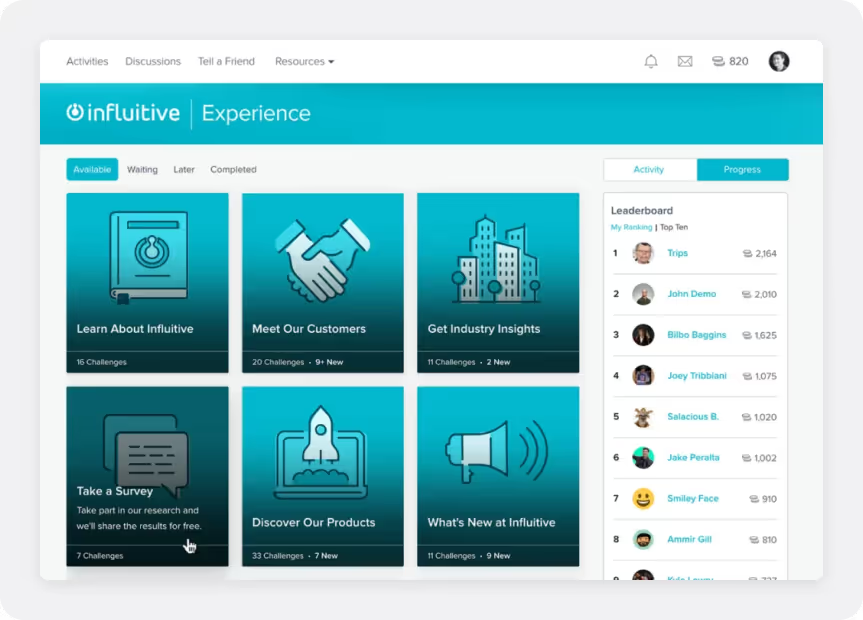
Centrical is a gamification platform focused on internal performance and learning scenarios. Gamification is applied to employee-facing programs, where training, sales activities, and everyday operational goals are turned into structured challenges.
Connections with learning, sales, and workforce systems allow tasks and objectives to be translated into competitions and progress paths. Participation is driven through points, badges, levels, and leaderboards tied to performance indicators, rather than customer behavior.
Enterprises often choose this platform when gamification is used for internal teams instead of customer loyalty programs. The setup fits organizations looking to structure sales enablement, onboarding, or training initiatives through competitive mechanics.
Usage typically sits alongside customer-facing loyalty systems rather than replacing them. Purchase-based rewards, omnichannel customer journeys, and loyalty progression remain outside the platform's primary focus.
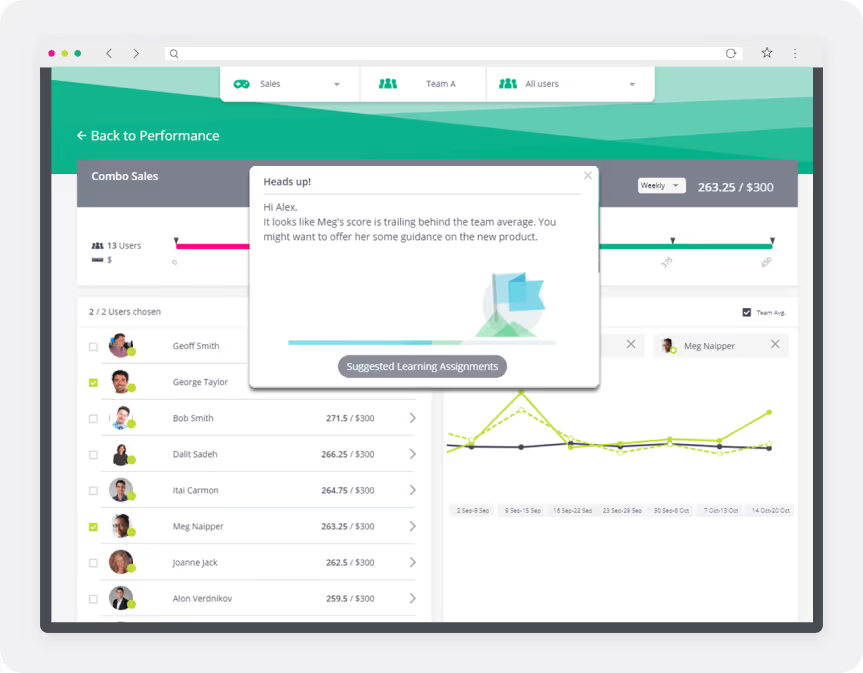
Comarch offers gamification as a module within its broader loyalty and CRM ecosystem. The setup is designed to extend existing loyalty programs with additional engagement mechanics rather than run as a separate gamification layer.
Gamification features sit directly inside loyalty flows managed within the Comarch stack. Program teams can shape progression paths and reward experiences that follow predefined customer journeys and loyalty rules already configured in the system.
Enterprises often choose this solution when operations already run on Comarch products, and extending existing loyalty programs feels more practical than adding a new platform. The setup fits organizations looking for a single-vendor environment covering loyalty, CRM, and gamification.
This option is commonly considered by telecom, retail, and financial organizations with established Comarch implementations, where introducing an external gamification engine would require wider architectural changes.
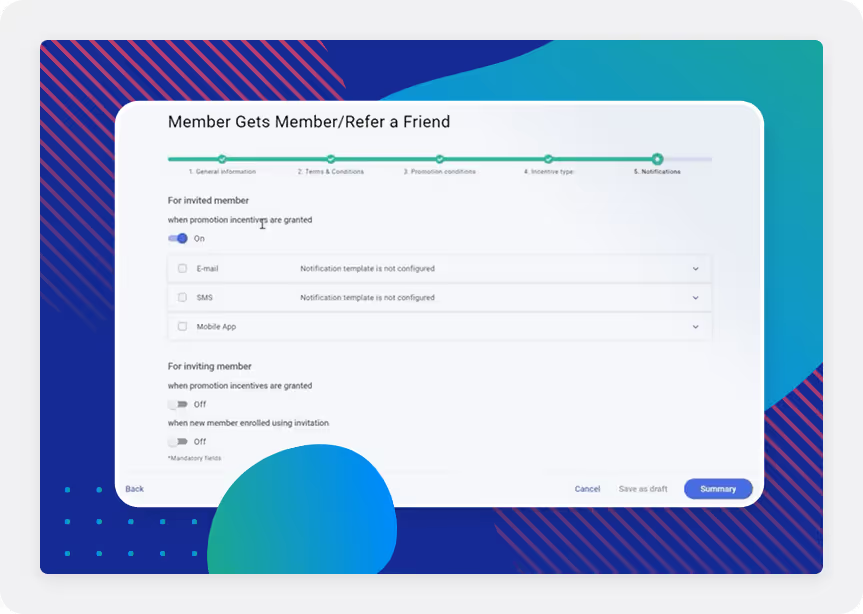
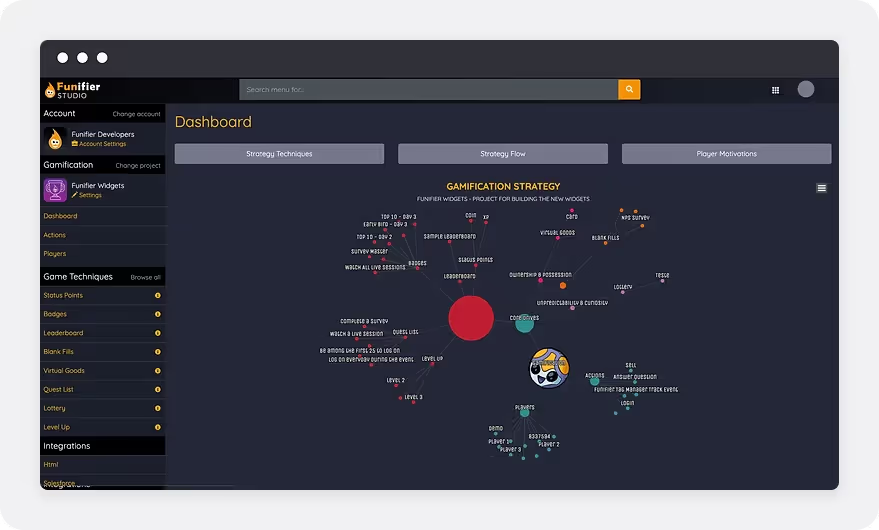
Funifier is a configurable gamification platform designed to support both customer-facing and internal engagement scenarios. A centralized setup allows teams to define gamification rules and mechanics once, then apply them to different audiences and initiatives.
This platform is usually chosen when teams want structured gamification flows without building custom mechanics from the ground up. Configuration happens through an administrative interface, with the same logic applied consistently across selected channels and programs.
Enterprises often choose this platform when a ready-to-configure gamification layer is needed across multiple initiatives. The setup fits organizations that want one system to manage gamification logic for different audiences without heavy customization.
Usage commonly sits alongside existing loyalty or HR systems rather than replacing them. Advanced loyalty orchestration, composable architectures, and deeply embedded gamification logic are usually handled elsewhere.
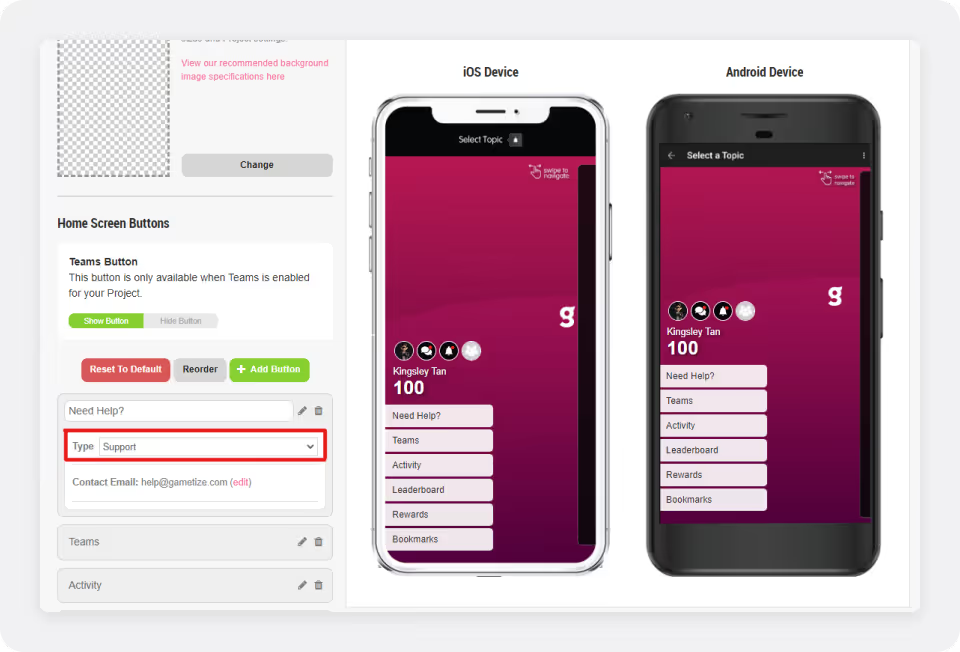
Gametize is a white-label gamification platform focused on community engagement, training, and structured participation scenarios. Programs usually focus on interaction, learning, or collaboration rather than long-term customer loyalty.
The solution relies on prebuilt game formats that can be branded and reused across initiatives. These formats often show up in onboarding flows, internal communication, compliance activities, or short-term engagement campaigns where speed and repeatability matter.
Enterprises often choose this platform when a quick rollout matters more than deep customization. The setup fits teams that want to reuse predefined formats across training, onboarding, or community programs without long configuration cycles.
Usage typically stays campaign-based or program-specific rather than continuous. Transaction-driven rewards, tier-based loyalty progression, and omnichannel customer journeys are usually managed outside the platform.
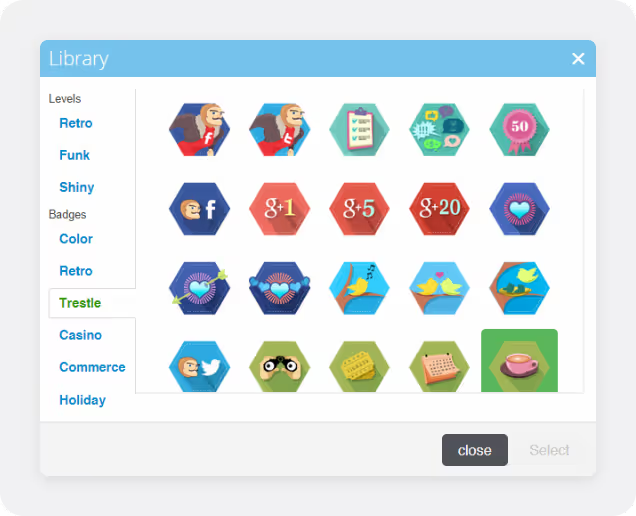
CaptainUp is a gamification platform designed to add interactive mechanics to websites and mobile applications. The setup works as an engagement layer that sits on top of current digital experiences, instead of running as a standalone loyalty system.
The platform centers on real-time mechanics such as challenges, tournaments, and interactive games. These elements are configured through a visual interface and are often used to create short engagement loops inside customer-facing channels, especially during campaigns or promotional moments.
Enterprises often choose this platform when the goal is to add interactive gamification elements to existing digital channels without touching core loyalty infrastructure. The setup fits teams looking to introduce short engagement moments inside websites or apps with minimal structural changes.
Usage commonly appears in entertainment, gaming, or promotion-driven environments. Long-running loyalty orchestration, reward ecosystems, and cross-channel progression are usually handled through other systems.
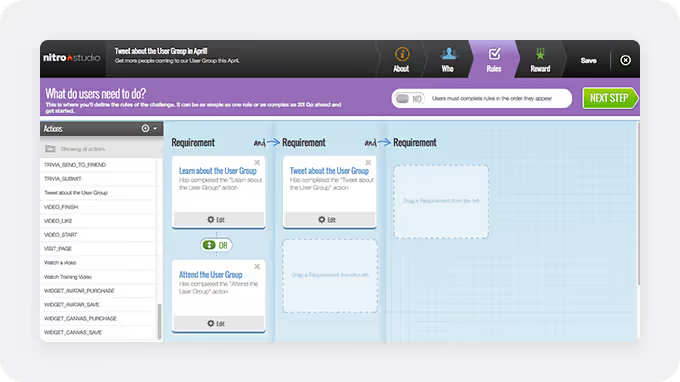
BI WORLDWIDE offers Bunchball Nitro as a gamification engine used across large organizations for engagement-focused initiatives. Programs often focus on employee learning, sales incentives, or partner enablement, with occasional use in customer-facing contexts.
Gamification mechanics are added through an embeddable SDK and managed from a centralized dashboard. These mechanics usually sit inside existing applications, learning systems, or internal portals, rather than running as a separate loyalty system.
Enterprises often choose this platform when gamification is applied to internal engagement at scale. The setup fits organizations running structured learning, performance, or incentive programs across large teams.
Adoption is common in environments with strict security, access control, and operational requirements. Customer loyalty orchestration, reward ecosystems, and omnichannel progression usually sit outside the platform and are managed through other systems.
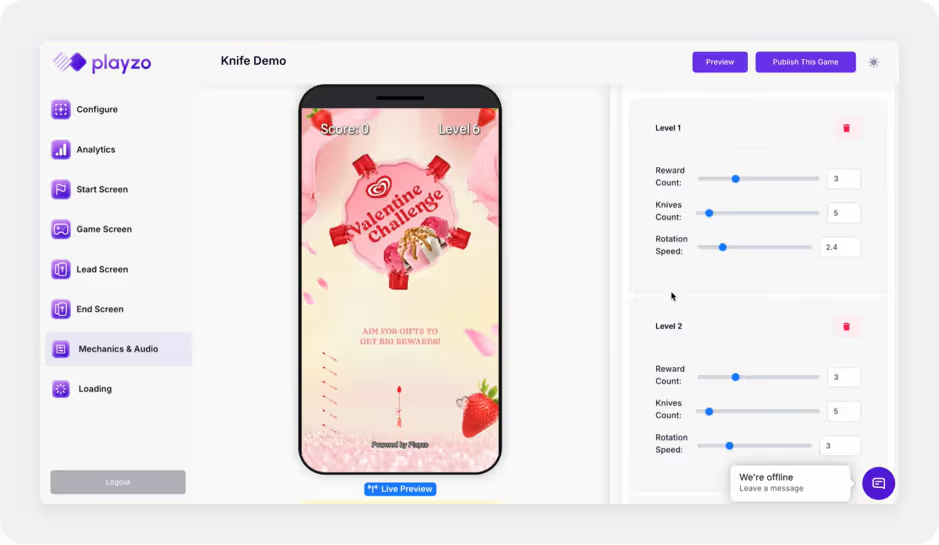
Playzo is a gamification platform designed around interactive marketing and engagement campaigns. Use cases usually focus on short- to mid-term initiatives where game-based formats help drive participation and capture data.
This solution centers on prebuilt game templates that can be launched without development work. These games often run as standalone experiences connected to broader marketing or loyalty efforts, rather than being deeply embedded into long-running loyalty systems.
Enterprises often choose this platform when gamification supports promotional or campaign-driven engagement. The setup fits teams looking to activate audiences quickly through interactive formats without building custom mechanics.
Usage commonly sits alongside existing loyalty or CRM systems, with games acting as entry points for lead generation or short engagement loops. Ongoing loyalty progression, tier logic, and cross-channel reward orchestration usually remain outside the platform.
Enterprise gamification adoption continues to grow, though usage patterns show clear differences between experimentation and long-term program design. Gamification market data and enterprise surveys point to several consistent trends you need to know.
Industry reports estimate that over 70% of large organizations use gamification in at least one area, such as customer engagement, employee training, or marketing campaigns. For example, Extraco Bank achieved a remarkable 700% increase in new customer acquisitions.
At the same time, fewer than 30% of enterprise programs apply gamification as part of an ongoing, multi-year loyalty or engagement strategy. Many initiatives remain limited to onboarding, seasonal campaigns, or short engagement loops.
Enterprise loyalty and engagement teams most often introduce gamification to address declining activity and participation.
Studies show that programs using progression systems, challenges, or status mechanics report 40% higher repeat participation rates compared to programs relying only on point accumulation. Engagement outside purchase moments remains one of the strongest drivers for gamification investment.
💡 For a broader overview of adoption figures and performance data, see the full breakdown in gamification statistics.
Despite growing usage, enterprise teams still struggle to link gamification activity directly to commercial outcomes such as revenue, margin, or long-term customer behavior. Engagement metrics are usually easy to access, while financial attribution becomes harder once gamification sits outside core transactional systems.
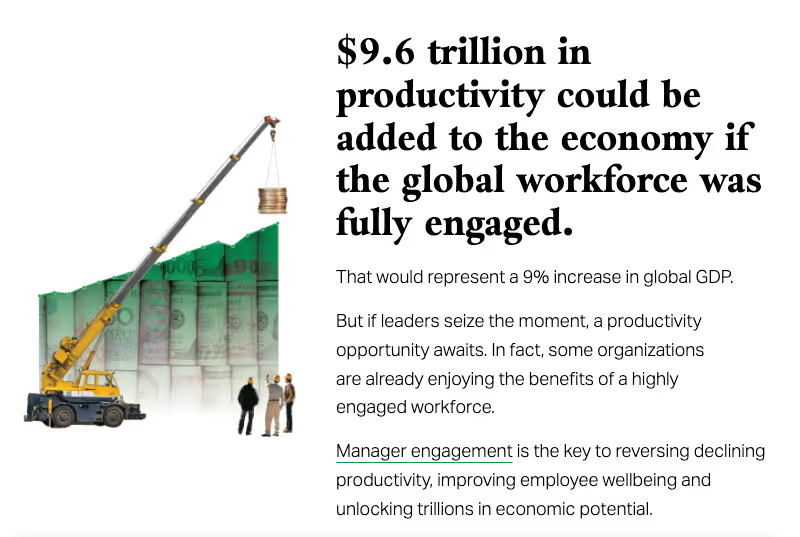
This gap matters because the cost of disengagement is far from abstract. According to Gallup’s State of the Global Workplace report, low employee engagement costs the global economy an estimated $9.6 trillion each year, roughly 9% of global GDP. While this data focuses on the workplace, it highlights a broader issue enterprise teams face across both employee and customer programs: participation without clear impact still carries a real financial price.
As a result, many teams revisit their tooling and data setup. Better access to event-level data, clearer links between actions and outcomes, and tighter integration with analytics systems often become priorities once programs move beyond early experiments.
Enterprise loyalty and gamification programs rarely run in isolation. Most need to connect with several systems at once, such as eCommerce platforms, mobile apps, POS systems, CRM tools, CDPs, and analytics stacks. As programs grow, keeping all these connections working together becomes one of the biggest challenges.
Industry data shows how real this problem is. Integration issues cost enterprises millions each year, especially when legacy systems slow down change. Around 95% of organizations report ongoing struggles with system integration, and only a small fraction have managed to connect more than half of their applications.
At the same time, API usage continues to rise rapidly, increasing exposure across critical systems. As a result, almost every enterprise now deals with API-related security incidents in some form.
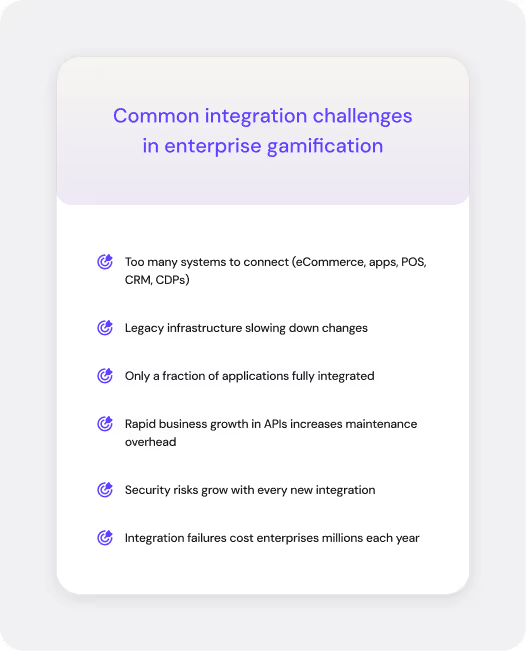
For loyalty teams, this often means integration decisions matter as much as gamification mechanics themselves. Platforms that fit naturally into existing architectures tend to reduce friction as programs expand, while rigid setups can quickly limit what teams are able to build or change over time.
Initial engagement spikes are common after launch, but from our experience, activity often drops within the first 60–90 days if mechanics remain static. Enterprise programs increasingly rotate challenges, adjust progression rules, and introduce time-bound mechanics to maintain steady participation without overwhelming users.
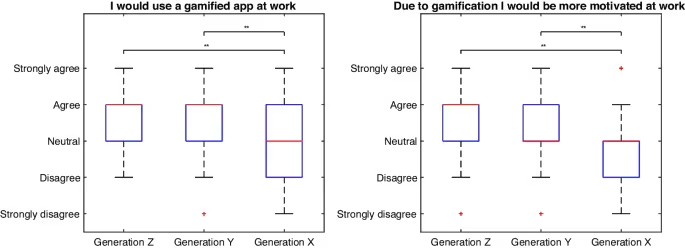
A study explored how gamification is received inside a large enterprise with more than 17,000 employees. The research included 367 participants from different age groups and showed a clear pattern. Younger employees were generally more open to gamified tools at work, while acceptance tended to decline with age.
Participants from Generations Z and Y were more willing to use gamified systems and more likely to say that gamification leads to increased motivation, while Generation X showed more hesitation. Preferences for specific mechanics also varied. Avatars were well received across all age groups, badges resonated more with younger employees, and leaderboards appealed mainly to Generation Z.
The findings suggest that enterprise gamification works best when program design takes different expectations and comfort levels into account, rather than relying on a single approach for everyone.
In large organizations, gamification frequently sits across teams. Marketing, loyalty, product, and operations may all influence program design and execution. Based on our experience, programs with clear ownership models and defined roles are more likely to run continuously, while fragmented ownership often leads to stalled initiatives or one-off campaigns.
Enterprise gamification uses game elements, game-like elements, and gamified elements in non-game contexts such as loyalty programs, corporate training, or internal platforms. The goal is to guide user behavior and support active participation on a large scale.
In a corporate environment, these systems must function across multiple users, teams, and tools. That usually means combining points, progression, challenges, and recognition in a way that fits real business workflows rather than standalone experiences. Many platforms draw on input from game designers to balance structure, motivation, and clarity.
Gamification helps loyalty programs move beyond passive point collection. Actions like purchases, referrals, reviews, or app usage turn into visible progress, tiers, or challenges. This gives members a reason to come back and engage users between transactions.
Over time, this approach supports continued engagement, increasing customer engagement, and stronger brand loyalty. Members who see how they progress through a program are more likely to stay active, which often leads to higher customer satisfaction and repeat participation.
Look for API-first architecture, modularity (to add/remove game mechanics), multi-channel support, real-time reward capabilities, and advanced analytics.
Beyond that, platforms often include gamification techniques such as challenges, levels, leaderboards, and progression rules, paired with analytics that connect activity to business goals and business objectives. Integration with existing systems matters, especially when supporting large online community setups or complex data flows.
Yes, gamification in the workplace is widely used to support employee motivation, onboarding, and performance programs. Mechanics like challenges, rankings, and recognition help boost engagement and introduce healthy competition without turning work into a game.
Many organizations rely on a gamified learning platform to support continuous learning and skills development. These setups often help with engaging employees, improving employee engagement, and boosting team performance, especially in sales, training, and support teams.
Industries with frequent interaction points tend to adopt gamification more broadly. Retail, eCommerce, QSR, financial services, telecom, travel, and technology commonly apply gamification within loyalty programs and digital channels.
Gamification also appears in internal initiatives across sales organizations, contact centers, and distributed teams. While use cases differ, the shared focus stays the same: continued engagement rather than short-term spikes.
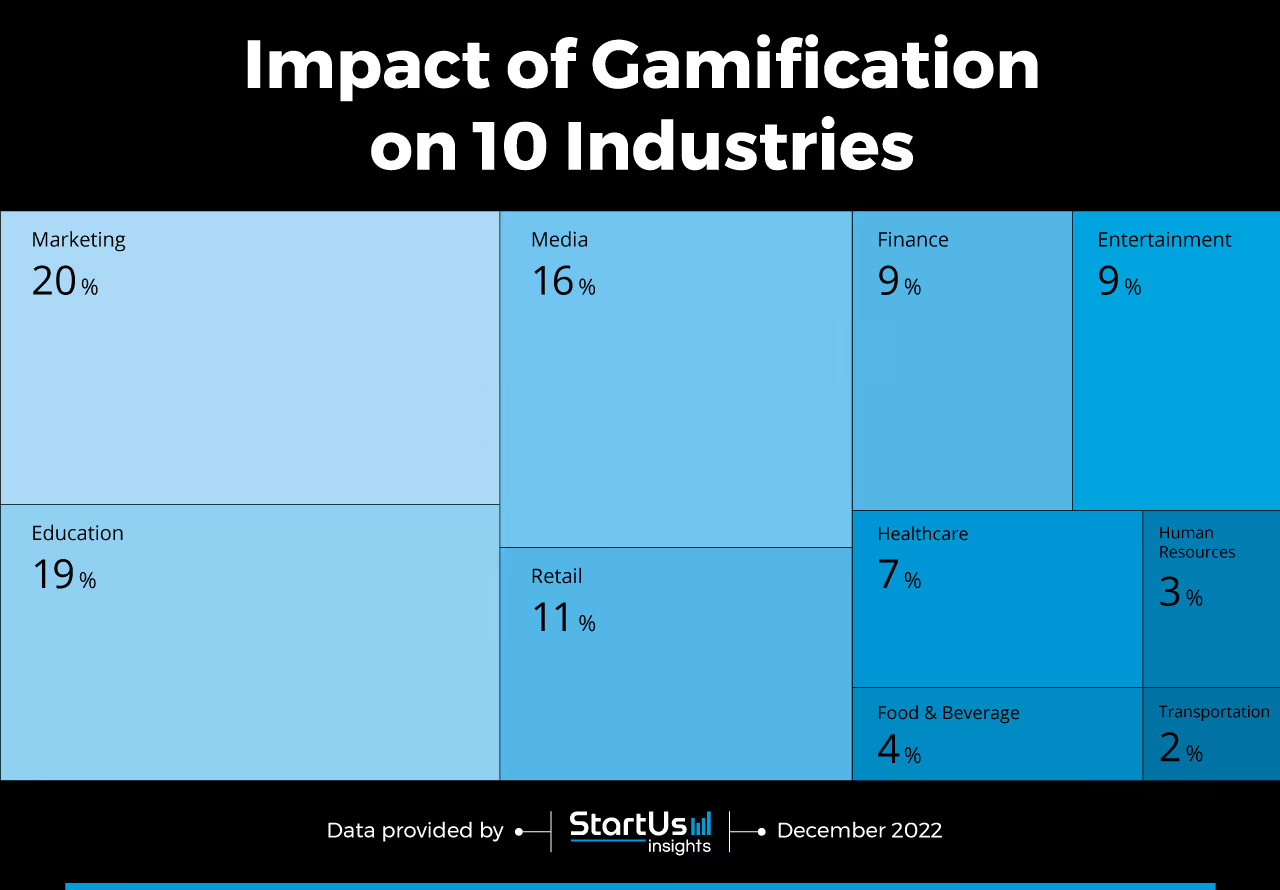
Across industries, patterns are becoming clearer. Marketing, media, retail, entertainment, and food and beverage brands use gamification to create more digital touchpoints and support sales activity.
Education and training organizations apply gamified learning to improve knowledge retention.
Finance teams use gamification to support financial literacy and decision-making, while healthcare applies it to patient engagement and care management.
Transportation and mobility companies often rely on gamification to improve traveler experiences and employee participation.
Most teams begin by identifying behaviors they want to encourage beyond transactions, such as repeat visits, referrals, app usage, or learning users' progress. From there, mechanics are layered onto existing journeys instead of being launched as standalone experiences.
Platform choice usually depends on how well a solution fits current systems, data models, and long-term program plans. Starting with a limited scope and expanding over time often works better than rolling out a fully loaded program on day one.
Choose a scalable platform (like Open Loyalty) that integrates with your systems. Many providers offer demos or pilot projects. For dedicated guidance and a demo, consider reaching out to Open Loyalty loyalty experts.
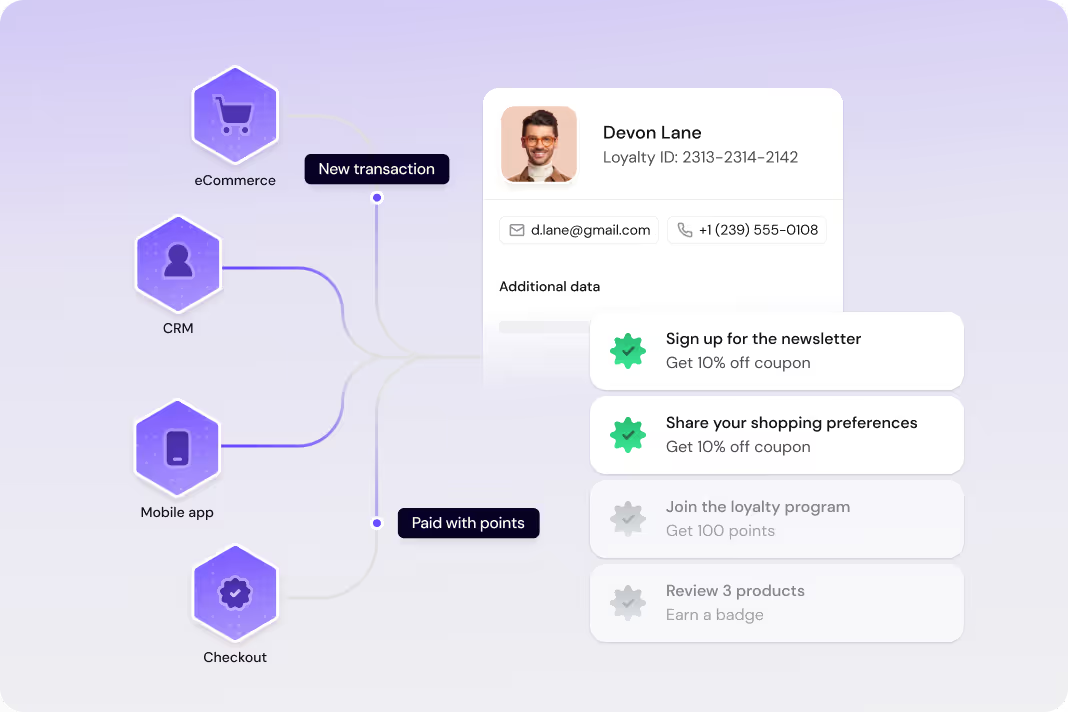
There are many examples of gamification across both customer and employee use cases. In customer-facing loyalty programs, brands often use tiers, challenges, and rewards to drive repeat visits. Internally, companies use gamification for training, onboarding, and performance tracking.
Some successful gamification examples also appear in wellness apps, advocacy platforms, and partner programs, where participation and consistency matter more than one-off actions. These examples show how gamification adapts to different audiences while supporting long-term user engagement.
Customer-facing gamification tactics usually focus on rewards, progression, and discovery. The goal is to motivate users to return, explore, and interact with the brand over time.
Employee-focused tactics often emphasize learning, performance, and collaboration. These programs use gamified elements to support team performance, encourage participation, and align daily actions with organizational priorities.
Enterprises use gamification in many innovative ways, from customer-facing rewards programs to internal learning and performance initiatives.
In customer scenarios, gamification supports lead generation, onboarding, and retention. Internally, it’s used to support training, adoption of tools, and daily execution.
Across use cases, the focus stays on encouraging participation without disrupting existing processes.
In employee training, gamification helps break down complex material into smaller steps.
Mechanics like challenges, milestones, and personalized learning paths make progress visible and easier to follow.
These approaches help encourage employees, inspire employees, and support focus during routine tasks, which can boost productivity and improve knowledge retention over time.
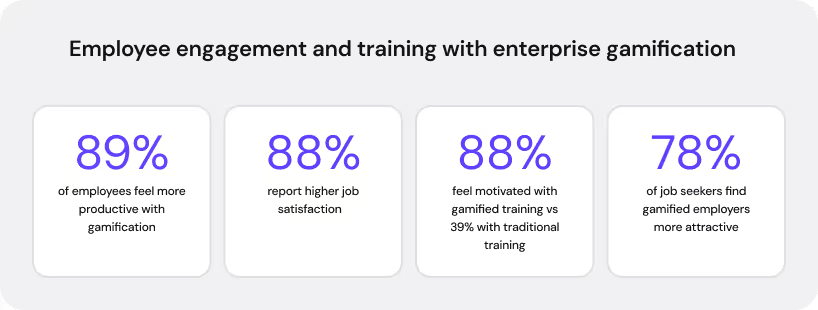
Successful enterprise gamification relies on simple, repeatable mechanics. Common examples include point systems, progress bars, challenges, and recognition tied to performance or learning outcomes.
These elements work because they tap into human psychology, giving users clear feedback and a sense of direction without overwhelming them.
Well-designed gamification uses structure rather than pressure to incentivize users. Clear goals, engaging challenges, and visible progress help people stay involved naturally.
In customer scenarios, this often connects to a broader rewards program. In internal programs, recognition and progress tracking help teams stay aligned with shared goals.
Yes, when aligned with strategy, gamification can support both business results and lead generation. Interactive experiences encourage participation, data sharing, and repeat visits, especially when paired with a clear reward system.
Some enterprises also experiment with machine learning to adjust challenges or content dynamically, while others explore augmented reality for more immersive engagement in specific use cases.
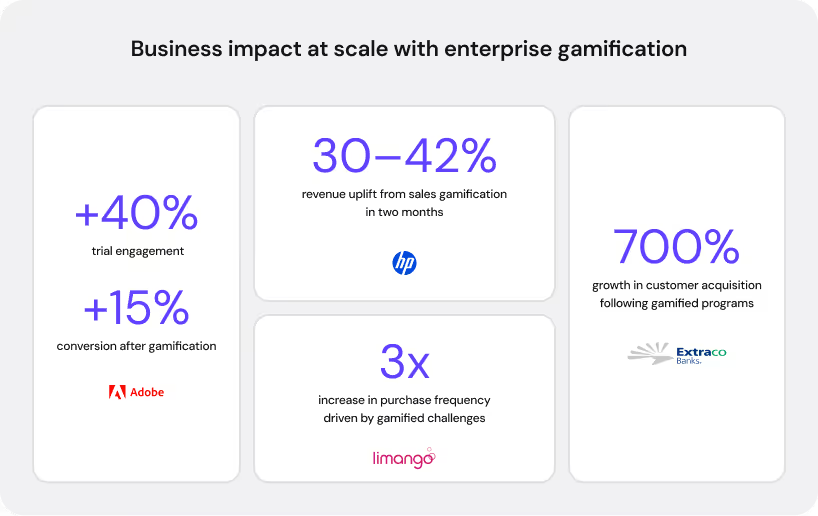
Most teams start small. A single journey, campaign, or training flow is gamified first, then expanded over time. Success often depends on seamless integration with existing systems rather than building something separate.
From there, programs evolve to support broader goals, including learning, performance, and customer engagement, while keeping the experience clear and consistent.
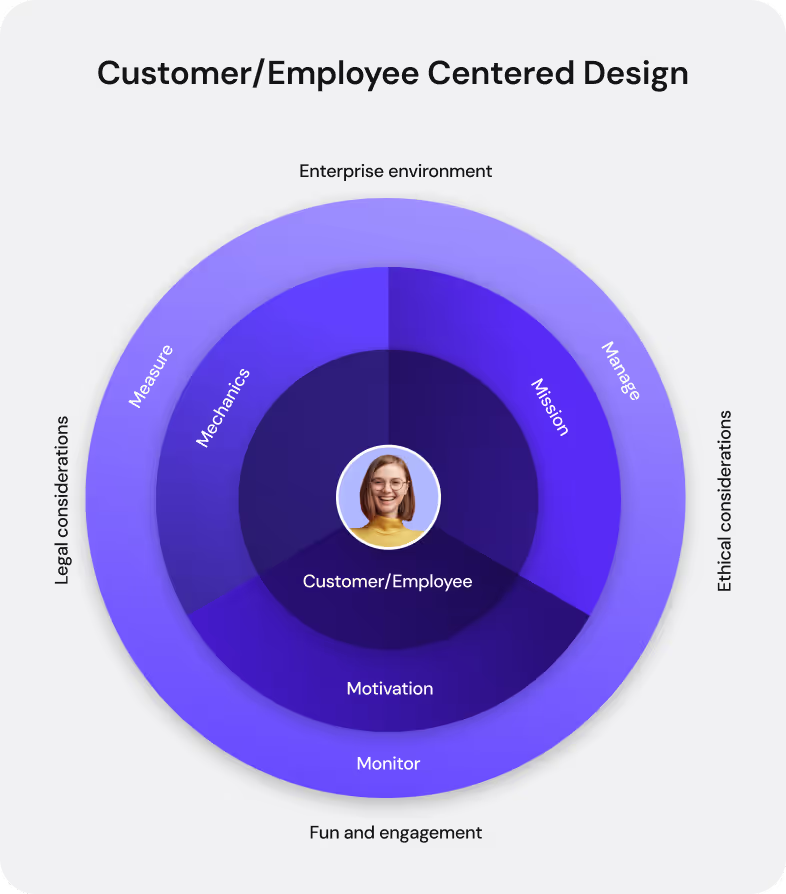
Enterprise gamification works best when it's planned as part of a broader loyalty or engagement setup, not added as a last-minute layer. The platforms covered above approach gamification from different angles, from loyalty engines and engagement layers to internal performance tools. Each fits a slightly different enterprise reality.
What usually makes the difference over time is how a platform fits into existing systems, how much freedom teams have to shape program logic, and how easily programs can evolve once they're live. Teams running long-term loyalty initiatives often benefit from thinking through real scenarios early, such as how user progression works across channels or how non-transactional actions feed into rewards.
A practical next step is to map a few loyalty journeys and test how different platforms handle them. Looking at events, rules, and progression side by side often brings clarity before you implement gamification or make any rollout decisions.
From there, programs tend to grow naturally, starting small, learning from live behavior, and expanding as confidence and internal alignment build.

API-first loyalty and gamification engine

Get a weekly dose of actionable tips on how to build and grow gamified successful loyalty programs!