New
Loyalty Program Benchmark Report 2027: Per-industry statistcs, self-assessment, and more!
Get the report

Points-only programs are losing their grip on fashion shoppers. The brands that keep customers coming back in 2026 have moved toward gamification, experiential perks, and community-driven mechanics that make loyalty feel less like a transaction and more like a relationship. Here are 10 programs that get it right – and the specific tactics that make them work.
Fashion has a retention problem. Purchase frequency is naturally lower than in grocery or QSR, the competitive set is enormous, and switching costs are close to zero – a shopper who bought from you last season can just as easily buy from a competitor this season. That makes loyalty programs one of the few structural advantages a fashion brand can build.
But the bar has moved. Open Loyalty's 2026 Trends report shows that gamification is now the fastest-growing investment area in loyalty, with 42.1 percent of professionals ranking it as the mechanic with the biggest medium-term impact. At the same time, 59.7 percent of loyalty teams are prioritizing personalization, and 44.4 percent are investing in automation. The programs on this list reflect those shifts – they go beyond earn-and-burn to create experiences that keep shoppers engaged between purchases.
What follows is not a ranking. It is a breakdown of 10 fashion loyalty programs that use different mechanics – tiers, challenges, referrals, experiential rewards, community access – to solve the same problem: how do you make a customer choose your brand again when they have hundreds of alternatives?
Program link: nike.com/membership
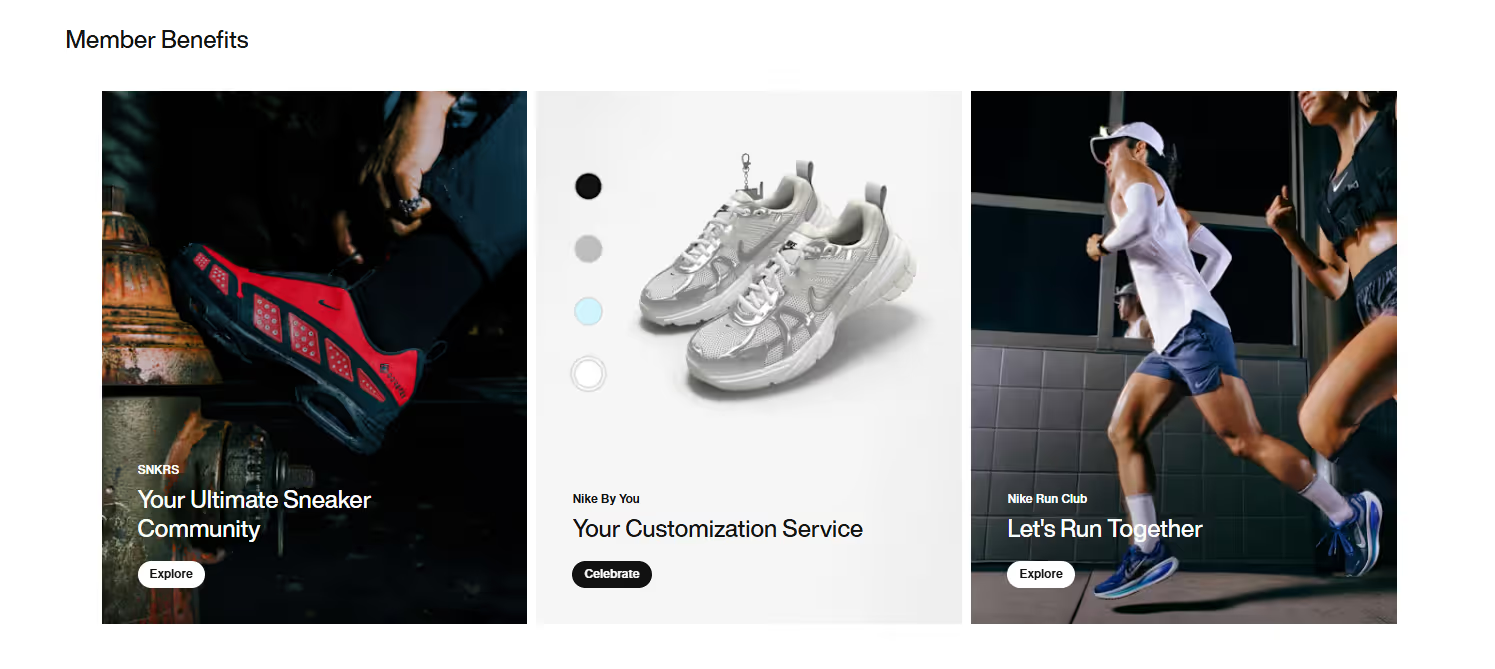
Nike Membership is a free, perks-based program that deliberately avoids traditional points. Instead, members get early access to product drops, invitations to local events and athlete-led experiences, personalized training plans through the Nike Training Club and Nike Run Club apps, and birthday rewards. Nike has built the program around more than 160 million active members globally, part of a total membership base exceeding 300 million.
In 2023, Nike hosted its first Member Days – a global event reaching over 60 million members across 25 countries with personalized exclusives and rewards for activity.
The program scored 8.03 out of 10 in apparel and 8.13 in footwear on Newsweek's 2025 loyalty rankings. Former Nike CEO John Donahoe summed up the strategy on an investor call: "What we know is more engaged consumers buy more."
Nike's approach solves a problem specific to fashion and sportswear: purchase frequency is seasonal, but engagement does not have to be. By embedding loyalty into fitness apps and content, Nike keeps members interacting with the brand daily – tracking runs, completing workouts, earning badges – even when they are not shopping. This creates a habit loop that surfaces the brand at the moment a purchase decision forms.
The absence of a points system also protects margins; Nike rewards with access and experiences rather than discounts, which preserves brand equity in a category where perceived value matters.
Program link: sephora.com/beauty/loyalty-program
Sephora's Beauty Insider is a three-tier program (Insider, VIB, Rouge) with over 45 million members. Members earn one point per dollar spent and can redeem points for products, experiences, and limited-time offers through the Rewards Bazaar. The program accounts for roughly 80 percent of Sephora's North American sales.

Emmy Berlind, Sephora's SVP and General Manager of Loyalty, has described the philosophy:
"We're not just offering rewards. We're creating a community that feels valued and understood."
Emmy Berlind, Sephora's SVP and General Manager of Loyalty
Beauty and fashion share a common challenge: emotional connection drives repeat purchases more than functional need. Sephora addresses this by making the program feel like a community rather than a ledger. Beauty Insider Challenges let members earn points through interactive experiences – not just purchases – which is a textbook application of gamification mechanics that keeps engagement high between shopping trips.
The tiered structure creates aspiration (Rouge status is a genuine social marker among beauty enthusiasts), while the Rewards Bazaar gives members agency over how they redeem, avoiding the "points expire before I use them" frustration that kills participation in less thoughtful programs.
Program link: nordstrom.com/the-nordy-club
The Nordy Club is Nordstrom's four-tier loyalty program (Member, Insider, Influencer, Ambassador) with over 13 million members. Members earn points on every purchase, with accelerated earning for Nordstrom cardholders.
Benefits include personal styling sessions, early access to sales, exclusive events, and a $40 Nordstrom Note for every 2,000 points earned. The program scored 8.61 out of 10 on Newsweek's 2025 customer satisfaction rankings.
Loyalty sales account for nearly 70 percent of Nordstrom's total revenue. CEO Erik Nordstrom noted back in 2025 that "Our Nordy Club loyalty program events and offerings have been well received by customers."
Nordstrom's program succeeds because it pairs points-based loyalty with high-touch service that reinforces the brand's positioning. Personal styling, early sale access, and in-store events like beauty happy hours and fragrance weeks create emotional loyalty that a pure discount program cannot replicate. For fashion brands targeting a premium audience, this blend of transactional and experiential rewards is a model worth studying – it gives members tangible value without eroding the aspirational positioning that justifies higher price points.
Program link: hm.com/member
H&M's loyalty program has grown to over 100 million members globally and continues to expand across more than 25 markets.
The two-tier structure (Member and Plus) awards points on every purchase, with Plus status unlocked at 500 points. Benefits include a 10 percent welcome discount, a $5 reward for every 200 points, double-point days, a birthday gift, and – for Plus members – free shipping, early access to collections, and invitations to exclusive fashion events.
H&M has reported that loyalty members spend approximately three times more than non-members.

H&M operates in fast fashion, where purchase frequency is higher but average order value is lower.
The program is calibrated for that dynamic: the points-to-reward ratio is achievable (200 points for a $5 reward feels attainable on a $30 purchase), which keeps the feedback loop tight. The Plus tier adds aspiration without making it unattainable – 500 points is within reach for a regular seasonal shopper. For brands at similar price points, the lesson is that tier structures work best when the thresholds match the natural purchasing cadence of the audience rather than forcing members to spend beyond their habits.
Program link: adidas.com/adiclub
adiClub is a free, four-level membership program where members earn 10 points per dollar spent, plus points for workouts logged on the adidas Running app, product reviews, and event attendance.
Rewards include member-exclusive products, early access to drops, and redemptions for subscriptions like Spotify Premium. adiClub was named the top apparel loyalty program in Bond's 2024 Loyalty Report for the second consecutive year.

adiClub's genius is treating non-purchase behaviors – workouts, reviews, event attendance – as loyalty-building actions on par with buying. This is critical in athletic fashion, where the brand relationship extends well beyond the transaction.
By rewarding engagement across the full lifestyle (not just the checkout), adidas builds a loyalty loop that competitors relying on purchase-only triggers cannot match. Bond's research reinforces this: consumers enrolled in engagement-rich programs like adiClub are four times more likely to increase their spending with the brand and twice as likely to recommend it.
The partnership rewards (Spotify, fitness subscriptions) are also clever: they embed the brand into daily routines without costing adidas inventory margin.
Program link: lululemon.com/membership
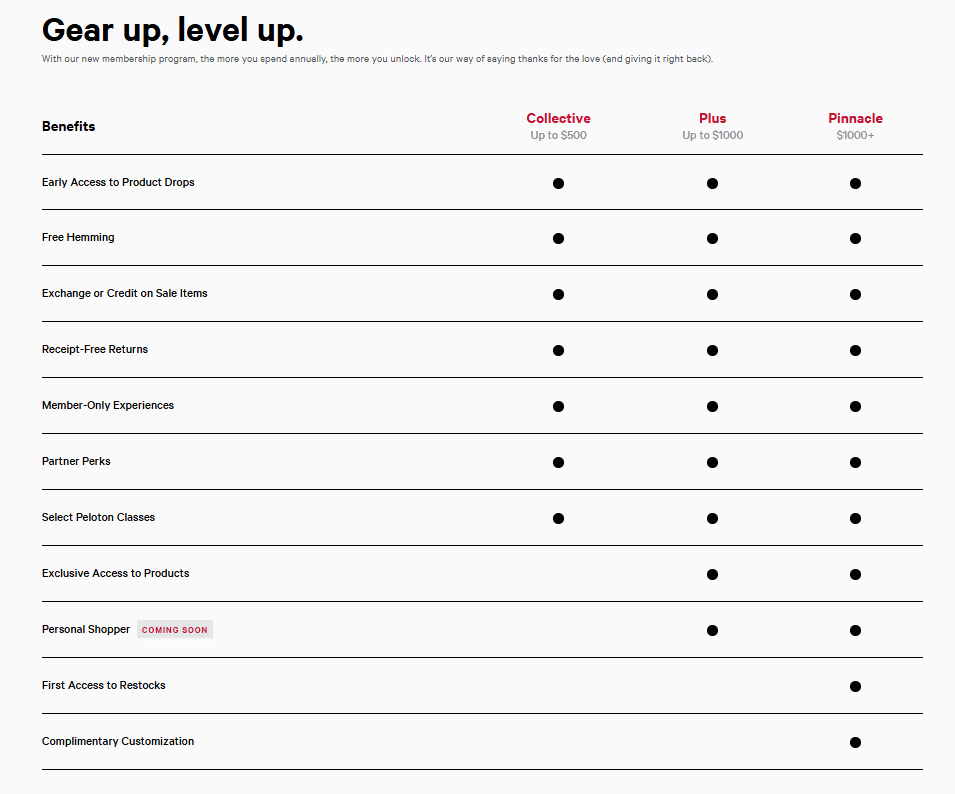
lululemon's free Essential Membership includes receipt-free returns, early access to product drops, free hemming, invitations to member-only events, and partner perks from brands like Peloton, Oura, Sweetgreen, and ClassPass.
Higher-tier Collective and Collective Plus levels unlock additional benefits based on annual spend, and once a member qualifies for a tier, they retain that status through the following calendar year.
The program signed nine million members within its first five months – a growth rate that signaled strong product-market fit.
The partner perks strategy is particularly notable: members get a free 60-day Peloton trial, 10 percent off Barry's classes, and ClassPass credits, embedding lululemon into the wellness routine rather than just the wardrobe.
lululemon's loyalty model is built around community and experiences rather than discounts, which is the right call for a premium athleisure brand where perceived value is part of the product. The partner perks (Peloton classes, ClassPass credits, Oura ring benefits) extend the brand into the member's wellness routine, creating touchpoints that have nothing to do with buying leggings but everything to do with brand affinity.
For fashion brands considering a loyalty program architecture, lululemon demonstrates that experiential rewards can drive enrollment velocity without margin erosion.
Program link: gap.com/customer-service/encore-program?cid=1099008
Launched in February 2026, Encore replaces Gap Inc.'s previous loyalty program and spans all four brands: Old Navy, Gap, Banana Republic, and Athleta. The three-tier program (Core, Premier, All-Access) draws on a file of nearly 40 million active members.

Gap Inc. CEO Richard Dickson described the thinking: "Fashion is entertainment, and today's customers aren't just buying apparel, they're buying into brands that shape culture and tell compelling stories."
Encore is significant because it unifies loyalty across a multi-brand portfolio – a challenge that many fashion groups face. A
member earns and redeems across Old Navy, Gap, Banana Republic, and Athleta, which increases the total addressable spend and reduces the risk of losing a customer who ages out of one brand into another. The entertainment angle (behind-the-scenes content, cultural partnerships) is a bet that fashion loyalty needs a narrative layer, not just a transactional one.
For enterprise loyalty implementations spanning multiple brands, this cross-portfolio approach is becoming a blueprint.
Program link: asos.com/discover/asos-world
ASOS launched ASOS.WORLD in the UK in 2025, following a successful trial that began in March.
The four-tier program (Stylist, Curator, Icon, A-Lister) unlocks based on annual spend: free entry, then 100, 350, and 750 GBP respectively. Even the free Stylist tier offers meaningful value – a 20 percent birthday discount, early access to product drops, and access to ASOS's AI-powered digital stylist, a conversational tool that curates looks based on a member's preferences.
Higher tiers add priority back-in-stock alerts, members-only sales, and early access to curated collections organized around specific styles and trends.
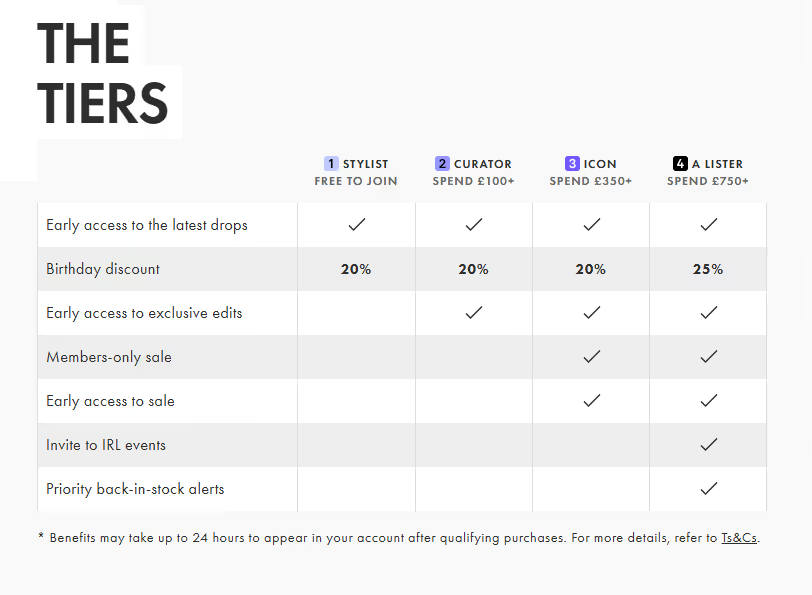
ASOS.WORLD is purpose-built for digital-native fashion shoppers – there is no physical store component, so every mechanic is designed to work in-app and on-web. The AI stylist tool is a differentiator that goes beyond traditional rewards; it makes the program genuinely useful rather than just rewarding.
The spend-based tier progression also creates a clear challenge mechanic where shoppers can see exactly how much more they need to spend to unlock the next level. For ecommerce brands building loyalty programs, ASOS's digital-first approach is a practical reference point.
Program link: swarovski.com/scs
The Swarovski Crystal Society (SCS) is one of the oldest fashion and accessories loyalty programs, founded in 1987.
Unlike most programs on this list, it requires an annual membership fee ($70 for one year, $165 for three years), with renewals available at a slight discount ($60 and $145 respectively). Members receive an exclusive annual crystal gift not available anywhere else, access to members-only collections, the biannual Swarovski Magazine, free repairs, free shipping, and an annual visit to Kristallwelten (the Swarovski museum) in Austria.
The SCS operates in over 100 countries through Swarovski stores, partner retailers, and online – making it one of the most geographically distributed loyalty programs in fashion accessories.
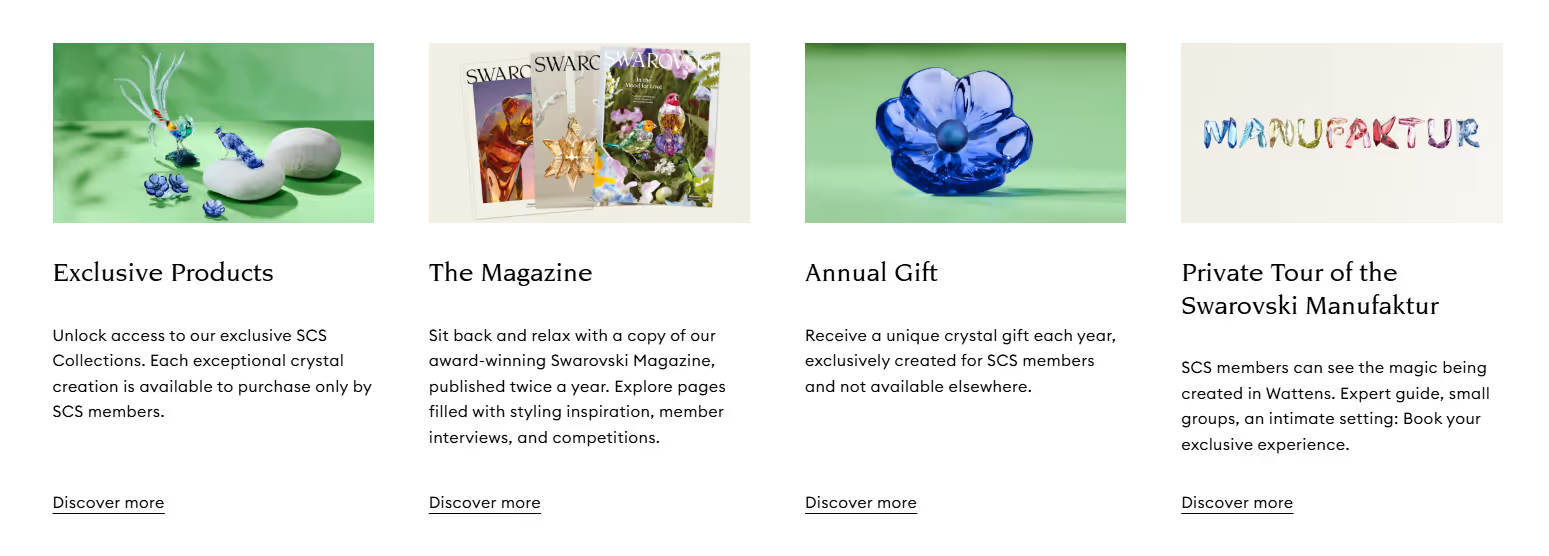
Swarovski's paid model is counterintuitive in a market where most loyalty programs are free, but it works precisely because the fee creates a sense of belonging and commitment.
Members who pay for access tend to be more engaged – the fee itself acts as a commitment device that filters for the brand's most dedicated customers. The exclusive crystal gift and members-only collections turn the program into a collector's community, which generates its own word-of-mouth and secondary market value.
For luxury and premium fashion brands, SCS demonstrates that reward exclusivity can be more powerful than broad accessibility.
Program link: uniqlo.com/membership-benefits
UNIQLO's free membership program is integrated into the UNIQLO App and rewards members with a $5 coupon for every $50 spent. New members receive up to $25 in welcome coupons ($10 app coupon, $5 email signup, $10 SMS signup), creating an immediate incentive to engage across channels from the first interaction.
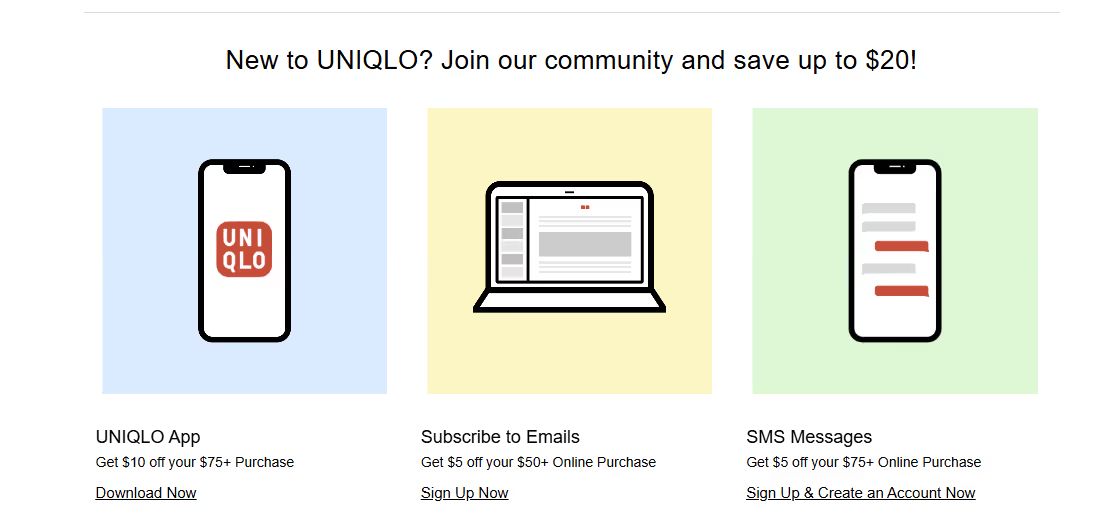
Additional perks include early access to sales, member-only pricing on select items, a birthday coupon, and a referral program that gives both the referrer and the friend a $10 off $50 coupon. The program also runs regular member-only offers where a curated selection of items is discounted for a limited time, creating urgency without resorting to permanent markdowns.
UNIQLO's approach is the most straightforward on this list, and that is the point.
The brand's identity is built on simplicity and quality basics – an overly complex loyalty program would feel inconsistent with the brand. The coupon-per-threshold mechanic is easy to understand, easy to earn, and easy to redeem, which removes friction at every step.
For fashion brands where the average order value is moderate and the product is replenishable (basics, essentials, seasonal staples), UNIQLO demonstrates that simplicity and low friction can be the program's defining feature.
These 10 programs differ in structure, price point, and audience, but they share a few principles that any fashion brand can learn from.
Nike does not offer discounts because discounts would undermine its premium positioning. H&M does, because its audience expects accessible value. Swarovski charges a membership fee because exclusivity is the brand.
The loyalty mechanic should reinforce the brand identity, not contradict it.
As Louise Hutchins, former Head of Loyalty at Marks and Spencer and Managing Director of The Loyalty People, has observed: loyalty is changing, and brands can no longer provide only functional value – the emotional dimension matters just as much.
Fashion has longer purchase cycles than grocery or QSR, so the programs that perform best are the ones that keep members active between transactions – through gamification, content, community events, or partner ecosystems.
Nike keeps members engaged through daily workout tracking. adidas rewards product reviews and event attendance. Sephora runs interactive challenges. lululemon offers wellness partner perks. Each of these mechanics solves the same problem from a different angle: maintaining brand presence during the weeks or months between purchases.
As the Open Loyalty Trends report found, gamification is the mechanic with the highest medium-term growth trajectory precisely because it solves this between-purchase engagement gap. Brands that rely solely on purchase-triggered points will struggle as competitors adopt richer engagement models.
H&M's Plus tier at 500 points, ASOS's spend-based progression, Nordstrom's accelerated earning for cardholders – each sets thresholds that feel achievable based on the brand's actual purchasing cadence.
A well-designed tier system creates aspiration without frustration. The opposite – tiers so high that most members never progress – breeds disengagement and can damage the program's reputation.
The best fashion programs calibrate their tiers to reward the behavior they want to encourage, not the behavior they wish customers had.
Nike, lululemon, and Nordstrom all lean into events, community access, and partner perks rather than straight discounts. This is not just a margin play – it also creates memories that a five-percent-off coupon cannot compete with.
The buyer's guide to loyalty software highlights this shift: the most effective enterprise programs now combine transactional earn-and-burn with behavioral and experiential mechanics. Gap's Encore program takes this further with behind-the-scenes content and cultural partnerships, betting that fashion loyalty needs a narrative layer to sustain long-term engagement.
Every program on this list collects behavioral data – not just purchase history, but workout logs, style preferences, event attendance, and review activity.
That data feeds loyalty analytics and personalization engines that make each member's experience feel tailored rather than generic.
The brands that use this data well (Sephora's Rewards Bazaar, ASOS's AI stylist, Nike's personalized training plans) create a feedback loop: better personalization leads to higher engagement, which generates more data, which enables even better personalization.
For fashion brands evaluating loyalty software, the ability to collect, unify, and act on behavioral data in real time is no longer optional – it is the foundation that makes every other mechanic (tiers, gamification, experiential rewards, personalization) work.
One pattern worth noting: the programs that iterate fastest – updating tiers, launching new challenges, testing partner perks, adding games of chance or leaderboards – tend to run on flexible, API-first loyalty infrastructure rather than rigid legacy platforms.
The ability to ship a new gamification mechanic in weeks rather than months is a competitive advantage that compounds over time. Programs that cannot adapt quickly enough risk losing members to competitors that can.
Fashion loyalty is moving from "spend more, get more" to "engage more, belong more." The 10 programs above are not just retaining customers – they are building communities, creating habits, and embedding themselves into their members' daily lives. The brands that figure out how to do this at scale, with the right loyalty infrastructure underneath, will have a structural advantage that competitors cannot easily replicate.

API-first loyalty and gamification engine

Get a weekly dose of actionable tips on how to build and grow gamified successful loyalty programs!