Every year, the Loyalty Program Trends 2026 report research examines how customer loyalty is changing in practice. The 2026 edition, built on insights from loyalty leaders across industries, highlights rising ROI scrutiny, stronger investment in gamification, growing reliance on AI-driven personalization, and increasing pressure to differentiate in a saturated market.
The sections below translate the full report research into a structured lens for selecting, replacing, or reassessing loyalty technology in line with emerging strategic priorities.
👇 If you want to explore the underlying data and full analysis, download the Loyalty Program Trends 2026 report.

The Loyalty Program Trends 2026 report research highlights several structural trends shaping how enterprise brands approach loyalty:
Across QSR, eCommerce, or retail, these trends boil down to one core question: can your loyalty software operationalize strategy at scale while protecting profitability?
The sections below translate these shifts into practical guidance for reviewing loyalty software in 2026.
The Loyalty Program Trends 2026 report shows a structural transformation in how loyalty success is defined. 59% of loyalty professionals prioritize improving Customer Lifetime Value in 2026, making it the dominant objective for another consecutive year (up from 36% in 2021 and peaking at 61% in 2023). CLV now anchors loyalty strategy.
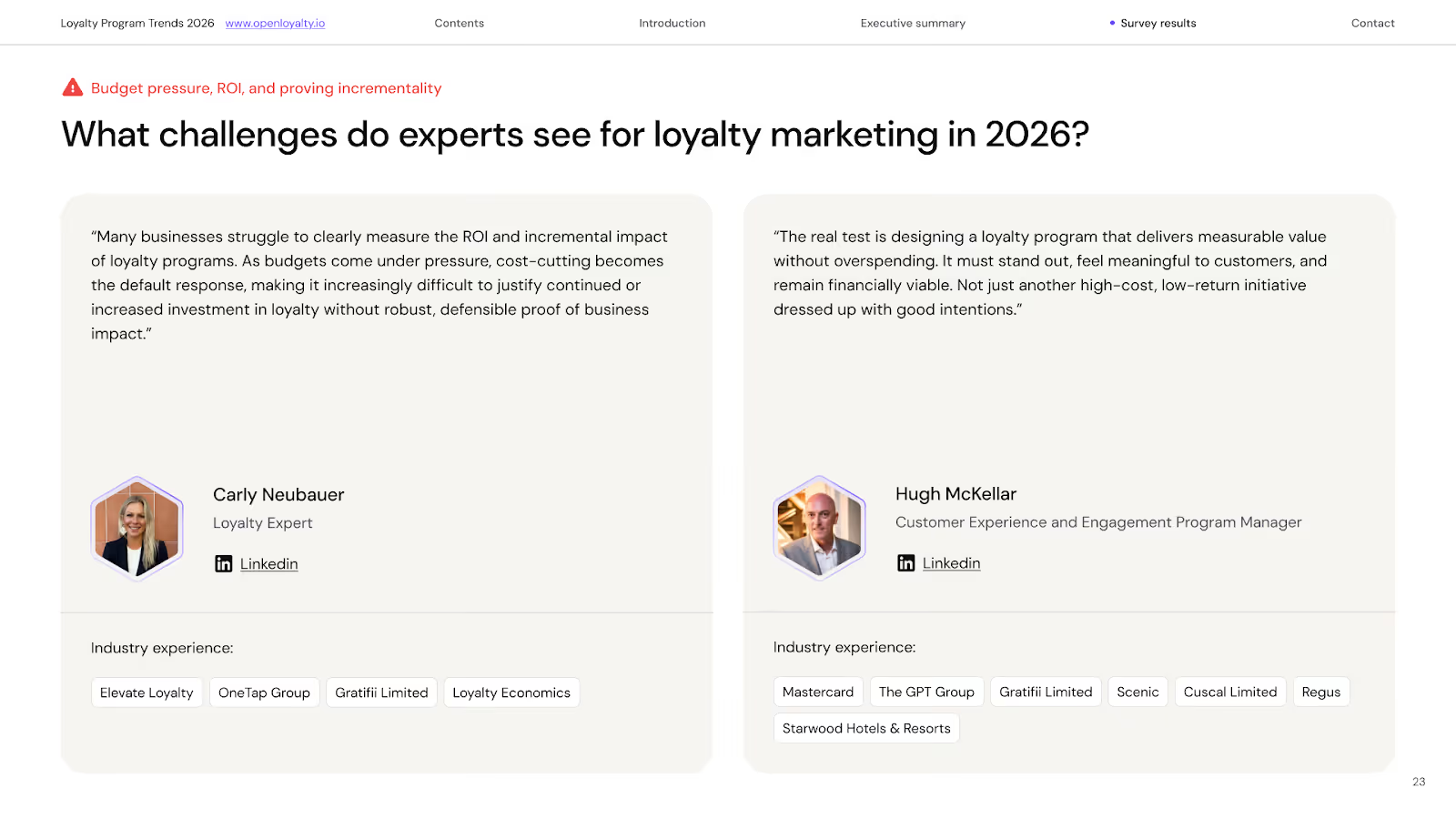
Accountability is intensifying alongside that focus. 44% prioritize lowering churn, up from 27% in 2021, reinforcing retention as a financial objective rather than a marketing metric. At the same time, 35% focus explicitly on increasing ROI, compared to 23% in 2023. ROI now ranks above "generating more revenue" (26%), signaling a pivot from topline growth to disciplined profitability.
Volume-based indicators continue to lose relative weight:
The direction is clear: scale alone no longer defines success, but retention efficiency and financial impact certainly do.
The data also reveals a reframing of margin thinking. "Generating higher margins" as a standalone goal fell from 42% in 2021 to 12% in 2026. Margin is now embedded in broader KPIs such as CLV, churn reduction, and ROI discipline rather than treated as a separate lever.
When ROI becomes a board-level conversation, loyalty technology can't operate as a points-and-coupons engine. It must connect engagement mechanics directly to financial outcomes. Tracking CLV longitudinally, measuring incrementality instead of gross revenue, and linking rewards programs to contribution margin become baseline capabilities.
Programs built primarily around promotional mechanics risk drifting toward over-discounting. Short-term lifts may appear attractive, yet long-term margin compression and incentive dependency erode sustainability. Rule engines tied to category margins, contribution thresholds, and behavioral uplift are obligatory. Under rising scrutiny, loyalty spend must demonstrate financial logic.
For companies considering customer loyalty program software, feature breadth matters less than financial modeling capability. Enterprise buyers increasingly look for platforms that allow:
🧠 The best loyalty program software in 2026 is measured against retention impact and disciplined capital allocation. Again, in a market where 35% of brands explicitly state they must prove ROI internally, loyalty technology that can't demonstrate margin alignment becomes progressively harder to defend.
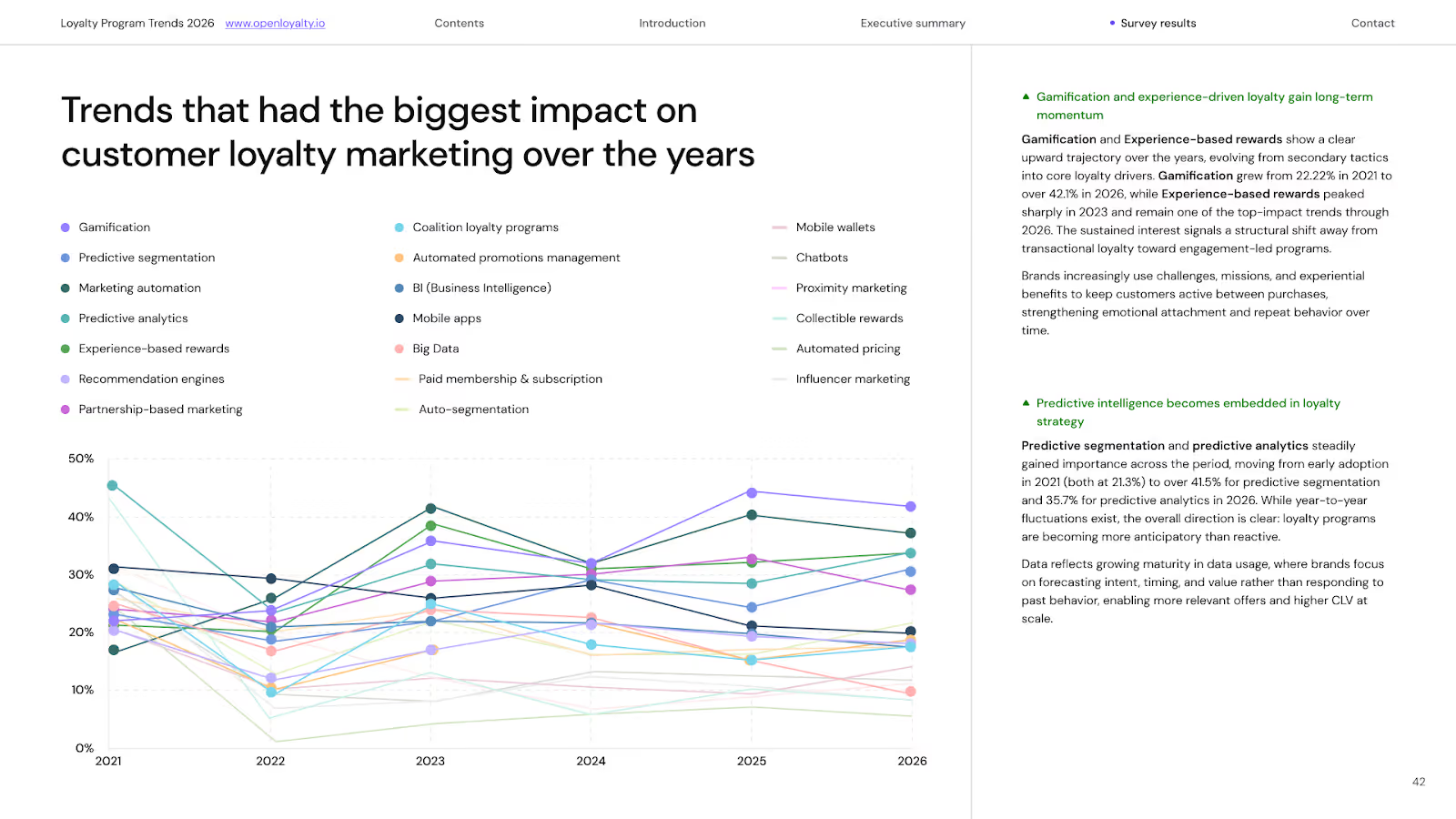
The 2026 data confirms a structural change in how gamification is positioned within loyalty strategy. When asked which future trends will have the biggest impact in the next 2–3 years, gamification/game-based mechanics ranks at 42.1% in 2026, up from 22.2% in 2021 and 27.7% in 2022. It peaked at 42.9% in 2025, maintaining top-tier relevance for consecutive years. The trajectory reflects sustained strategic prioritization rather than short-term experimentation.
In the 2026 "planned investments" data:
Gamification consistently ranks among the top investment priorities. As a result, companies are operationalizing:
Gamification is increasingly used to influence frequency and basket behavior without relying exclusively on discounting. Still, legacy platforms struggle here.
Systems centered on point accrual and voucher issuance typically support static tiering based on spend thresholds. Dynamic missions, rule-based challenges, and behavioral triggers often require external tooling or customization. When gamification sits outside the core rule engine, scalability narrows and experimentation slows.
In contrast, API-first loyalty engines allow brands to:
Engagement mechanics are increasingly paired with intelligence layers rather than operating as decorative features. Note how gamification has moved from surface engagement to structural behavior design.
🧠 The best loyalty program software in 2026 will be defined by its ability to operationalize missions, tiers, and challenges as core architecture. When many brands identify gamification as a top future driver and 38% plan active investment, engagement mechanics can't remain bolt-on features. They must function as programmable, scalable components within the loyalty engine.
Interest in AI-driven loyalty continues to rise across the 2026 data. Predictive segmentation and predictive analytics rank among the top future impact drivers.
In 2026 research we spotted that:
AI sits within the top strategic tier of loyalty innovation. Investment intent clearly supports this direction:
That places AI-adjacent capabilities alongside gamification as top spending priorities.
An additional signal appears in the qualitative data: AI was the most frequently mentioned topic within the "Other" category in open responses. Even when not listed explicitly as a predefined option, respondents repeatedly introduced AI as a priority. The pattern shown reflects growing executive-level focus that extends beyond structured survey categories.
Yet ambition doesn't automatically translate into operational maturity.
While predictive segmentation doubled from 21.3% in 2021 to 41.5% in 2026, adoption curves suggest organizations are still building execution capability. Many brands discuss AI in strategic planning, yet implementation often remains limited to basic segmentation or isolated experiments. Our observations show that constraints are rarely conceptual in nature, but more often architectural.
AI-driven loyalty requires:
Composable enterprise stacks are changing loyalty software. Large organizations rarely rely on a single monolithic marketing platform. They operate CDPs, analytics warehouses, machine learning pipelines, marketing automation systems, and custom applications. In that environment, loyalty software for business executes on AI layers.
Enterprise loyalty software increasingly functions as:
Rather than embedding standalone AI modules, leading platforms integrate with existing AI pipelines and CDPs. Predictive models generate insight, and then the loyalty engine operationalizes it.
🧠 The 2026 data makes one pattern clear: AI is structurally prioritized. However, execution maturity lags strategic ambition. The competitive advantage will come from integrating predictive systems deeply enough that segmentation insights immediately translate into triggered rewards, tier progression, or personalized incentives.
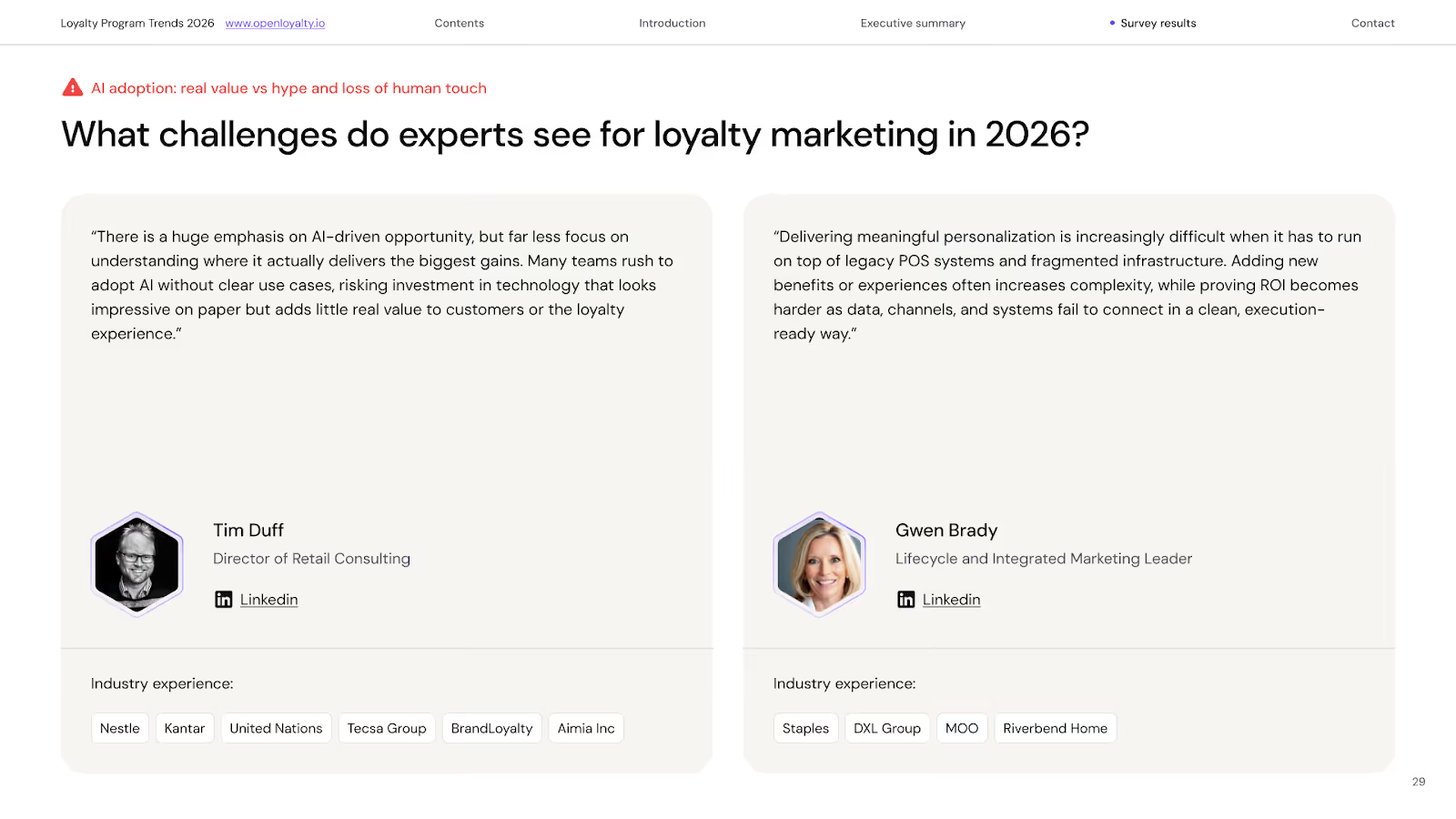
The 2026 investment data confirms that seamless, cross-channel execution is no longer secondary. 59.7% of respondents identify personalization as a top investment area in 2026, making it the highest-ranked priority. Loyalty programs (49.7%) and automation (44.4%) follow closely. All of them depend on real-time orchestration and integrated systems.
Omnichannel experience is also rising again. After fluctuating between 21–29% from 2021 to 2024, it climbs to 32.2% in 2026, signaling renewed structural focus. Loyal customers interact through apps, web, stores, and digital touchpoints interchangeably. Digital loyalty systems must operate across those environments without delay.
Other supporting data reinforces the shift:
Meanwhile, experience categories tied purely to single channels continue to decline:
The pattern suggests that organizations are investing in integration layers that unify isolated channel improvements. As can be seen, that strongly changes the technical baseline for loyalty software.
A frictionless loyalty system must support:
Delayed batch updates conflict with rising personalization and automation expectations. When personalization leads at investment focus, static loyalty systems can't keep pace.
Enterprise environments increasingly operate with composable architectures. Loyalty software for business must plug into existing CRM, CDP, and marketing automation stacks rather than attempt to replace them. The 2026 data shows that investment is consolidating around personalization, automation, and program innovation rather than standalone channel upgrades.
🧠 The best enterprise loyalty software in 2026 will be judged on integration depth and responsiveness. Platforms that update balances instantly, synchronize across systems in real time, and embed natively into apps and POS environments will align with where budgets are flowing. Systems built around centralized batch logic will struggle to meet rising expectations.
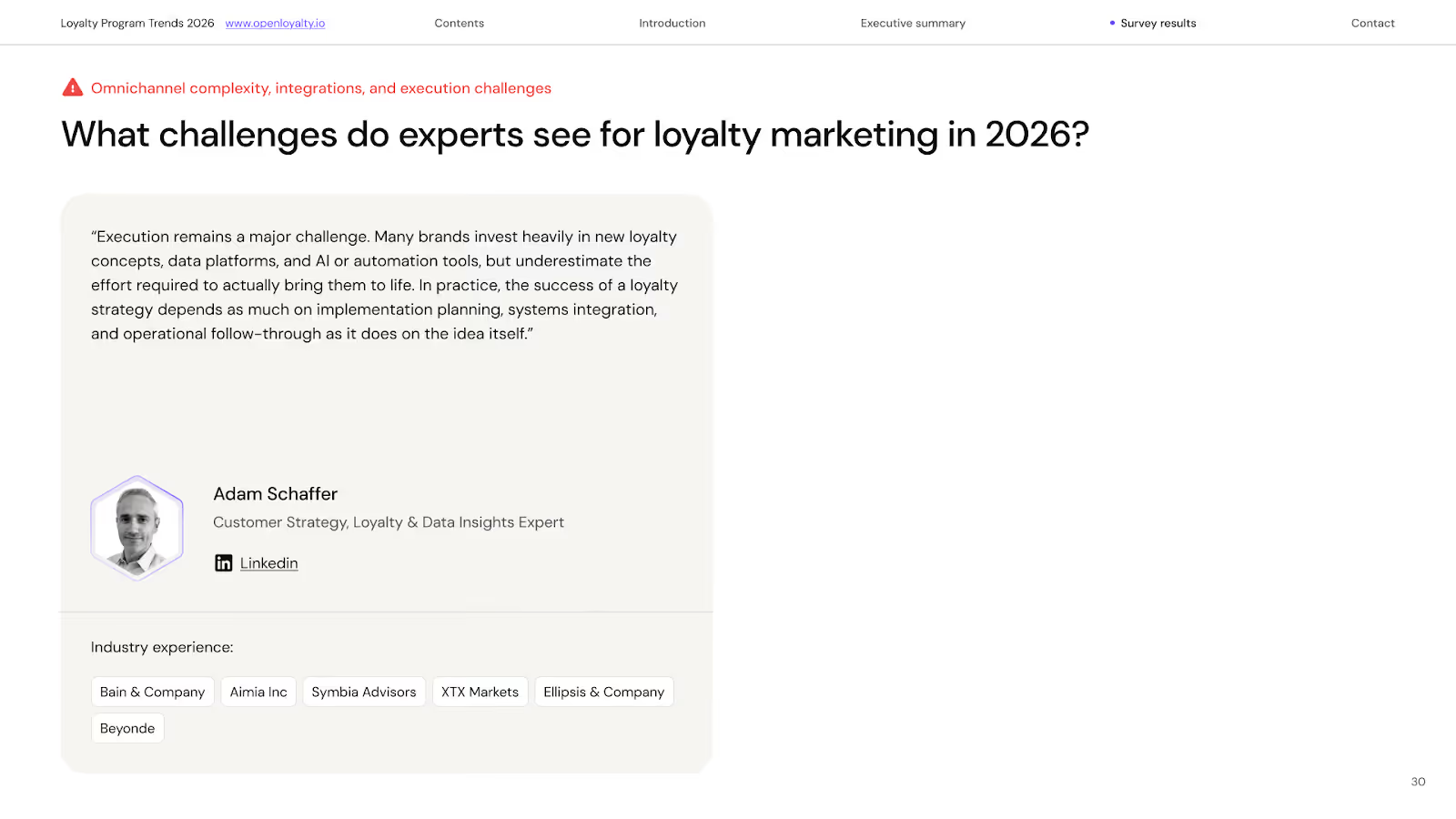
Execution requirements vary significantly across industries, even when strategic priorities such as ROI discipline, gamification, and real-time engagement remain consistent. The way loyalty software is configured in QSR differs from eCommerce and retail, because operational realities, customer behavior, and margin structures differ.
The following sections translate the broader Loyalty Program Trends 2026 report findings into industry-specific implications for selecting customer loyalty software.
Quick service restaurants operate in a high-frequency environment where speed, habit formation, and margin control determine performance. Purchase cycles are short, competition is intense, and switching costs are low. Loyalty programs in this segment are built to increase visit frequency, reinforce routine behavior, and grow ticket size while protecting profitability.
The Loyalty Program Trends 2026 report highlights rising expectations around real-time engagement and behavioral reinforcement. In QSR, latency directly affects outcomes. When a customer completes a purchase, scans a receipt, or unlocks a milestone, rewards and progress updates must reflect instantly. Delays weaken habit loops and reduce the impact of incentives.
High-performing QSR programs typically rely on:
Loyalty program software for businesses in the QSR sector must support this level of configurability and immediate reward execution.
QSR loyalty spans drive-thru systems, in-store kiosks, mobile ordering apps, and digital wallets. Rewards earned in-app must be redeemable at the counter without friction. Offers triggered at kiosks must update customer profiles instantly. Loyalty software must integrate directly with POS and ordering infrastructure to maintain synchronized omnichannel behavior.
Operational agility also matters here. QSR brands frequently run limited-time and localized campaigns. Loyalty engines must support API-driven deployment, stacking and exclusion controls, embedded margin safeguards, and high transaction throughput during peak rush hours across hundreds or thousands of locations.
For QSR operators assessing customer loyalty software, the central question becomes whether the platform can reinforce high-frequency behavior at scale while protecting margin and maintaining speed. In a segment defined by immediacy, technical responsiveness directly influences program performance.
💡 Read about restaurant loyalty programs with 10 successful examples.
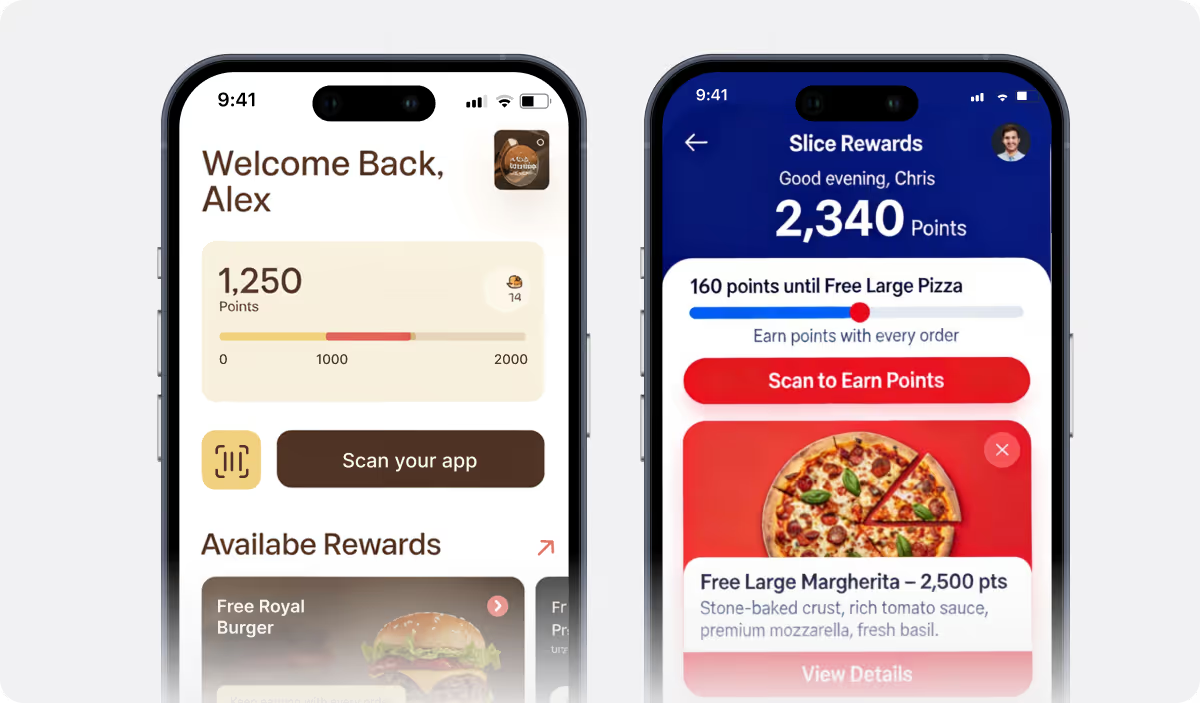
eCommerce operates in a high-pressure space where acquisition costs are elevated, competition is immediate, and switching requires only a single click. Loyalty programs in this segment must influence measurable outcomes such as Average Order Value, repeat purchase frequency, and customer retention. Points accrual alone rarely shifts these loyalty metrics in a meaningful way.
The Loyalty Program Trends 2026 report findings around ROI discipline and behavioral design directly apply to digital commerce. Customer loyalty software must support structured incentives that influence cart composition, category exploration, and lifecycle progression rather than relying on broad discounting.
High-performing eCommerce programs typically rely on:
Listed mechanics depend on flexible rule engines capable of granular, cart-level calculations executed in real time.
Hyper-personalization further strengthens these drivers. Modern customer loyalty program software allows retailers to transform browsing behavior, purchase history, and engagement signals into dynamic incentives. Bundled offers triggered by SKU combinations, free gifts unlocked at defined thresholds, and lifecycle-aligned rewards increase precision while protecting margins.
Next up, execution must occur inside the customer journey. Real-time progress bars, limited-time challenges, streak incentives, dynamic bonus thresholds, and checkout decisioning logic require API-driven integration. In headless architectures, loyalty software connects through event streams, so incentives update instantly during browsing and checkout. Batch synchronization undermines experimentation and limits performance optimization.
In addition, scalability has a huge bearing on success. Enterprise retailers face traffic spikes during BFCM, seasonal drops, or major launches. Loyalty systems must process high volumes of concurrent events, support thousands of active promotions, and maintain stability under peak conditions. Real-time testing and checkout-level decisioning increasingly differentiate high-performing programs.
Enterprise loyalty software built for composable stacks integrates naturally with storefronts, CDPs, data warehouses, and personalization engines. Rather than duplicating CRM or campaign infrastructure, the loyalty engine specializes in behavioral orchestration and reward logic execution.
For eCommerce brands reviewing customer loyalty software, the assessment extends beyond points and vouchers. The decisive factor is if the platform can influence measurable digital commerce outcomes such as AOV growth, referral conversion, and repeat purchase behavior while maintaining architectural flexibility and performance stability.
💡 Read about the best eCommerce loyalty programs.
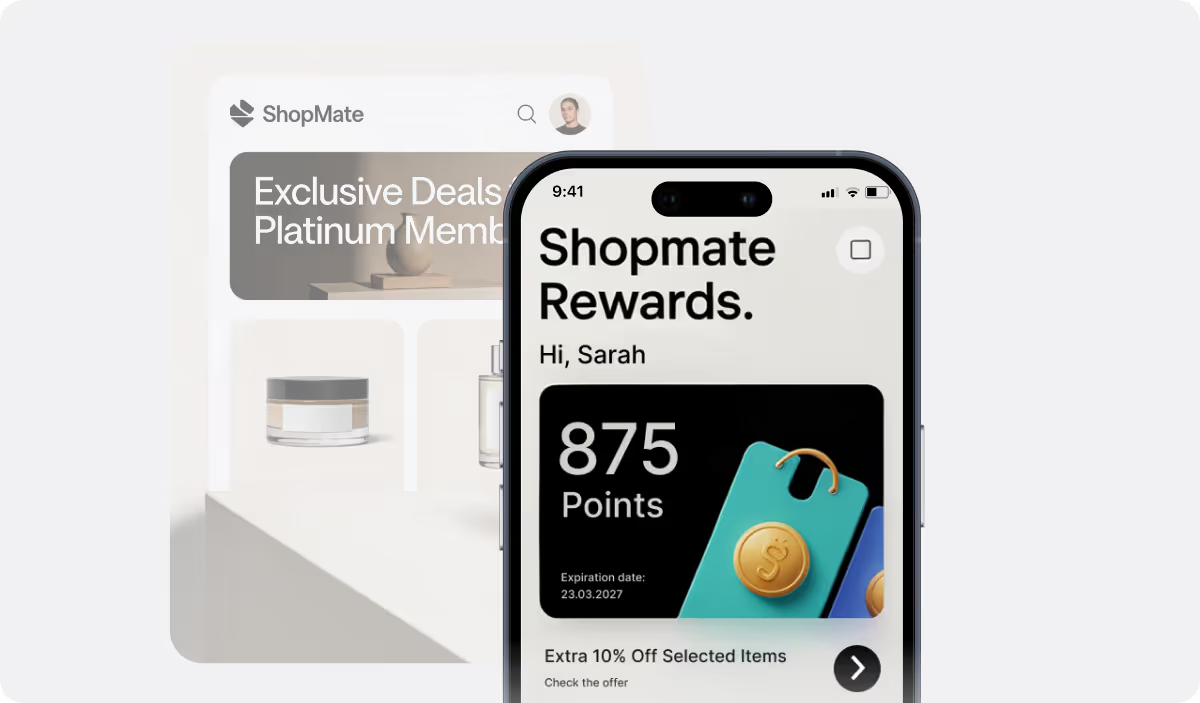
Retail chains operate at the intersection of physical and digital commerce. Repeat customers move between in-store purchases, eCommerce transactions, mobile apps, and third-party marketplaces. Loyalty programs in this environment must function as a unifying behavioral layer rather than a channel-specific add-on.
The Loyalty Program Trends 2026 report highlights the rising emphasis on omnichannel consistency and real-time engagement. Progression, rewards, and status recognition must remain synchronized across touchpoints. A customer who earns points in-store expects to see them reflected instantly in a mobile app. A reward unlocked online must be redeemable at checkout without reconciliation delays.
High-performing retail loyalty programs typically rely on:
These mechanisms require existing customer loyalty software options to enable dynamic configuration of rules in distributed systems.
Retail loyalty execution depends on synchronized data flows. Platforms must ingest events from POS systems, eCommerce platforms, and mobile applications in real time. Balances, tier progression, and reward eligibility must update instantly and apply consistently across environments. Batch processing introduces discrepancies that weaken trust and reduce engagement continuity.
What's more, in-store behavioral triggers add another layer of complexity. Mechanics tied to product scans, category purchases, store visit patterns, or location-based promotions require the loyalty engine to accept external event data and apply rules dynamically. Static reward tables limit contextual engagement and restrict campaign flexibility.
At scale, fraud management becomes structural. Multi-location retail operations must monitor referral manipulation, duplicate accounts, receipt fraud, reward exploitation, and cross-channel inconsistencies. Enterprise loyalty software should support configurable safeguards, rule-based restrictions, and anomaly detection while maintaining a smooth customer experience.
Retail chains increasingly favor customer loyalty software for business that integrates cleanly into POS ecosystems, data platforms, and mobile applications. API-first architectures allow the loyalty engine to function as a centralized behavioral layer while aligning with existing infrastructure.
For retail operators looking at customer loyalty software, the assessment centers on whether the platform can synchronize engagement across channels, respond to in-store events in real time, maintain consistency across locations, and protect profitability through embedded safeguards.
💡 Read about designing effective retail loyalty programs.
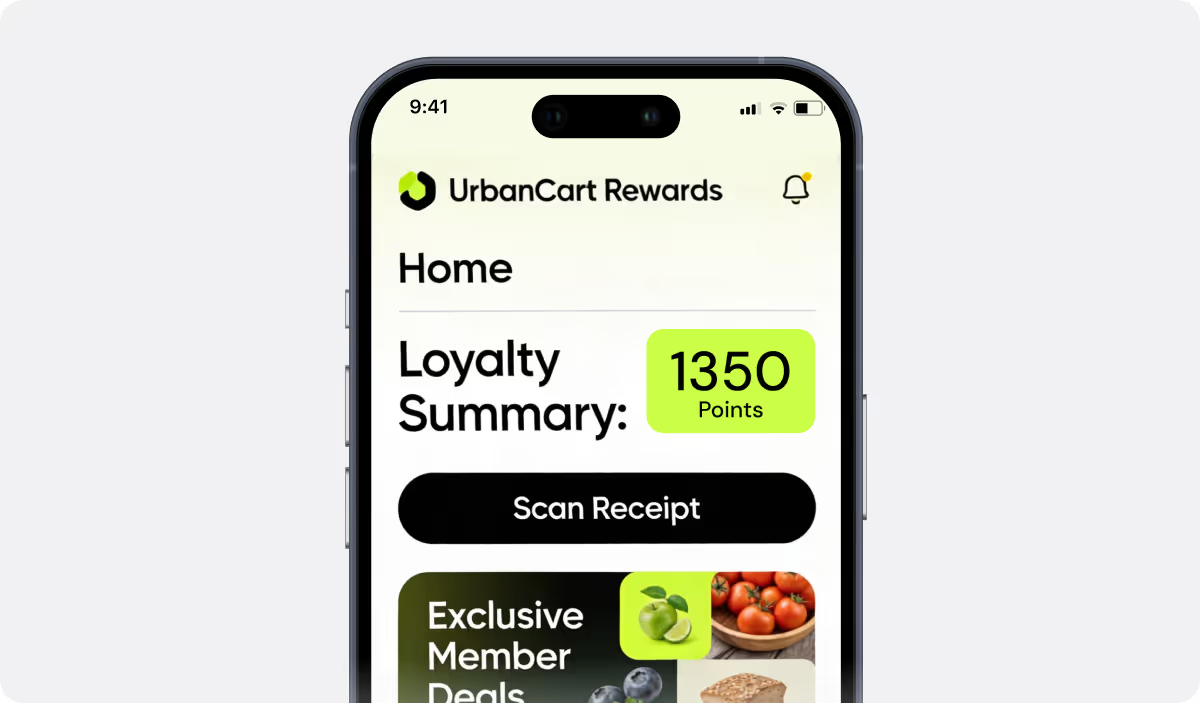
As loyalty strategies grow more sophisticated, incorporating gamification mechanics, real-time orchestration, margin-based reward logic, and composable integrations, the question inevitably arises: Should an enterprise build its own loyalty infrastructure or invest in specialized customer loyalty software?
The findings of the Loyalty Program Trends 2026 report make this decision more significant than in previous years, and for most enterprise organizations, the answer is yes. And not because loyalty is expanding in scope, but because it is changing in nature.
Building internally offers maximum control. Organizations can tailor mechanics precisely to proprietary systems, align loyalty logic with internal data models, and design fully customized engagement flows. For enterprises with strong engineering capacity and loyalty expertise, this path may appear strategically attractive.
However, the report's broader direction suggests loyalty is becoming more dynamic, more real-time, and more financially scrutinized. The evolution increases the burden on internal teams, and the whole development is only the starting point. Ongoing iteration, scalability, fraud prevention, compliance, orchestration logic, and gamification design require sustained investment.
Besides, internal roadmaps must also compete with core product priorities, often slowing experimentation and limiting adaptability.
💡 Read more about loyalty program implementation.
Promotion-focused tools enable rapid deployment of discount logic and transactional incentives. They work well for short-term campaigns. Yet the Loyalty Program Trends 2026 report illustrates that loyalty is moving beyond discounting toward behavioral frameworks and long-term engagement design.
Architectures built around price manipulation struggle to support structured progression systems, non-transactional rewards, real-time personalization, and margin-aware orchestration. As expectations change, structural limitations become apparent.
All-in-one customer loyalty platforms attempt to centralize campaign management, reward catalogs, messaging tools, and analytics within a single system. Vendor consolidation simplifies procurement and governance.
Nevertheless, the composable direction reflected in the report suggests enterprises increasingly operate with specialized CRM, CDP, and automation layers. In this context, bundled platforms can create overlap and redundancy. Customization may require vendor involvement, reducing agility and forcing operational compromise.
💡 Read our loyalty integration report insights and the composable tech revolution.
Enterprise loyalty software designed as an API-first engine aligns more closely with the trajectory presented in the research. Instead of replacing surrounding systems, it integrates into them. Loyalty logic, reward configuration, fraud controls, and engagement orchestration operate as a specialized layer connected to the existing data infrastructure.
The broader pattern shows how loyalty is becoming embedded within digital ecosystems rather than sitting beside them: it interacts with predictive models, real-time event streams, and omnichannel touchpoints.
💡 Read more about loyalty program integrations.
The comparison below summarizes the trade-offs:
💡 Read more about solving the build vs. buy dilemma when building loyalty solutions.
Search queries such as "best loyalty software" or "best loyalty program software" often lead to feature comparison lists. Integrations, campaign templates, dashboards, and reward catalogs dominate rankings. The mentioned approach reflects an older way of evaluating platforms – one focused on surface capabilities rather than structural alignment.
The Loyalty Program Trends 2026 report findings suggest a different benchmark.
As ROI scrutiny increases, gamification becomes foundational, AI execution requires architectural depth, and omnichannel responsiveness becomes standard, loyalty software is evaluated against business outcomes rather than feature volume.
👉 The definition of "best" now centers on whether a platform supports margin discipline, behavioral orchestration, and long-term scalability.
Reward configuration connects directly to profitability metrics rather than transaction volume alone. Rule engines allow thresholds tied to contribution margin, behavioral uplift, or long-term customer progression instead of static spend tiers.
Missions, streaks, dynamic tiers, and non-purchase incentives require flexible event modeling and configurable progression frameworks. Engagement design must extend beyond points accrual and voucher issuance.
Enterprise loyalty software increasingly operates within composable ecosystems that include CDPs, CRMs, marketing automation platforms, and custom-built digital products. The platform must integrate cleanly into that environment, accept external event schemas, and support real-time orchestration rather than duplicating surrounding systems.
Platforms that replicate CRM segmentation, messaging infrastructure, or promotion engines create overlap and governance challenges. Loyalty software for business performs best when it specializes in loyalty logic and behavioral orchestration while leveraging existing systems for communication and data intelligence.
Frequency increase, customer satisfaction, retention uplift, and margin contribution form the metrics that determine strategic continuation. The strongest customer loyalty program software provides visibility into these indicators and enables teams to refine reward strategies based on performance data.
The comparison below summarizes the enterprise capabilities that increasingly define category leaders, and clarifies what "best loyalty software" actually means in 2026:
To manage loyalty programs effectively, companies need platforms that centralize rule configuration, reward management, segmentation, and analytics capabilities. Modern loyalty management systems connect to the broader tech stack, enabling real-time data collection and consistent execution across channels. Rather than manually coordinating campaigns, businesses rely on automated rewards, integrated reporting, and structured loyalty campaigns aligned with measurable program performance.
A digital loyalty program operates across mobile apps, eCommerce platforms, POS systems, and mobile wallet environments. Instead of plastic cards or static loyalty points accumulation, digital loyalty cards synchronize instantly and reflect real-time progression. Digital infrastructure allows brands to segment customers based on behavior, deliver personalized rewards, and integrate referral programs directly into the experience.
Enterprise loyalty solutions influence repeat purchases by aligning incentives with behavioral triggers. Rather than relying solely on discounts, they support experiential rewards, loyalty status progression, and automated rewards tied to engagement. Structured customer engagement mechanics help foster relationships, strengthen emotional loyalty, and retain customers through ongoing interaction instead of transactional incentives alone.
Advanced loyalty software allows teams to segment customers based on purchase history, frequency, margin contribution, and behavioral signals. Integrated marketing automation systems trigger loyalty campaigns in real time, improving customer interactions across digital and physical channels. Granular segmentation helps engage customers with relevant offers while protecting profitability.
Referral programs extend loyalty beyond the existing customer base by turning satisfied members into acquisition channels. Customer referrals can support customer acquisition while maintaining margin discipline when integrated directly into loyalty management. Platforms that unify referral marketing with reward management provide better visibility into performance and reduce fraud risk.
💡 Read more about loyalty fraud: Risks, examples, and how to prevent program abuse.
While loyalty programs primarily focus on retention, well-designed loyalty solutions also support acquisition through referral programs and shareable incentives. Structured loyalty campaigns help convert first-time buyers into repeat customers, increasing repeat business and strengthening long-term customer relationships. A strong loyalty engine aligns acquisition efforts with retention mechanics.
💡 Read more about customer acquisition campaign templates and good practices.
Enterprise loyalty management platforms should integrate seamlessly with the existing tech stack rather than duplicate it. Core requirements include:
Alignment with the existing tech stack determines if loyalty software functions as a strategic layer or creates operational redundancy.
Personalized rewards connect incentives to individual behavior rather than generic promotions. When loyalty software analyzes data collection across customer interactions, it can tailor offers to purchasing patterns, lifecycle stages, or engagement milestones. This improves customer experience, keeps customers engaged, and increases repeat purchases without broad discounting.
💡 Read more about personalization strategy for loyalty programs.
Loyalty software tracks loyalty points, progression thresholds, and loyalty status to identify and reward the most loyal customers. Advanced systems allow tier-based recognition, experiential rewards, and automated incentives triggered by long-term engagement. Rewarding customers consistently reinforces repeat purchases and strengthens emotional loyalty.
💡Read more about emotional loyalty and 10 programs that connect deeply with customers.
Open Loyalty operates as an API-first loyalty engine designed for enterprise environments. It integrates into an existing tech stack, supports structured reward management, referral programs, marketing automation alignment, and real-time orchestration. The platform enables businesses to manage loyalty programs at scale while maintaining flexibility for behavioral design and long-term customer engagement.
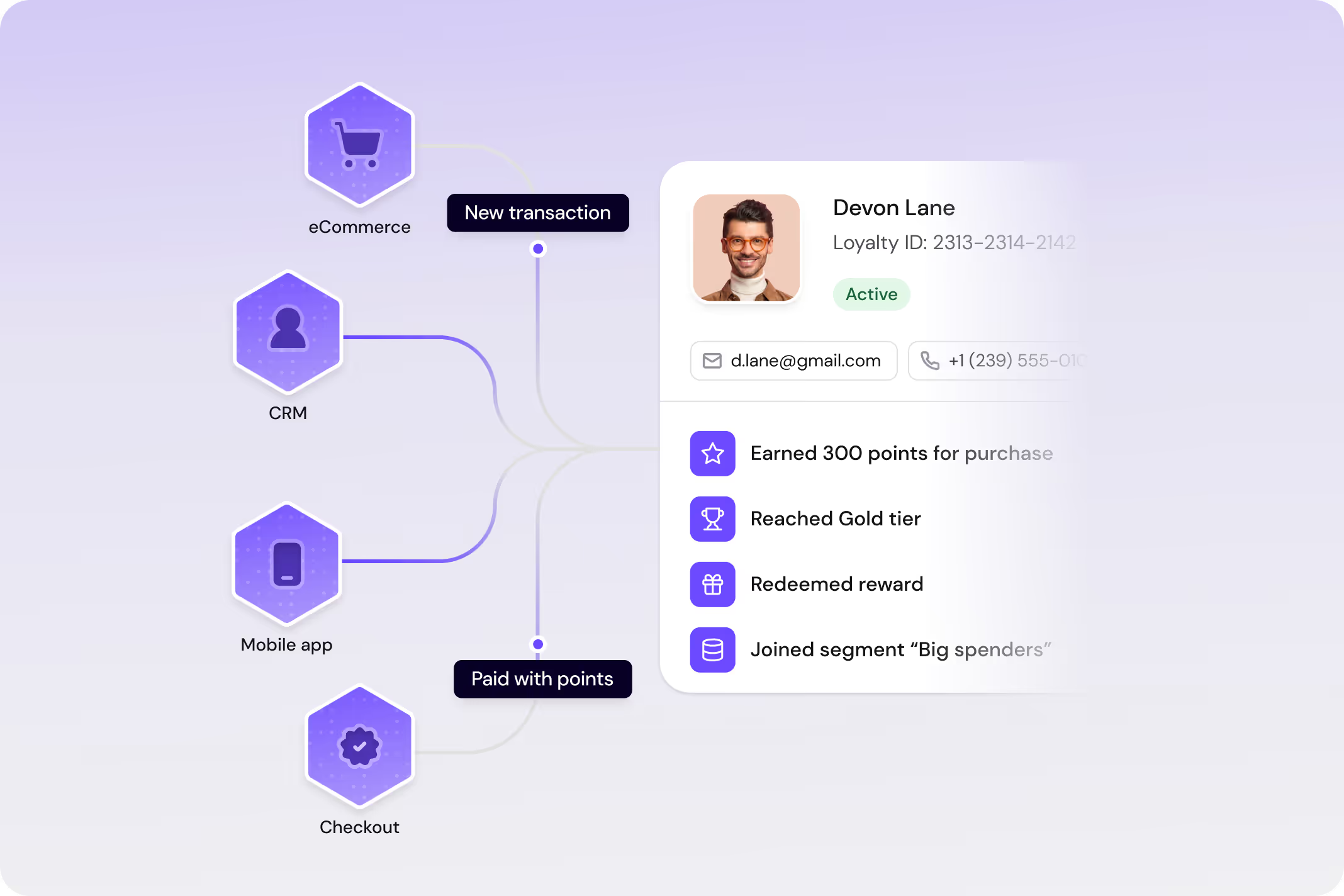
The Loyalty Program Trends 2026 report research makes one thing clear: loyalty strategies are becoming more advanced. Organizations are moving beyond transactional rewards toward structured behavioral design. They're connecting loyalty to profitability metrics, experimenting with gamification frameworks, and integrating AI-driven personalization into broader data ecosystems. Expectations around omnichannel execution and real-time responsiveness continue to rise.
Organizations reviewing their current platforms or entering a new vendor selection process should assess if their technology reflects where loyalty is heading, not where it was designed to operate several years ago.
👉 If you're evaluating enterprise loyalty software in 2026, make sure your tech can support where loyalty is heading.
For teams ready to explore how an API-first, composable approach fits into modern enterprise environments, learn more about our approach to enterprise loyalty software.

API-first loyalty and gamification engine

Get a weekly dose of actionable tips on how to build and grow gamified successful loyalty programs!