Points and discounts are table stakes. The loyalty programs that move the needle on engagement make earning rewards feel exciting – not transactional. Games of chance do exactly that.
Games of chance – spin the wheel, scratch cards, lucky draws, digital lotteries – tap into the same psychological mechanics that make casinos and game shows irresistible. The difference? In loyalty, you control the odds, the budget, and the business outcome. When done right, these mechanics drive measurable increases in purchase frequency, average order value (AOV), and customer lifetime value (CLV).
This guide covers what games of chance are in the context of loyalty, why they work so well, the best real-world examples worth studying, and a practical playbook for launching your own.
Games of chance are promotional mechanics where the outcome depends primarily on randomness rather than skill. In loyalty, they take several common forms:
Spin the wheel – Members spin a digital wheel to win prizes ranging from discount codes to bonus loyalty points or exclusive products. The visual spectacle and anticipation of the spinning animation create a dopamine hit that flat discounts cannot match.
Scratch & win – Digital scratch cards that reveal instant prizes when members "scratch" their screen. The tactile interaction – even on a screen – triggers the same reward-seeking behavior as a physical lottery ticket.
Lucky draw / lottery – Members earn entries into a prize drawing through qualifying actions such as purchases, referrals, or profile completion. Grand prizes create aspirational motivation, while the accumulation of entries encourages repeated engagement.
Treasure chest / mystery reward – Members open a digital chest or box to reveal a randomized reward. The element of surprise makes even modest prizes feel more valuable than a predictable discount of the same amount.
What makes these mechanics powerful is not the game itself – it is the behavioral triggers they activate. Uncertainty of outcome, instant gratification, loss aversion ("I might miss this"), and social comparison all push members from passive point-collectors into active, engaged participants. For a broader view of how game mechanics apply to loyalty, see our guide on what is gamification.
Before jumping into examples, it is worth understanding why these mechanics are so effective – because that understanding separates a well-designed game from a gimmick.
Variable ratio reinforcement. The core mechanism behind slot machines is one of the most powerful behavioral patterns in psychology. When rewards are unpredictable, people engage more frequently and for longer periods than when rewards are guaranteed. A guaranteed 10 percent discount drives one action. A chance to win 50 percent off – even with lower expected value – drives repeated actions. Our gamification statistics roundup explores the data behind these engagement gains.
The endowment effect. The moment a member spins a wheel or scratches a card, they feel psychologically invested in the outcome. That sense of ownership over the interaction makes them more likely to use whatever prize they receive – even a modest one.
Instant gratification. Traditional loyalty programs ask members to accumulate points over weeks or months before seeing value. Games of chance compress that timeline to seconds. The member takes an action, plays the game, and immediately receives a reward. That tight feedback loop drives repeat behavior.
Loss aversion and urgency. Time-limited campaigns ("Spin the wheel – available for the next 48 hours") activate a fear of missing out that motivates action far more effectively than a standard promotional email.
These are not theoretical benefits. Brands across every industry put them to work – and the results speak for themselves.
McDonald's Monopoly is arguably the most recognized game-of-chance promotion in history – and it keeps coming back since 1980 because it keeps working.
The game has different names depending on the edition or country – examples include Prize Vault, Win Win, and Get Your Bag.
The mechanic combines instant-win prizes (peel a game piece, win immediately) with a collection game (gather matching properties for grand prizes).
What makes it brilliant from a loyalty standpoint:
The promotion spans multiple weeks, covers 30+ menu items, and drives measurable lifts in both traffic and AOV during the campaign window.
Having such big stakes, the campaign has attracted controversy over the years.
For example, in 2018, UK protesters campaigned against it, while the promotion was halted in the US in 2021 for suspicion of fraud. These serve as a reminder of proper planning and supply chain management.
Starbucks runs its Summer Game annually to tackle a specific business problem: engagement dips during warmer months when hot coffee consumption drops.
The game gives Starbucks Rewards members digital game pieces for qualifying purchases, with a mix of instant-win prizes and sweepstakes entries.
Why it is worth studying:
Not everything is perfect, however. Users on Reddit have vented frustration about differences in recent edition, such as less fun activities and lower point accrual.
Coca-Cola has deployed scan-and-win mechanics across multiple global markets – from Pakistan to Canada to Singapore. The concept is simple: scan a code on the bottle cap using the Coca-Cola app and instantly find out if you have won.

The effectiveness comes from simplicity and scalability:
Marriott Bonvoy ran a Travel Roulette campaign that gave members a digital spin-the-wheel experience with prizes up to one million Bonvoy points. The campaign ran in a tight window – just a few weeks – creating real urgency.

Key takeaways for loyalty managers:
Grab – the dominant super-app across Southeast Asia – uses daily mystery rewards as a core engagement mechanic. Members complete activities (rides, food orders, payments) to unlock mystery prizes ranging from ride discounts to cash bonuses.
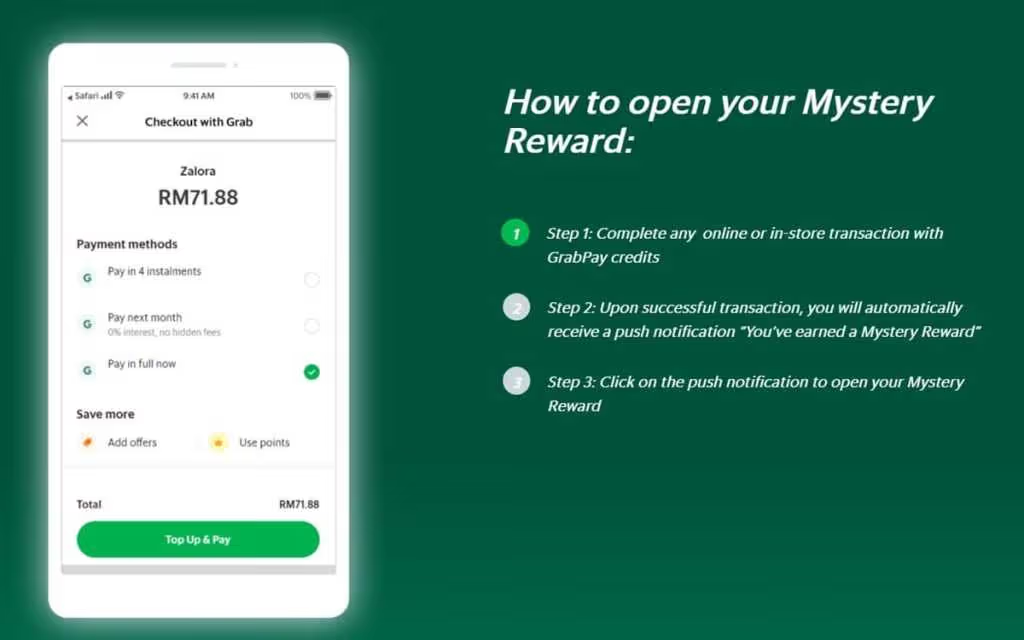
What stands out:
Tesco, one of the UK's largest grocery chains, has integrated scratch card mechanics into its long-running Clubcard program. Digital and physical scratch cards offer prizes ranging from bonus Clubcard points to free products and vouchers.
Why it works in grocery:
The examples above share common patterns. Here is how to apply them.
Do not start with the game mechanic – start with the problem you are solving. Games of chance can drive very different outcomes depending on configuration:
The mechanic should serve the objective – not the other way around.
Most loyalty teams get nervous at this step – and smart design makes all the difference. The key principle: you control the odds.
A well-structured prize pool typically includes three tiers:
Because you control the winning probability for each tier, your total prize budget is predictable. You are not gambling – your customers are.
The most effective games of chance do not sit in a static section of your app waiting to be discovered. They trigger based on member behavior:
Use loyalty campaign software to configure these triggers without custom development. The trigger determines who plays and when – and it is often more important than the game mechanic itself.
Open-ended games underperform time-limited ones. Every example above uses at least one urgency lever:
Urgency converts passive interest into immediate action.
Games of chance work best when connected to – not separate from – your core loyalty program:
An isolated game is a promotion. An integrated game is a loyalty strategy. For a deeper look at combining mechanics, see our guide on gamification software for enterprises.
Track these loyalty program metrics from day one:
Run A/B tests on game mechanics, prize structures, and triggers. The first version of your game is a hypothesis – the data tells you what to optimize.
Even well-intentioned games of chance can fall flat. Here are the pitfalls that derail loyalty gamification efforts most often.
A 100 percent win rate actually kills engagement. When members know they will win something every time, the excitement disappears.
Variable outcomes – including the possibility of not winning – create the dopamine response that drives repeat engagement.
Aim for a win rate between 60 and 85 percent for most game formats.
A standalone spin-the-wheel promotion on your website might generate a short-term traffic spike, but it does nothing for long-term customer retention if it is not connected to your member ecosystem.
Prizes should flow into the member's account, game history should be visible in their profile, and participation should count toward tier or challenge progress.
Launching a game and walking away is a recipe for declining returns. The most effective programs refresh prizes, rotate mechanics, and adjust triggers based on performance data.
McDonald's does not run the same Monopoly campaign year after year without updating the prizes, eligible products, and digital components.
If a member needs to read a paragraph of terms before understanding how to play, you have already lost them.
The best games of chance are self-explanatory: spin, scratch, reveal. Keep the interaction under five seconds from trigger to outcome.
Games of chance are subject to sweepstakes and gambling regulations that vary by jurisdiction.
In many regions, requiring a purchase to enter a random-prize game triggers specific legal obligations – including no-purchase-necessary alternatives, official rules, and prize disclosures. Consult legal counsel before launch, especially for multi-market campaigns.
Launching games of chance at scale requires a loyalty engine that gives you control over odds, prize pools, triggers, and budget – without rebuilding your tech stack from scratch.
If you are evaluating how to add gamification to your existing program, Open Loyalty's games of chance module is built for exactly that: an API-first approach that lets you deploy spin-the-wheel, scratch cards, lotteries, and treasure chests across any channel, with full admin control over winning probabilities and prize distribution.
The brands winning at loyalty are not the ones offering the most points. They are the ones making the experience of earning rewards worth coming back for.

API-first loyalty and gamification engine

Get a weekly dose of actionable tips on how to build and grow gamified successful loyalty programs!